

Almost two months after President Donald Trump signed his so-called “One Big Beautiful Bill Act” into law, the legislation’s health care implications remain hazy.
Adopted on July 4, the federal budget reconciliation package introduced a number of changes to Medicaid, Medicare and the marketplace created by the Affordable Care Act (ACA) that could lead to an additional 10 million uninsured people in the U.S. by 2034, according to the U.S. Congressional Budget Office’s (CBO) most recent estimates.
Many changes didn’t take immediate effect. For example, restrictions on immigrants’ eligibility for Medicaid will start on Oct. 1, 2026, while new requirements that most adults work at least 80 hours a month or attend school to qualify for Medicaid must be in place by Dec. 31, 2026.
However, health care providers and community organizations across Northern Virginia are already grappling with how to navigate the impending upheaval.
Hamkae Center, a nonprofit based in the Fair Oaks area that organizes and advocates for Asian Americans, assists community members with filling out health insurance applications, among other services. In the wake of the reconciliation bill’s passage, the organization is “trying to walk a fine tightrope” between raising awareness of its impacts and avoiding alarming people, Executive Director Sookyung Oh says.
“We don’t want people to just think, ‘Oh my god, there’s no more ACA or no more Medicaid,'” Oh told FFXnow. “But it’s also … wanting to raise awareness and educate people that hundreds of thousands of people are at risk of losing their health care coverage.”
Approximately 310,000 more Virginians — an increase of about 3 percentage points — are projected to be uninsured by 2034 as a result of the stricter eligibility rules and other Medicaid changes. That could jump to 350,000 people, or a 4 percentage point increase, if enhanced tax credits to offset ACA premiums are allowed to expire at the end of 2025, according to the Kaiser Family Foundation (KFF), which based its analysis on CBO estimates released in mid-August.
Virginia has around 1.9 million people enrolled in Medicaid, including 600,000 people who became eligible when the state expanded its program in 2018, the Virginia Mercury reported.
In Fairfax County, more than 200,000 residents rely on Medicaid for critical medical and mental health services, county staff say.
Enrollment in Medicaid has increased in Virginia and Fairfax County over the past five years, despite an “unwinding” process to redetermine recipients’ eligibility in the wake of the pandemic that led some to lose coverage. Fairfax saw a 45% surge in its Medicaid caseload from February 2020 to April 30, 2024, staff with the county’s Department of Family Services (DFS) reported in June 2024.
DFS is responsible for administering Medicaid, which is overseen statewide by the Virginia Department of Social Services. Fairfax County says it’s “actively seeking guidance” from the state “to better understand the potential effects” of the federal government’s changes to the health care program.
“Our top priority remains ensuring that all Fairfax County residents eligible for Medicaid continue to have access to this vital resource, which supports the health and well-being of our community,” a county spokesperson said. “… We are committed to doing everything we can to support eligible residents in accessing medical coverage they need.”
Bill reduces funding for hospitals
In addition to leaving people without health coverage, while adding regulatory hoops and potentially higher costs for those still eligible for Medicaid and the ACA, the reconciliation bill carries significant repercussions for state and local governments as well as health care providers.
Fairfax County is projected to lose more than $3.6 billion in funding by 2034 as the federal government reduces spending on Medicaid, according to an analysis by the advocacy group Voices for Virginia’s Children. Cuts to Supplemental Nutrition Assistance Program benefits would drive the estimated loss past $3.8 billion.
States could fill in the funding gap on their own, but Virginia officials estimate that it would cost about $250 million just to cover the expiring ACA premium tax credits, WAMU reported.
The reconciliation bill also requires states to bring Medicaid payments to hospitals and other health care providers in line with Medicare levels, starting in 2028. Virginia Department of Medical Assistance Services Chief Financial Officer Chris Gordon estimated that the reductions will amount to $26 billion over 14 years, though Gov. Glenn Youngkin’s office later disputed that figure.
Gordon told a General Assembly subcommittee on July 15 that the loss of funding will result in “a macroeconomic financial shock” for the whole state and likely lead to job cuts, according to VPM News.
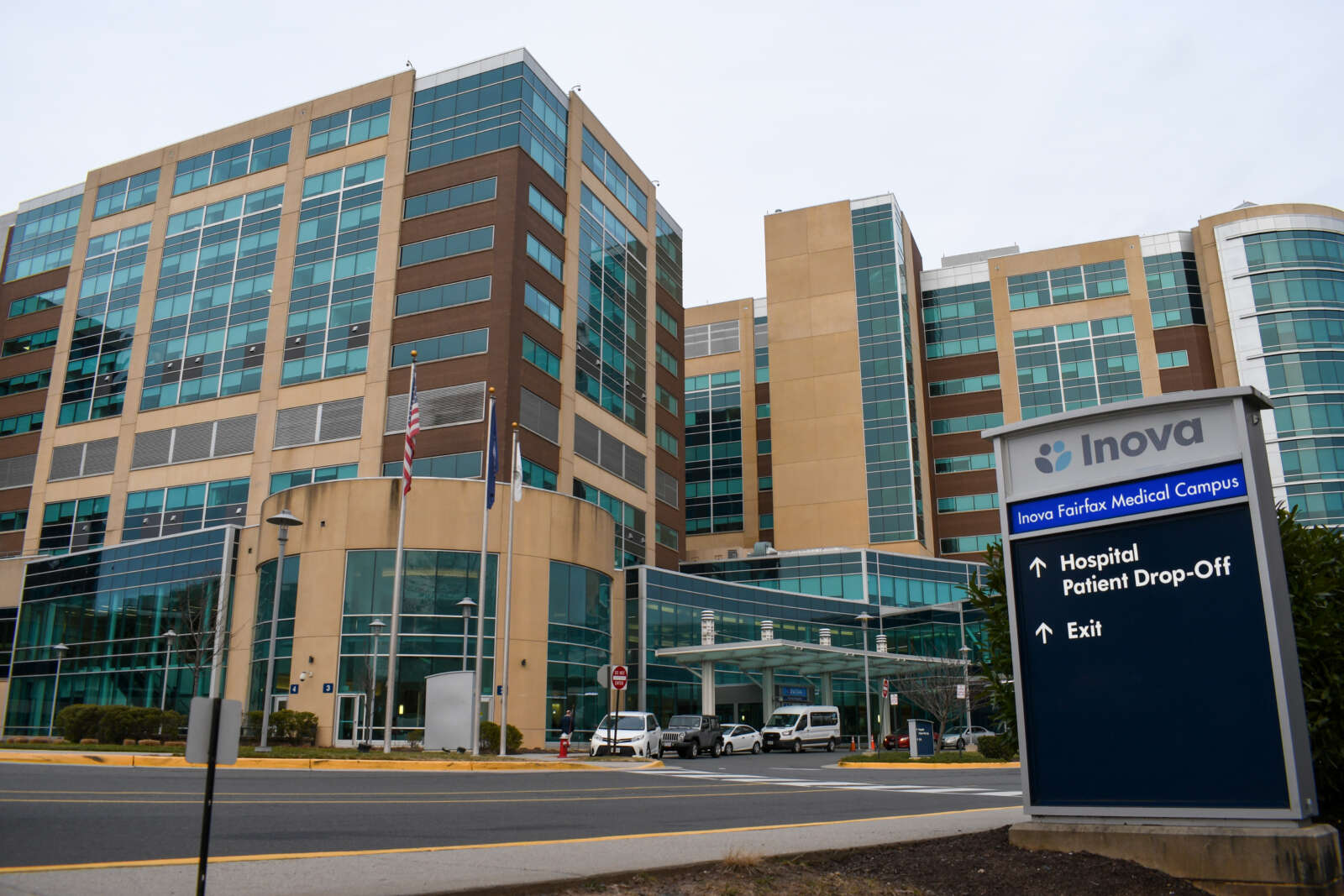
A spokesperson for Inova, which operates health care facilities across Northern Virginia, says it’s too early to “fully assess” the impacts of the Medicaid changes, but the Fairfax-based provider is committed to keeping its “community focused, non-profit mission at the center” of its work.
Inova served 266,000 patients who were covered by Medicaid in 2024, according to media relations officer Tracy Connell.
“Inova will continue to provide world-class care to all in our community regardless of ability to pay,” Connell said in a statement to FFXnow. “We are expanding access to our services through our investment in new hospitals in Alexandria and Franconia-Springfield, as well as an expanded emergency room at Inova Fairfax Hospital. Inova’s focus firmly remains on meeting the unique needs of the communities we are privileged to serve.”
This story has been corrected to more accurately reflect the Congressional Budget Office’s estimate for how many more people would be uninsured under the federal reconciliation bill. The 14 million people initially stated included those affected by the expiring ACA enhanced tax credits.
