

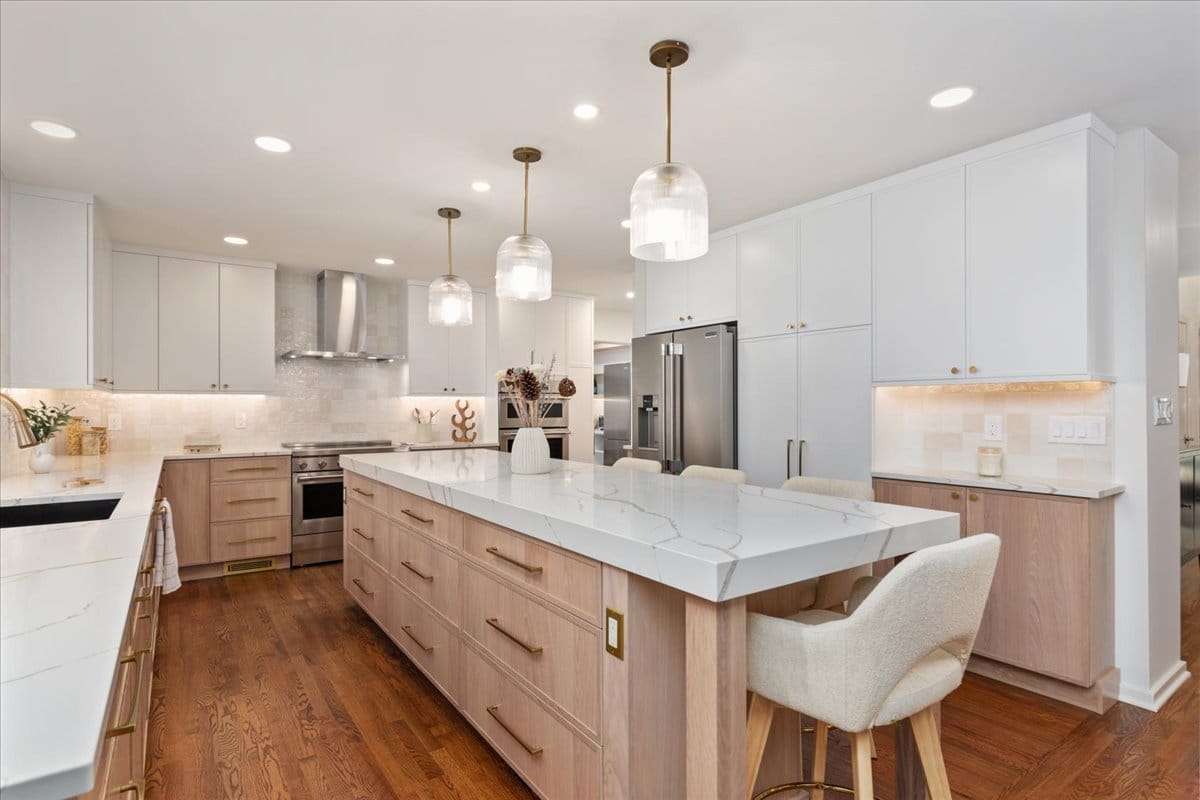
An organized kitchen doesn’t happen by accident. It’s not just about drawer dividers or pantry bins. It starts much earlier with thoughtful design decisions that support how you actually live.
At Synergy Design & Construction, we’ve found that the most functional kitchens aren’t necessarily the largest. They’re the ones that were designed intentionally. When layout, storage, and daily habits are considered together, the result is a space that feels calmer, works harder, and stays organized long after the kitchen remodel is complete.
Here are five ways to design a kitchen that supports lasting organization.
1. Start With How You Actually Use the Space
Before selecting cabinets or finishes, take a step back and evaluate how your kitchen functions today.
- Where does clutter naturally collect?
- Which items are used daily, and which are rarely touched?
- At what point during the day does the kitchen feel like a pain point?
- Do multiple people cook at once?
- Is homework happening on the island while dinner is being prepared?
Organization improves dramatically when the layout reflects real-life patterns. A well-designed kitchen considers traffic flow, prep zones, cleanup zones, and storage access. For example, placing dish storage near the dishwasher shortens cleanup time and reduces friction. Locating spices near the cooktop makes meal preparation smoother.
When a kitchen is designed around daily habits instead of idealized images, it becomes easier to maintain order.
2. Design Storage for Function, Not Just Capacity
More cabinets don’t automatically mean better organization. The key is smarter storage.
Deep drawers for pots and pans are often more practical than lower cabinets with fixed shelves. Pull-out trays allow you to see and access items without digging. Vertical dividers can keep baking sheets upright and easy to grab. Dedicated pantry storage helps eliminate overcrowded upper cabinets. It’s not just about maximizing square footage, it’s about making everything easily accessible without feeling overcrowded.
A common frustration homeowners face is feeling like they have plenty of cabinets, but they still struggle when it comes to organization. Often, kitchens are designed around standard cabinet configurations rather than the homeowner’s real inventory. Stand mixers end up too tall for upper cabinets. Large platters don’t fit into narrow shelves. Small appliances take over countertops because there’s nowhere practical to store them.
A kitchen remodel is the perfect time to evaluate the specific tools and appliances a homeowner uses regularly and design storage around them, rather than assuming one-size-fits-all cabinetry will work.
3. Minimize Countertop Clutter Through Built-In Solutions
Countertops are often where organization breaks down. Mail piles up. Small appliances stay out. Charging cords accumulate.
The solution isn’t simply clearing the counter, it’s designing a place for everything to go.
Incorporating appliance garages, charging drawers, built-in trash and recycling pull-outs, or hidden coffee stations can dramatically reduce visual clutter. Even adding a shallow drawer specifically for daily essentials or incorporating an intentional drop zone prevents surfaces from becoming catch-all spaces.
An organized kitchen feels calm because surfaces remain open and usable. When design provides intentional homes for everyday items, cleanup becomes quicker and more sustainable.
4. Create Zones That Support Efficiency
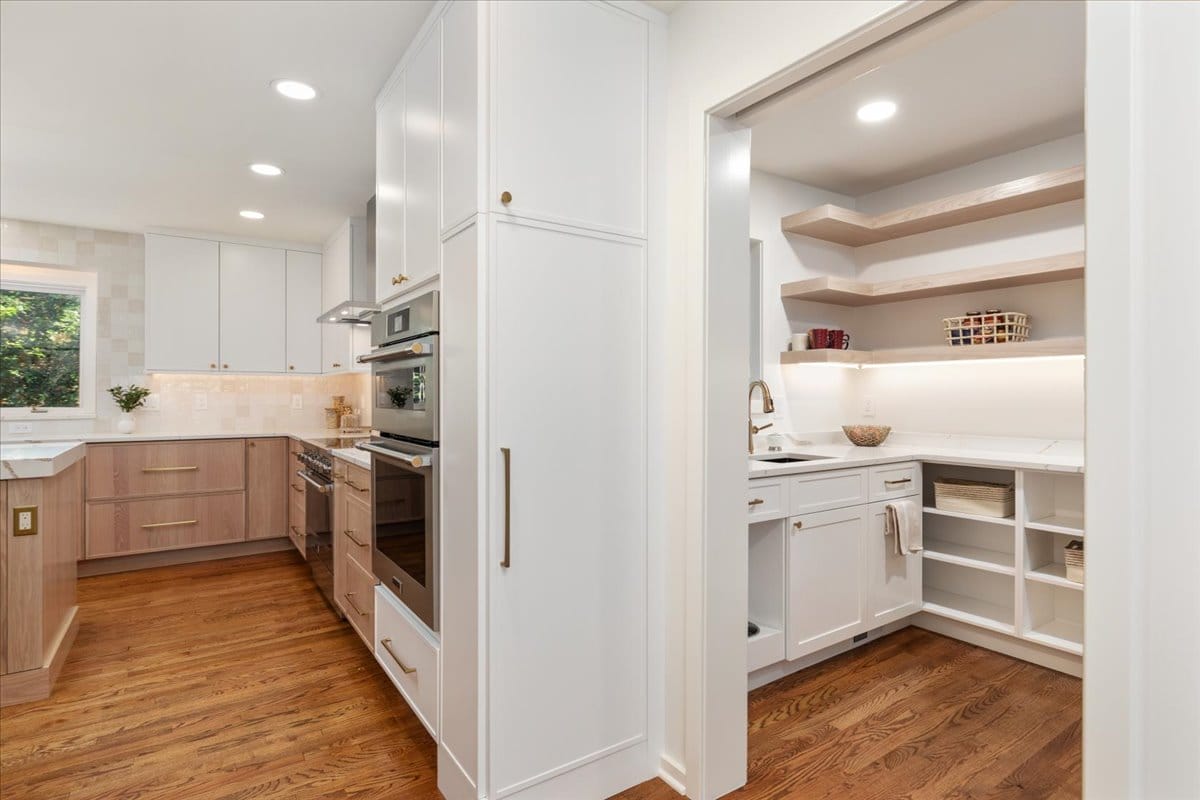
One of the most effective ways to maintain organization is to design the kitchen in functional zones.
Rather than scattering related items throughout the room, grouping them together creates intuitive systems. Consider:
- A baking zone with mixing bowls, measuring tools, and dry goods stored together
- A prep zone near the sink and trash
- A beverage station separate from the main cooking area
- A dish zone near the dishwasher and cabinets
Zoning reduces unnecessary movement and keeps items from migrating across the kitchen.
This approach is especially important in open-concept homes common throughout Reston and Northern Virginia, where kitchens serve as gathering spaces. When zones are clearly defined, multiple people can use the kitchen at the same time without creating chaos. Good zoning supports both organization and connection.
5. Design for Long-Term Simplicity, Not Just Aesthetic Appeal
Beautiful finishes are important. But lasting organization depends more on practicality than trends.
For example, overly ornate cabinet interiors or narrow shelving can make storage harder to use efficiently. Islands that prioritize seating without considering storage may limit functionality. Decorative open shelving, while attractive, requires consistent styling and maintenance.
When planning a remodel, it’s important to ask: Will this design choice make my life easier in five years?
Durable materials, flexible storage systems, and adaptable layouts help kitchens stay organized as families grow and routines shift. A well-designed kitchen evolves with you for years to come instead of working against you.
Understanding the Benefits of an Organized Kitchen
An organized kitchen isn’t just visually appealing. It reduces daily friction. When everything has a place, mornings move faster. Cleanup takes less effort. Cooking feels more enjoyable. Even hosting becomes less overwhelming.
We often see homeowners tolerate disorganization for years, assuming it’s simply part of living in an older home. In reality, many frustrations stem from design limitations rather than personal habits. Remodeling provides an opportunity to correct those limitations. When design and daily life align, organization becomes natural rather than forced.
Remodeling Your Reston, Virginia, Kitchen
Designing a kitchen that stays organized requires more than purchasing storage accessories. It requires thoughtful planning ahead of time, honest evaluation of habits, and design decisions rooted in function.
By starting with real-life patterns, customizing storage, minimizing countertop clutter, creating purposeful zones, and prioritizing long-term usability, homeowners can create kitchens that feel both beautiful and balanced.
And when your kitchen works well, your entire home tends to feel more at ease. Ready to redesign your forever kitchen? Visit www.RenovateHappy.com to get started!
