

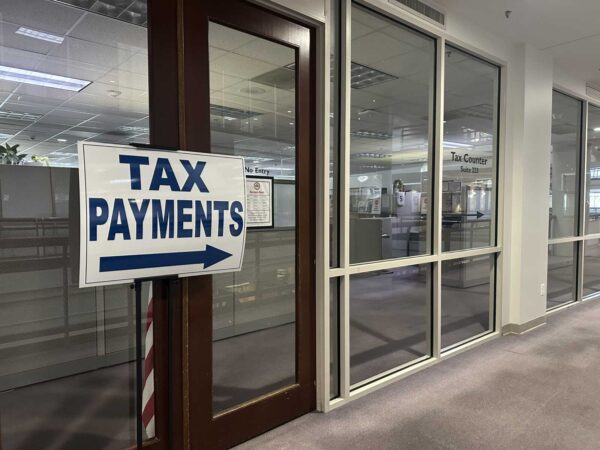
The Fairfax County Board of Supervisors on Tuesday (May 19) took the first step toward considering giving property owners tax rebates in years when the local government shows a significant budget surplus.
In a unanimous vote, supervisors agreed to a request by Springfield District Supervisor Pat Herrity, directing staff to begin looking at the technical and cost implications of such a proposal.
In some fiscal years, the county government ends up with significantly more cash in its coffers than anticipated. In those cases, “it would be a shame to have the funding available” but not return it to property owners, Herrity said.
The idea is not new, but in past years, “the complexity issue” has prevented its pursuit, Board Chair Jeff McKay said.
With advances in technology, “the ease of doing that is moving in the right direction,” said McKay.
Both McKay and Herrity said any future action would depend on the costs of managing a rebate program being reasonable. For now, the chairman said he has “no objection to having a conversation.”
Herrity asked staff to identify Virginia jurisdictions where a rebate policy is in place or under consideration. He pointed to the Henrico and Louisa counties and the city of Richmond.
Louisa County leaders authorized a 3.3% rebate in early 2025 that was applied automatically to tax bills sent out later that year.
Richmond officials mailed out rebate checks to property owners in 2025, although the process was not without some hiccups.
The state government also embraces the tax-rebate concept when it comes to income taxes. Virginia localities do not levy local income taxes, but rely on property taxes for a significant share of their revenue.
Under state law, localities cannot run a deficit, so each year’s budgeting incorporates a cash cushion so the budget balance doesn’t run into negative territory. Typically, funds left over at the end of a fiscal year are either deposited in reserve funds or spent on unbudgeted expenses.
Information on the pros and cons of a rebate program for Fairfax would be presented at a future meeting of supervisors’ Budget Policy Committee.
While Hunter Mill District Supervisor Walter Alcorn voted in support of moving forward, he didn’t think tax rebates were the best tool available for addressing accumulated surplus revenue.
“This comes across to me as kind of gimmicky,” Alcorn said. He termed it “a solution seeking a problem.”
If the county has surplus cash, it can always reduce the real estate tax rate the following year to help property owners, Alcorn said.
Earlier this month, supervisors adopted the fiscal year 2027 spending plan and reduced the tax rate by one-quarter of a penny, to $1.12 per $100 assessed valuation.
The tax rate cut was enabled by staff adjustments that left the Board of Supervisors with around $23 million in available general funds for FY 2027. The board also used unallocated funds to increase funding for affordable housing and restore several proposed budget cuts, though reductions affecting school crossing guards, Fairfax Connector bus service and some other programs were ultimately approved.
