

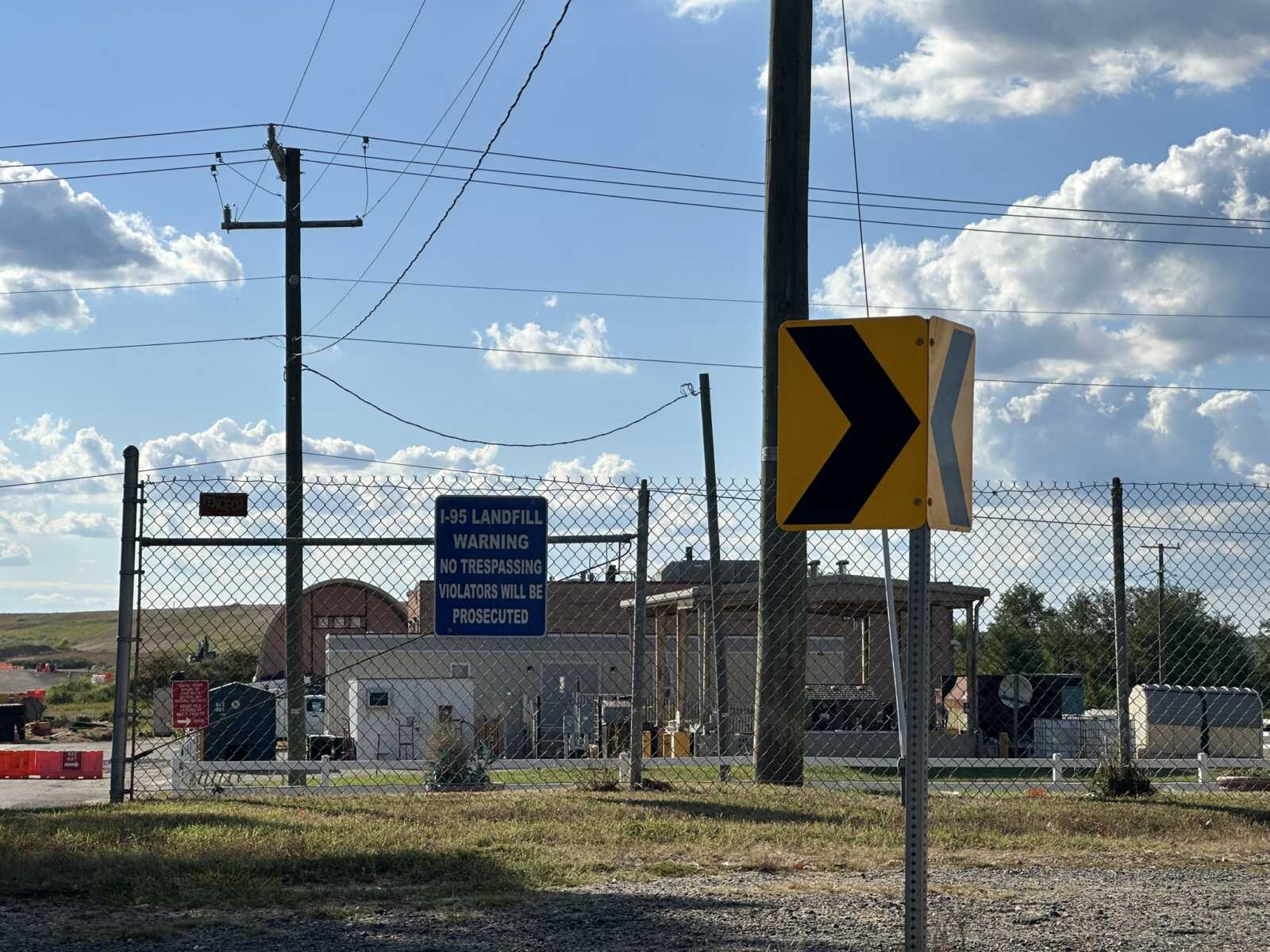
Land in Lorton that once served as a waste disposal site has been transformed into Fairfax County’s largest solar power project so far.
After about a year of construction, a completed 5-megawatt solar array now sits on 37 acres in a closed portion of the I-95 Landfill Complex at 9850 Furnace Road, the Fairfax County Department of Public Works and Environmental Services (DPWES) announced Wednesday (May 19).
The county and project developer Madison Energy Infrastructure will celebrate the milestone with a ribbon-cutting ceremony open to the public next Thursday, May 28 at 10 a.m.
“This ribbon cutting event is more than a ceremonial moment — it’s proof that climate action and fiscal responsibility can go hand in hand,” Fairfax County Office of Environmental and Energy Coordination (OEEC) Director John Morrill said. “By turning a capped landfill into a productive solar array, we’re cutting energy costs for taxpayers, strengthening the resilience of our energy supply, and creating a model for future clean energy projects on county land.”
Previously owned by D.C., the I-95 Landfill Complex stopped accepting municipal waste once Fairfax County acquired it in 1995. It now primarily serves as a disposal site for ash generated by a waste-to-energy facility operated by Reworld, though it also offers recycling and disposal services to residential and commercial customers.
Fairfax County had targeted the closed portion of the landfill as a potential solar panel site since at least 2017, but the project was slowed by a need for the Virginia General Assembly’s approval — finally granted in 2020 by the Solar Freedom Act — and vendor complications.
The Board of Supervisors unanimously voted in September 2022 to lease approximately 40 acres of the county-owned landfill to Sun Tribe Solar, one of three companies that the county had partnered with in 2019 for a solar power purchase agreement initiative expected to bring arrays to more than 100 municipal, park and school facilities.
While the I-95 landfill project ended up being undertaken by a different vendor, the arrangement remained essentially the same. Under a power purchase agreement, Madison Energy is responsible for building, operating and maintaining the solar array, while the county pays for the electricity produced by the site over the deal’s 30-year term.
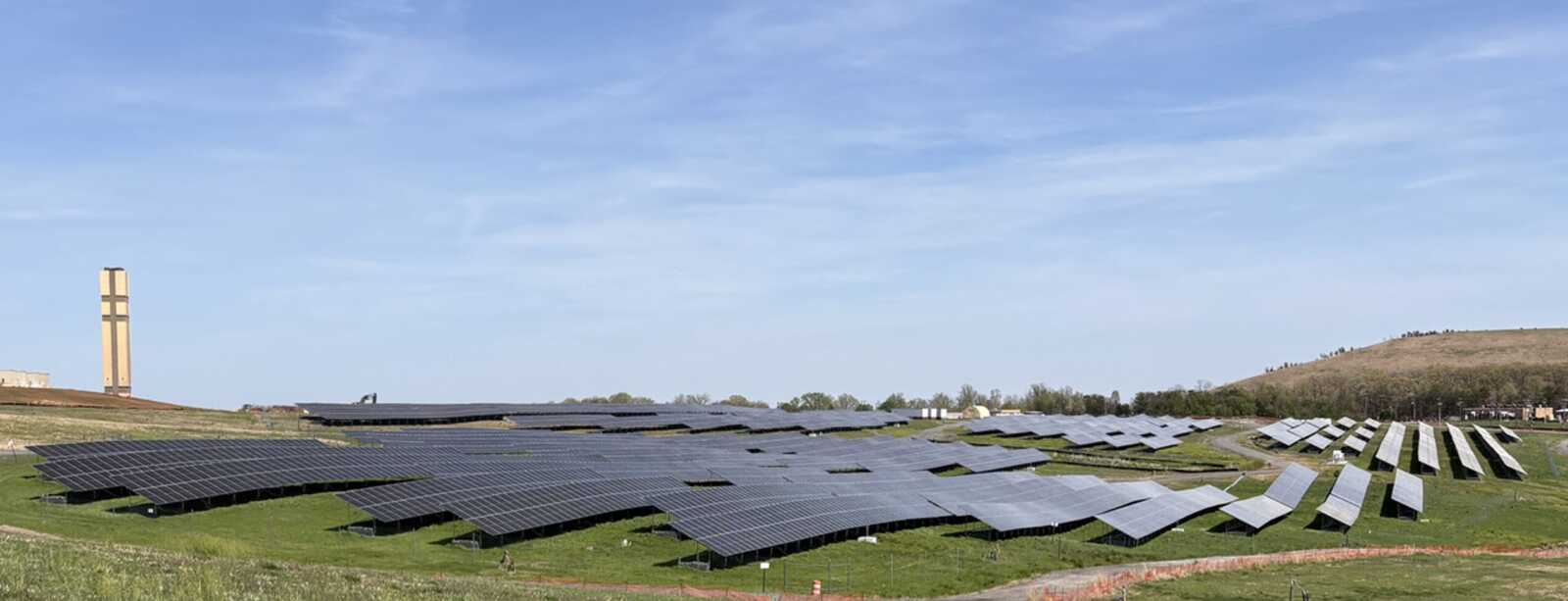
According to DPWES, the array will generate enough electricity annually to power approximately 1,000 homes and reduce carbon emissions by an estimated 136,000 metric tons. The county anticipates saving $12 million in energy costs over the next 30 years.
“This solar array in combination with our ongoing methane gas capture, bird habitat management, rooftop solar, and other site improvements clearly demonstrate our commitment to creating and preserving a sustainable Fairfax County,” DPWES Director Christopher Herrington said.
The county captures methane gas produced by the closed landfill and converts it to energy. Solar arrays have also been installed at the I-95 Landfill Complex’s administrative building, the I-66 Transfer Station on West Ox Road and the Newington Solid Waste Facility.
According to the 2025 Climate Action Progress report released by OEEC earlier this month, the county now has rooftop solar panels operating on 13 of its buildings, generating 1.8 megawatts of electricity.
Even without counting the newly completed I-95 array, there are over 5,600 solar installations on public and private land across Fairfax with a collective capacity of 49 megawatts — surpassing the goal of 46 megawatts by 2030 set by the Community-Wide Energy and Climate Action Plan adopted by the Board of Supervisors in 2021.
Coupled with energy efficiency improvements, the increased use of electric vehicles and other initiatives, the expansion of solar energy has helped reduce greenhouse gas emissions in the county by 28% or 4.2 million metric tons since 2005, though emission levels rose slightly from 2020 to 2023 as vehicle travel bounced back from the first year of the COVID-19 pandemic.
In a press release highlighting the progress report’s release, Morrill said the county is continuing to work toward its climate and sustainability goals “despite a challenging policy and funding environment at the federal and state levels.”
“The progress we’ve made is the product of strong partnerships across county agencies and alongside community organizations, businesses, and residents,” Morrill said.
