

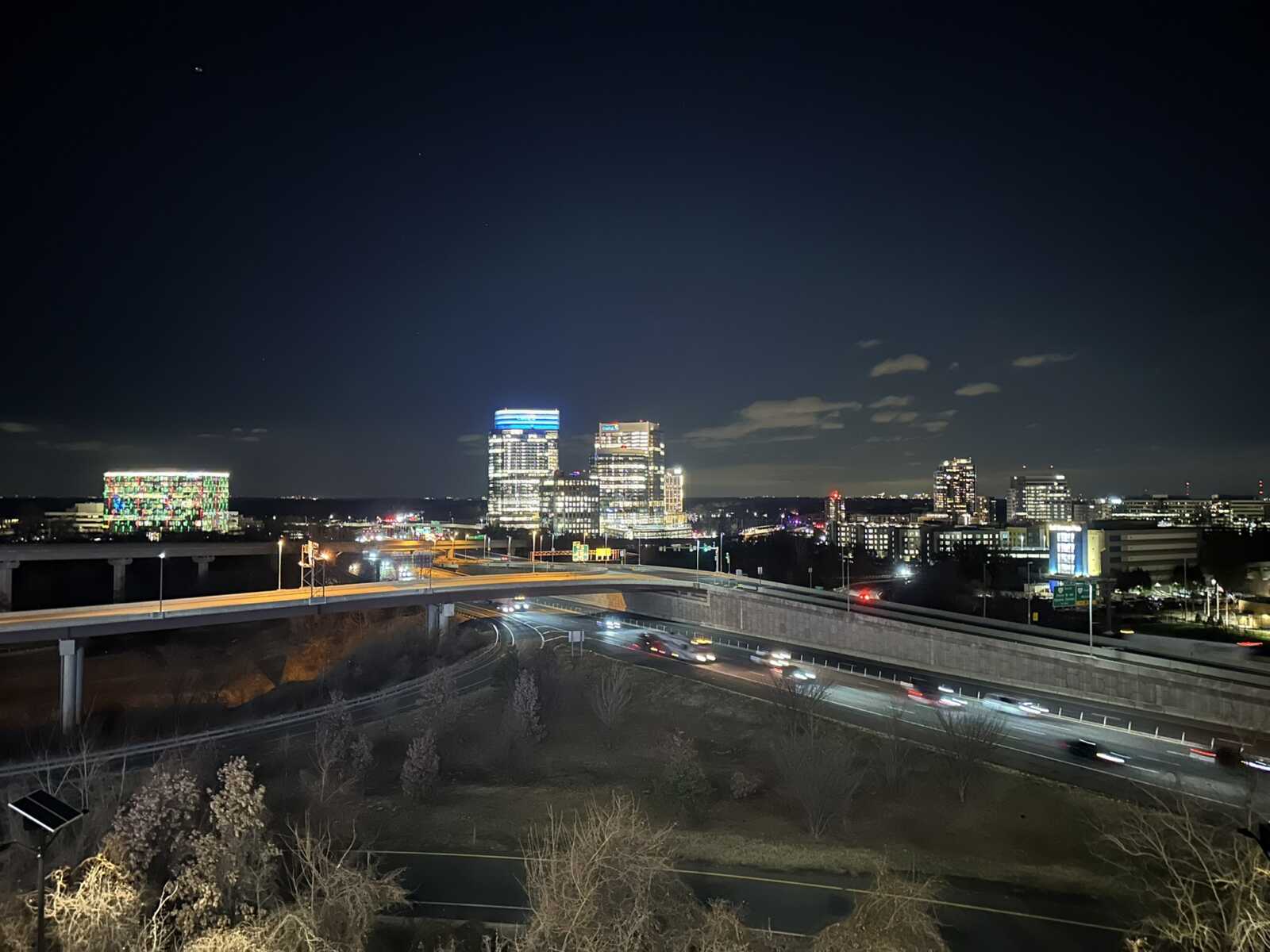
Fairfax County leaders are ready to drill down on what it would take to establish a conference center in Tysons.
At Chairman Jeff McKay’s request, the Board of Supervisors directed County Executive Bryan Hill and his staff on June 23 to work with the Fairfax County Economic Development Authority, Visit Fairfax and other groups “to determine the feasibility of pursuing a conference center in Tysons.”
“This is not approving this,” McKay stressed when proposing the directive. “This is asking that we review the studies that have been done, look at the viability, and come back and have a discussion about this.”
According to McKay, county planners have viewed Tysons as an ideal “conference destination” since at least 1984 — a perception further solidified by the 2010 Comprehensive Plan’s vision of the approximately 2,100-acre area as Fairfax County’s downtown.
After the comprehensive plan update in 2010, which was spurred by the impending arrival of Metro’s Silver Line, Visit Fairfax, the county’s tourism marketing organization, enlisted a consultant for a $70,000 feasibility study in 2011 that confirmed there would be demand for a conference center in Tysons, McKay said.
Though the county is home to a number of venues with meeting space, such as the JW Marriott Reston Station hotel and residences that opened last year, its largest conference option for years — the Sheraton Tysons Hotel — shuttered in April 2020, and the Dulles Expo Center in Chantilly, a key location for larger-scale events, has been replaced by an IKEA.
A market study commissioned by the Tysons Community Alliance (TCA) in 2023 attributed the local hotel industry’s sluggish recovery from the COVID-19 pandemic compared to other urbanized markets — specifically D.C., Rosslyn and Crystal City — in part to the lack of a convention center capable of hosting large events.
The TCA also identified the need to increase capacity for events and gatherings as a strategy for fostering a “vital economy” in its first Tysons Strategic Plan, released in December 2023.
Analysis supports a ‘mid-size’ conference center
According to McKay’s directive, the TCA completed a study last year that reaffirmed the 2011 feasibility study’s findings and recommended “a mid-size regional conference facility” complemented by a full-service hotel. The facility would be “much smaller” than existing convention centers like the Walter E. Washington Convention Center in D.C. and Gaylord National Resort and Convention Center at National Harbor in Maryland.
Attempting to compete with those venues — which boast 703,000 and 540,000 square feet of space, respectively — would be “unsustainable,” Visit Fairfax CEO Barry Biggar told the Fairfax County Planning Commission in February, suggesting that a conference center around 140,000 square feet in size would be more reasonable.
That would be much bigger than the “destination” convention center that the developer Comstock Companies has floated as part of its proposed casino-anchored entertainment district in Tysons. A lobbying flyer circulated among state lawmakers during the Virginia General Assembly’s 2025 session called for a 50,000-square-foot convention center, along with a 600-room hotel, 6,000-seat performing arts venue, housing and a casino.
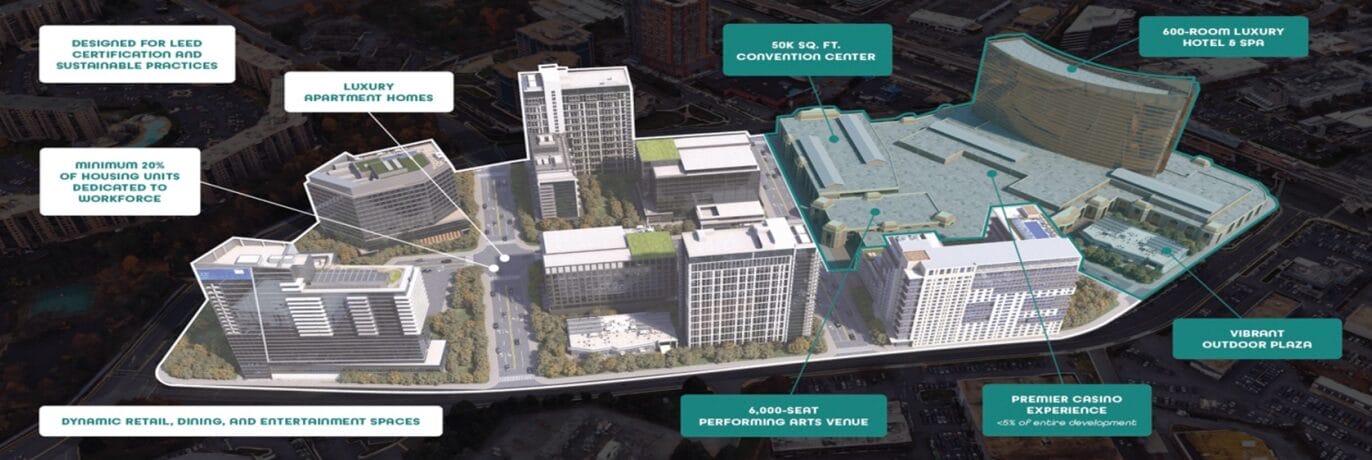
Whether that development will materialize remains to be seen, as legislation allowing Fairfax County to host a casino has repeatedly fallen short of approval. This past spring, a bill was vetoed by Gov. Abigail Spanberger in response to vocal local opposition, including from members of the Board of Supervisors.
A TCA spokesperson confirmed that the nonprofit community development organization conducted an analysis “that evaluated the potential for a flexible, mid-sized convention, conference, and events facility in Tysons” and found that it could have a “promising economic impact.”
Time right to evaluate conference center concept, board says
At the June 23 board meeting, McKay contended that the Tysons area has now “matured” enough in its development that it makes sense for the county to revisit its past studies and consider potential “models that might produce” the desired conference center.
“Having a conference center in Tysons is consistent with the overall vision for the area that calls for a symbiotic mix of mutually supportive uses,” McKay said in his board matter. “Furthermore, the presence of Metro and the significant amount of destination retail add to the viability of a conference center in Tysons.”
The 2011 consultant study and the TCA study both warned that conference centers often “require significant financial support,” but any public investment could be offset by economic gains through increased visitor spending, tax revenue, new jobs and worker earnings.
Providence District Supervisor Dalia Palchik, who represents most of Tysons, expressed support for the requested review.
“I would also just request [or] recommend that as the county executive goes back to Visit Fairfax and the EDA … we look at potential state partnerships as well as local, knowing that this is the economic engine of the state and a priority for all of Virginia,” she said.
Hunter Mill District Supervisor Walter Alcorn, whose district includes part of Tysons west of Route 7, also thanked McKay for proposing a review.
“This is, I think, very much an appropriate time to take a hard look at this and see where there might be an opportunity,” Alcorn said before the unanimous vote.
The board instructed Hill to report his findings to its Economic Initiatives Committee by the end of this year. The committee’s next scheduled meeting isn’t until Sept. 22.
In a statement to FFXnow, TCA’s interim CEO, Drew Sunderland, said the alliance is “pleased to see Fairfax County advancing additional analysis of a flexible convention, conference, and events facility in Tysons.”
“TCA’s analysis found promising economic impact potential, and we’re encouraged to see the County building on that work,” Sunderland said. “This concept reflects the longstanding vision in the Tysons Comprehensive Plan and was also identified by TCA stakeholders as a key opportunity to support Tysons’ continued evolution as a regional destination.”
