

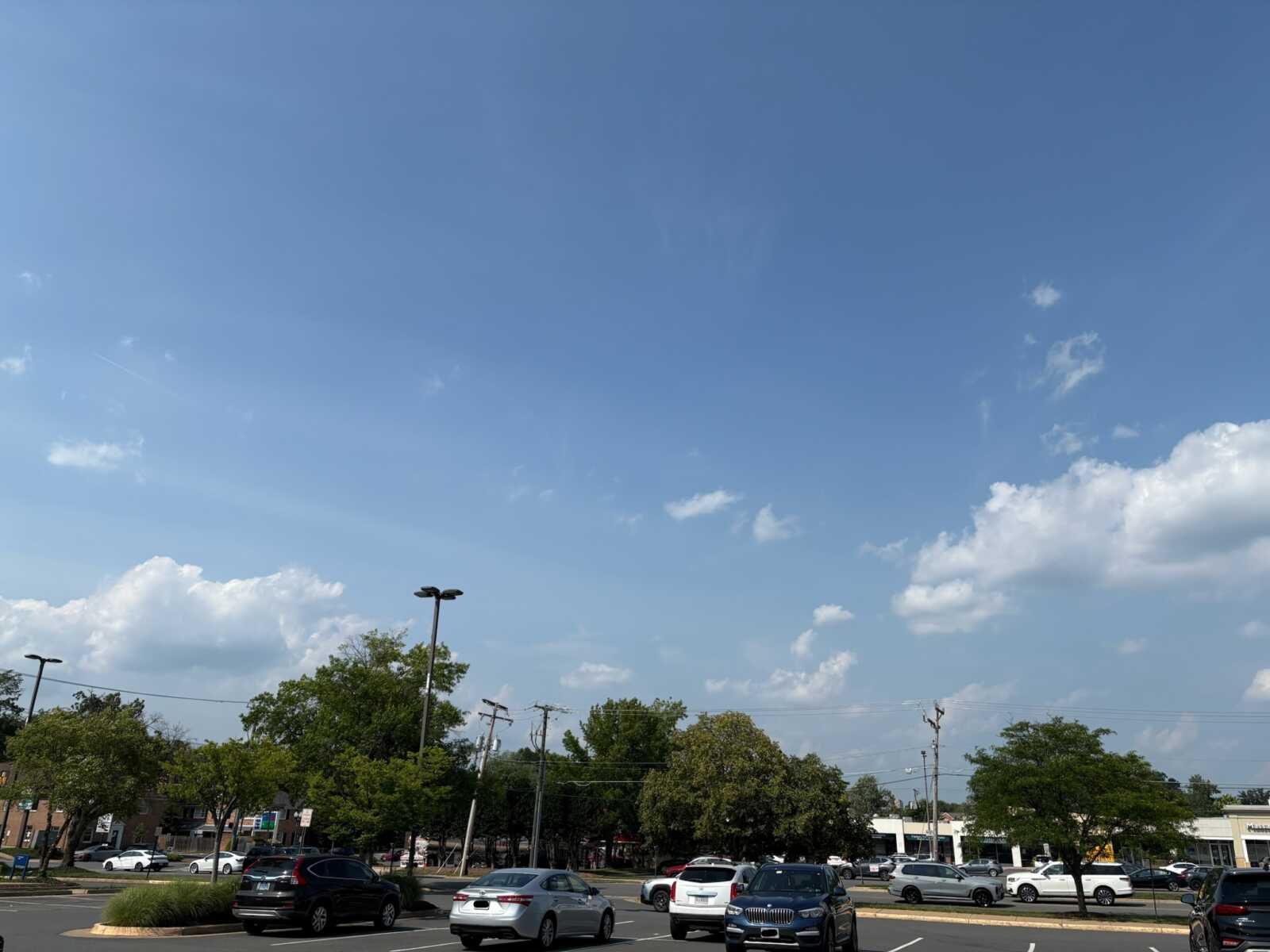
Fairfax County hasn’t yet seen clear evidence of the wildfires raging in Canada and Minnesota, but that could change tomorrow (Friday), as smoke continues wafting toward the East Coast.
The Virginia Department of Environmental Quality (DEQ) and Metropolitan Washington Council of Governments (COG) are both forecasting Code Red air quality tomorrow for Northern Virginia and the greater D.C. region, meaning conditions will be unhealthy for everyone.
“Residents should reduce outdoor activities, especially children, older adults, people with respiratory conditions such as asthma and chronic obstructive pulmonary disease (COPD), and people with other chronic conditions including heart disease and diabetes,” Fairfax County said in a blog post announcing the alert.
Due to wildfires in Canada, a Code Red Air Quality alert has been issued for Friday, July 17, which means air quality is unhealthy for everyone.
Protect your health with these tips: https://fairfaxcountyemergency.wpcomstaging.com/2026/07/16/code-red-air-quality-day-for-friday-july-17/
— Fairfax County Government (@fairfaxcounty.gov) July 16, 2026 at 4:25 PM
In addition to limiting outdoor activities, the Fairfax County Health Department says residents should close windows and use air purifiers. More safety tips from the county:
- Avoid strenuous outdoor activities.
- Consider moving outdoor and physical activities indoors or rescheduling them. Keep outdoor activities such as dog walking short and take frequent breaks.
- Use air conditioning and/or air purifiers at home and change filters often.
- Keep vehicle and home windows and doors shut.
- Make sure prescribed breathing aids, such as inhalers and oxygen, are accessible and working correctly.
- Seek medical attention for urgent symptoms such as difficulty breathing, chest tightness, or irregular heartbeat.
- Consider wearing a well-fitting face mask outside if you have a respiratory condition.
- Outdoor workers should consider alternative schedules and take frequent breaks.
Driven by an expected surge in “fine particle pollution,” per the alert from COG, a Code Red is a step up from the Code Orange air quality alert issued today, which signaled that the air could be unhealthy for sensitive groups, including children and people with respiratory difficulties.
The last time Fairfax County faced a Code Red alert was in June 2023, when another season of Canadian wildfires brought an increase in particulate matter and cast the area in a smoggy, slightly orange haze.
Conditions could be even worse tomorrow in parts of Maryland, where authorities are forecasting Code Purple air quality. According to Capital Weather, some smoke began entering the D.C. region on Tuesday (July 15), but it stayed high enough to not have a noticeable impact on the air quality on the ground.
Officials advise residents to stay inside
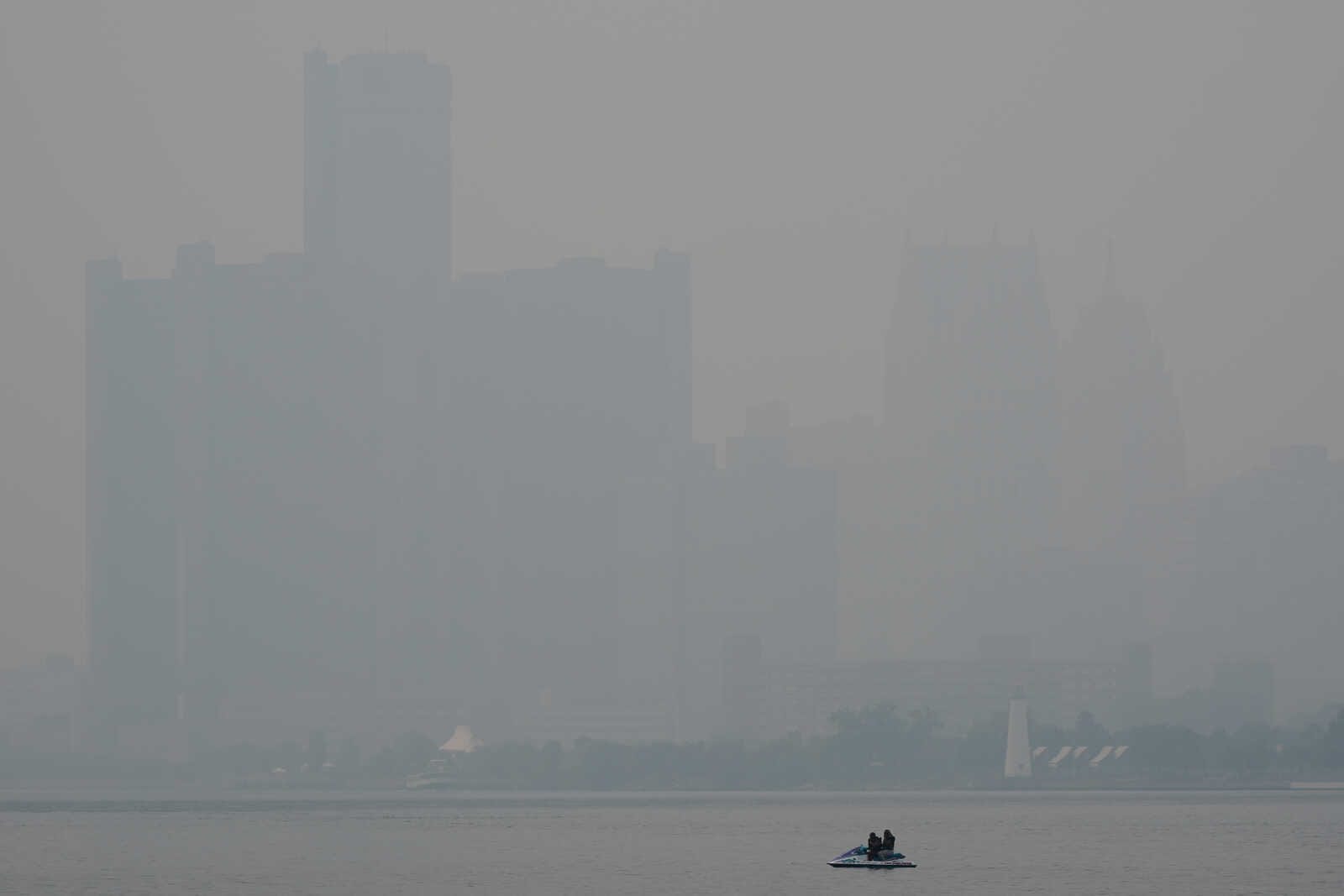
In a preview of what local residents might see tomorrow, wildfire smoke clouded other parts of the U.S. today, particularly in the Great Lakes region and more northern parts of the East Coast. Some cities grappled with reduced visibility and issued warnings for people to stay inside and wear masks.
The smoke is coming from fires that are burning primarily in Canada but also in northern Minnesota. A lingering high pressure system has trapped the smoke close to the ground, said Steven Freitag, a National Weather Service meteorologist in Detroit, where air quality was among the worst in the world for major cities.
“Sure enough, it arrived in force here and it’s really pretty extreme levels,” said Freitag, who noted that visibility in some areas was reduced to a half mile.
“It’s scary,” Omar Mitchell, 50, said as he looked he looked to the sky. He wore a mask while walking to his restaurant in Detroit. “You don’t know necessarily what the side effects may be. That’s days or months later.”
Microscopic particles can lodge deep in the lungs and enter the bloodstream, leading to heart and lung problems and contributing to other long-term health issues.
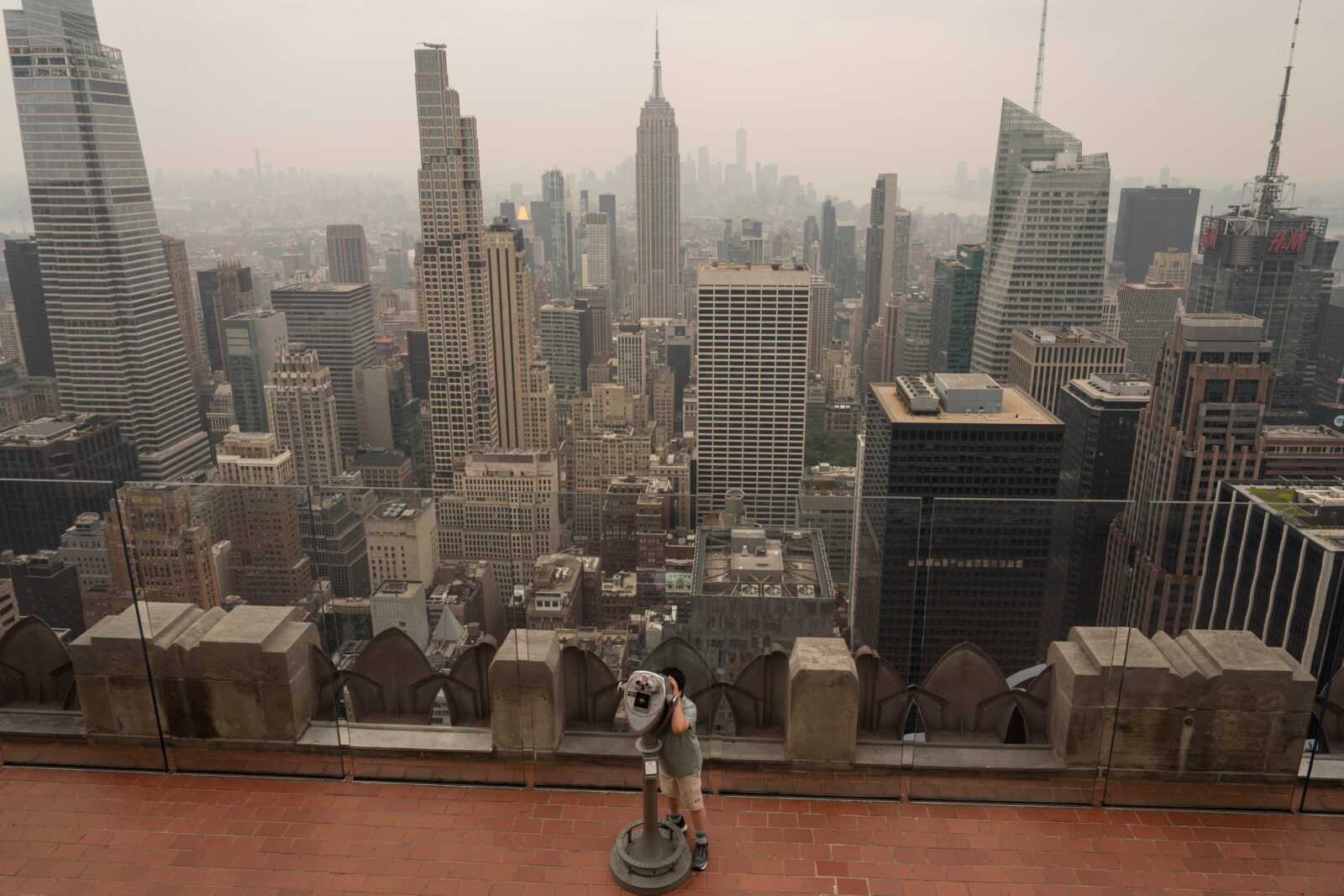
In the New York City area, a thick haze tinged the morning sky in orange and yellow and partly obscured Manhattan’s skyline.
City officials opened cooling centers as health officials urged New Yorkers to limit strenuous and prolonged outdoor activities. The city’s schools, parks and other agencies moved activities indoors, rescheduled events and adjusted operations. State officials distributed tens of thousands of face masks at transit hubs and other major locations.
Minnesota fires are spreading
In Minnesota, forest rangers on Thursday combed a remote wilderness area for anyone who might still be there days after wildfires led to its closure.
Officials closed the Boundary Waters along the U.S.-Canada border on Tuesday. At the time, 6,000 to 10,000 people were inside, but Superior National Forest staff estimated Wednesday that they’d reached 90% of them, said Karen Harrison, a spokesperson for state and federal agencies involved in the response.
She said Thursday that smoke is making it difficult for helicopters to fly, and fires are spreading despite firefighting efforts.
“There will be fire on the landscape until fall, and some fire will be burning until snow cover,” Harrison said.
The Royal Canadian Air Force successfully evacuated 11 Minnesota teenagers and four staff members Wednesday from wildfires in an Ontario provincial park about 175 miles (282 kilometers) north of the Minnesota border.

