Countywide

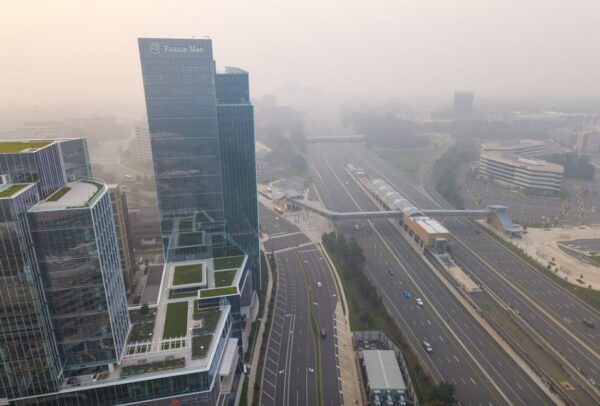
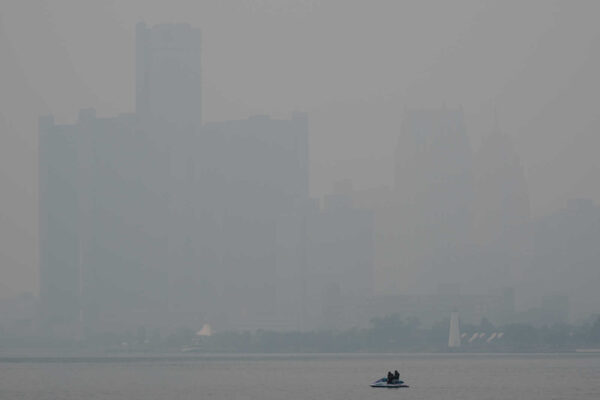
Hazardous air quality levels due to wildfire smoke have been reported in the D.C. region, prompting cancellations of outdoor activities across Fairfax County.

Early this morning (Friday), the Metropolitan Washington Council of Governments (COG) issued a Code Purple Air Quality Advisory for the region after conditions considered “very unhealthy” for everyone were recorded in D.C., Northern Virginia and parts of suburban Maryland by 9 a.m.


Countywide

Fairfax County hasn’t yet seen clear evidence of the wildfires raging in Canada and Minnesota, but that could change tomorrow (Friday), as smoke continues wafting toward the East Coast.

The Virginia Department of Environmental Quality (DEQ) and Metropolitan Washington Council of Governments (COG) are both forecasting Code Red air quality tomorrow for Northern Virginia and the greater D.C. region, meaning conditions will be unhealthy for everyone.


Countywide

Fairfax County leaders are asking Gov. Abigail Spanberger to take into account the local area’s unique circumstances if a drought emergency needs to be declared in Virginia.

The Fairfax County Board of Supervisors on Tuesday (June 23) authorized Chairman Jeff McKay to send a letter to Spanberger, laying out concerns of local leaders and Fairfax Water officials.


News

Fairfax City has received funding for a study to identify potential safety improvements along heavily used but crash-prone Pickett Road.

The city was awarded $80,000 for the planned roadway safety audit by the National Capital Region Transportation Planning Board (TPB), which approved a total of $980,000 in grants last month for 12 different local transportation consulting projects in Virginia and Maryland.


Countywide

Despite a relatively stable year-over-year homelessness count in new data, Fairfax County’s level of those experiencing chronic homelessness ticked up more substantially between 2025 and 2026.

A total of 302 people were counted as chronically homeless in Fairfax County and the cities of Fairfax and Falls Church in this year’s Point-in-Time Survey, coordinated by the Metropolitan Washington Council of Governments (COG).


Countywide

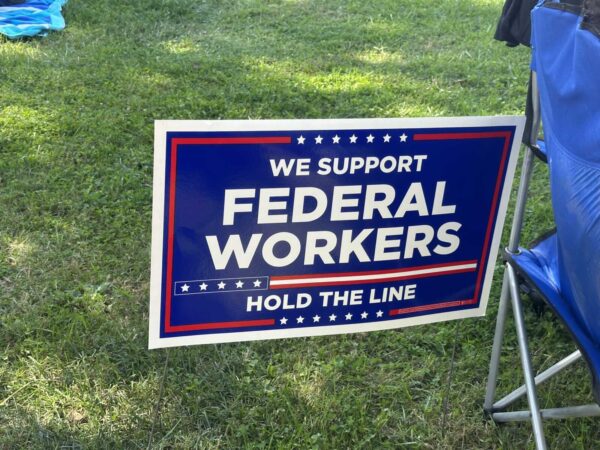
The Washington region lost over 62,000 federal jobs from January 2025 to January of this year, putting the region’s federal workforce at its lowest figures since 1990, according to a new Metropolitan Washington Council of Governments analysis.

The D.C. region’s 16.5% dip in federal workforce was topped only by nearby Baltimore, which shed 20.5% of its federal jobs over the same time frame. The New York statistical area lost 7.4% of its federal jobs, and Philadelphia dipped 10.1%.


Countywide

Data centers present both opportunities and challenges, and at a recent regional meeting, local leaders were urged to become acquainted with both, regardless of whether their jurisdictions are directly impacted.

“Don’t ever have a conversation of ‘all-good’ or ‘all-bad’ — there are a lot of nuances,” Loudoun County Board of Supervisors Chair Phyllis Randall said at a March 11 meeting of the Metropolitan Washington Council of Governments (COG).


News

The City of Fairfax will have to look for other funding means to add a new sidewalk after it missed out on potential financing from the regional Transportation Planning Board.

The city had applied for $3.25 million in funding to construct a sidewalk on Norman Avenue between the Chain Bridge Road Service Road and Hill Street. The funding would have covered a significant part of the project’s $10.8 million estimated cost.


Countywide

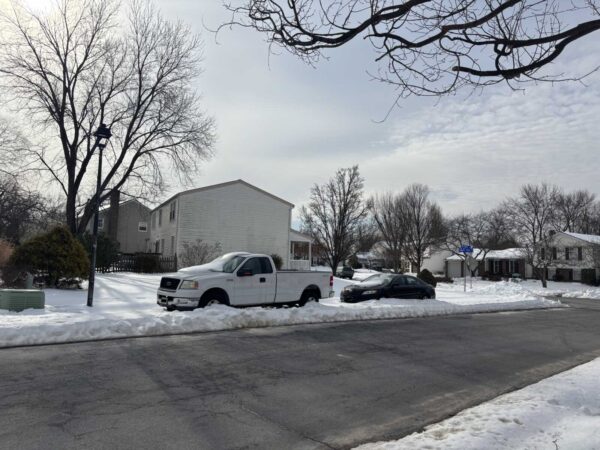
Fairfax County Public Schools resumed regular classes on Monday (Feb. 9) for the first time since a double whammy of snow and ice hit the D.C. region in late January, but many students still encounter blocked sidewalks and intersections on the way to their school or bus stop.

That was the case earlier this week in the Franklin Farm neighborhood near Herndon, where sidewalks around a school bus stop at Old Dairy Road and Tyburn Tree Court remained stubbornly covered in ice.


Countywide

Lower-income Fairfax County residents rely more on their own vehicles to get to and from work, and are less likely to be able to telework throughout the week, than those at the top of the income spectrum.

Though not necessarily surprising, the data from the 164-page 2025 State of the Commute report recently issued by the Metropolitan Washington Council of Governments (COG) does have public policy implications.


View More Stories