

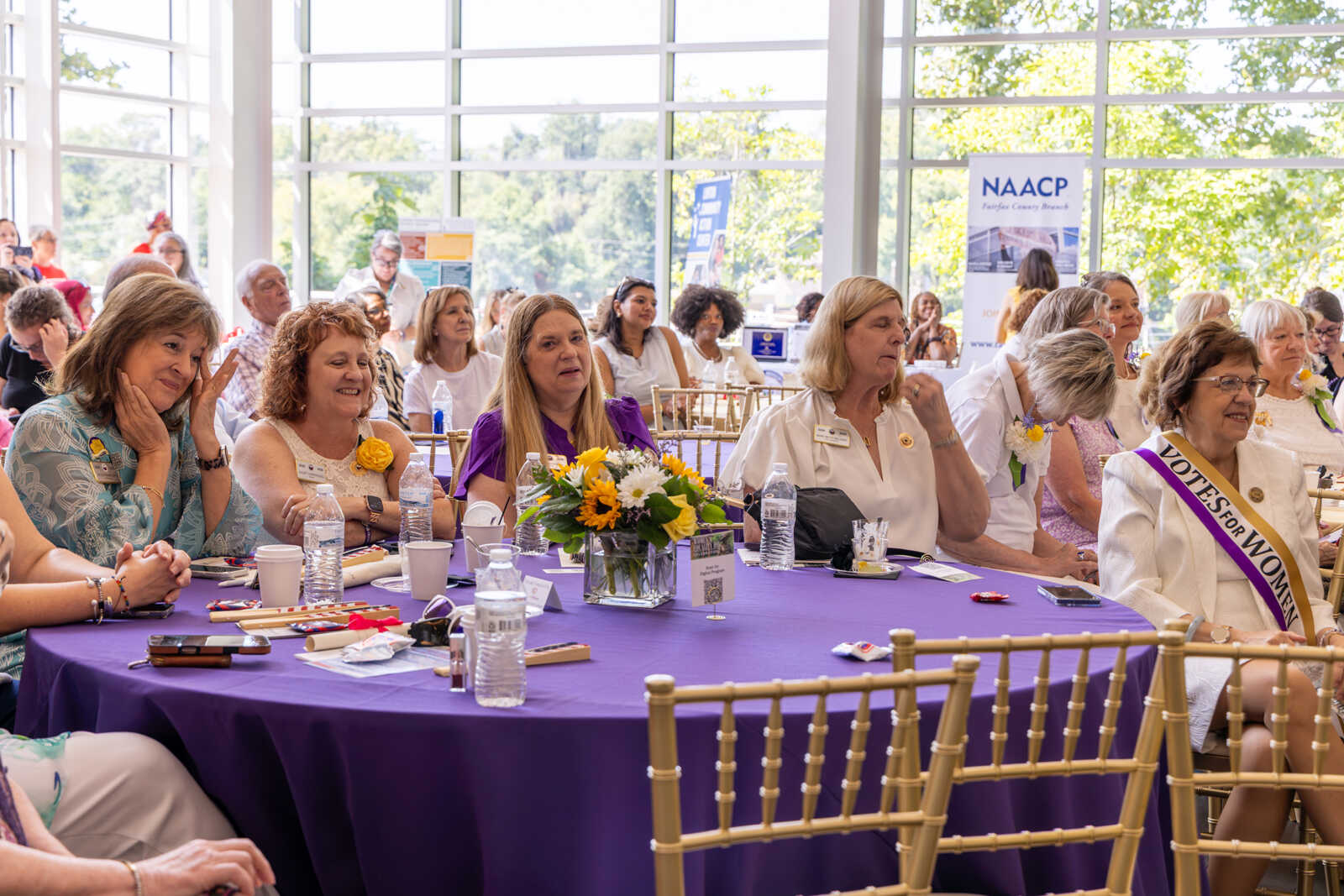
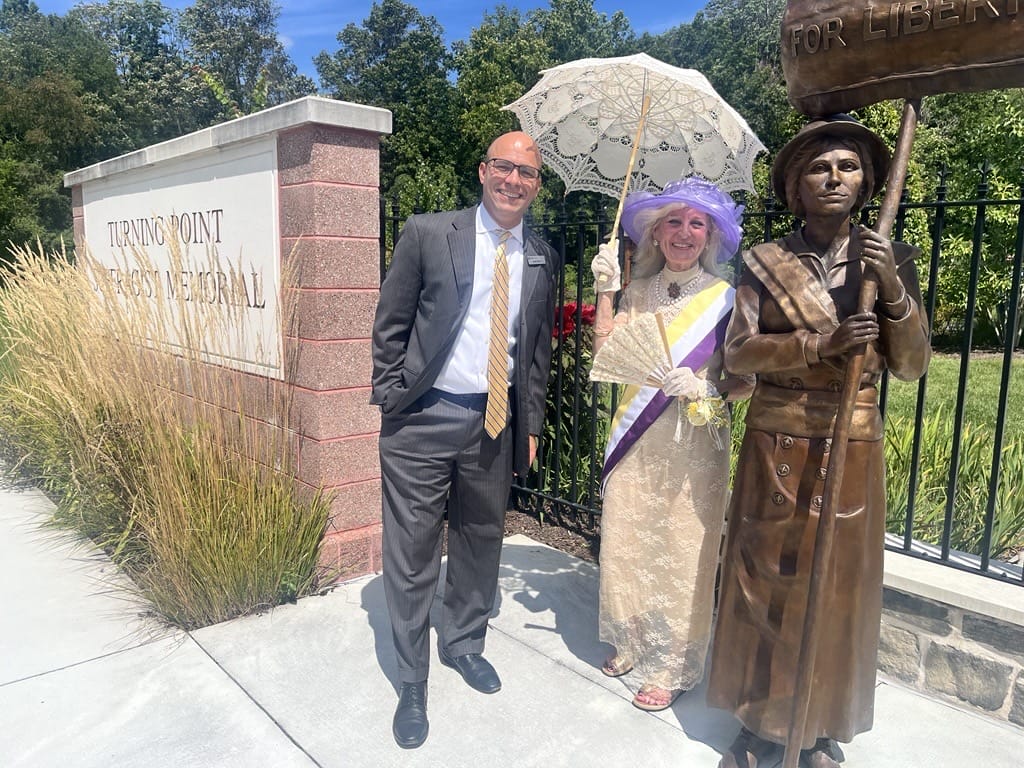
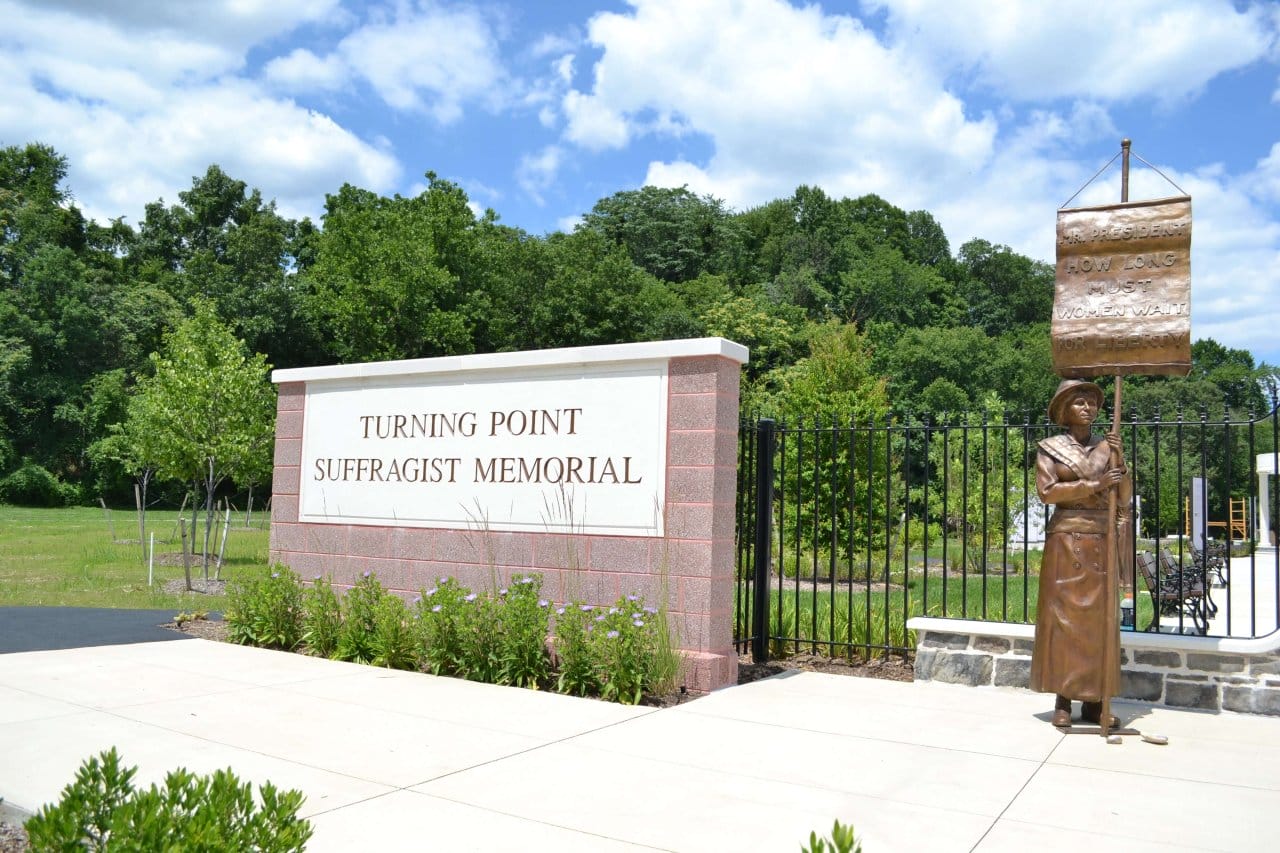
Visitors from around Virginia came to Occoquan Regional Park in Lorton to celebrate Women’s Equality Day at the Turning Point Suffragist Memorial last week (Aug. 26).
Hosted by NOVA Parks, Wednesday’s event commemorated the women who took part in the suffrage movement, which fought for women’s right to vote leading up to the implementation of the 19th Amendment in 1920.
The Turning Point Suffragist Memorial was inaugurated five years ago, supported by donations from Fairfax County, Virginia and other communities across the country, according to Justin Wilson, executive director for NOVA Parks.
“The intent of this memorial was never simply to be a physical recognition of this important part of American history, but it is intended to inspire the next generation. That’s why we worked to organize this event and provide a celebration for not only the achievements, but the work ahead,” Wilson said.
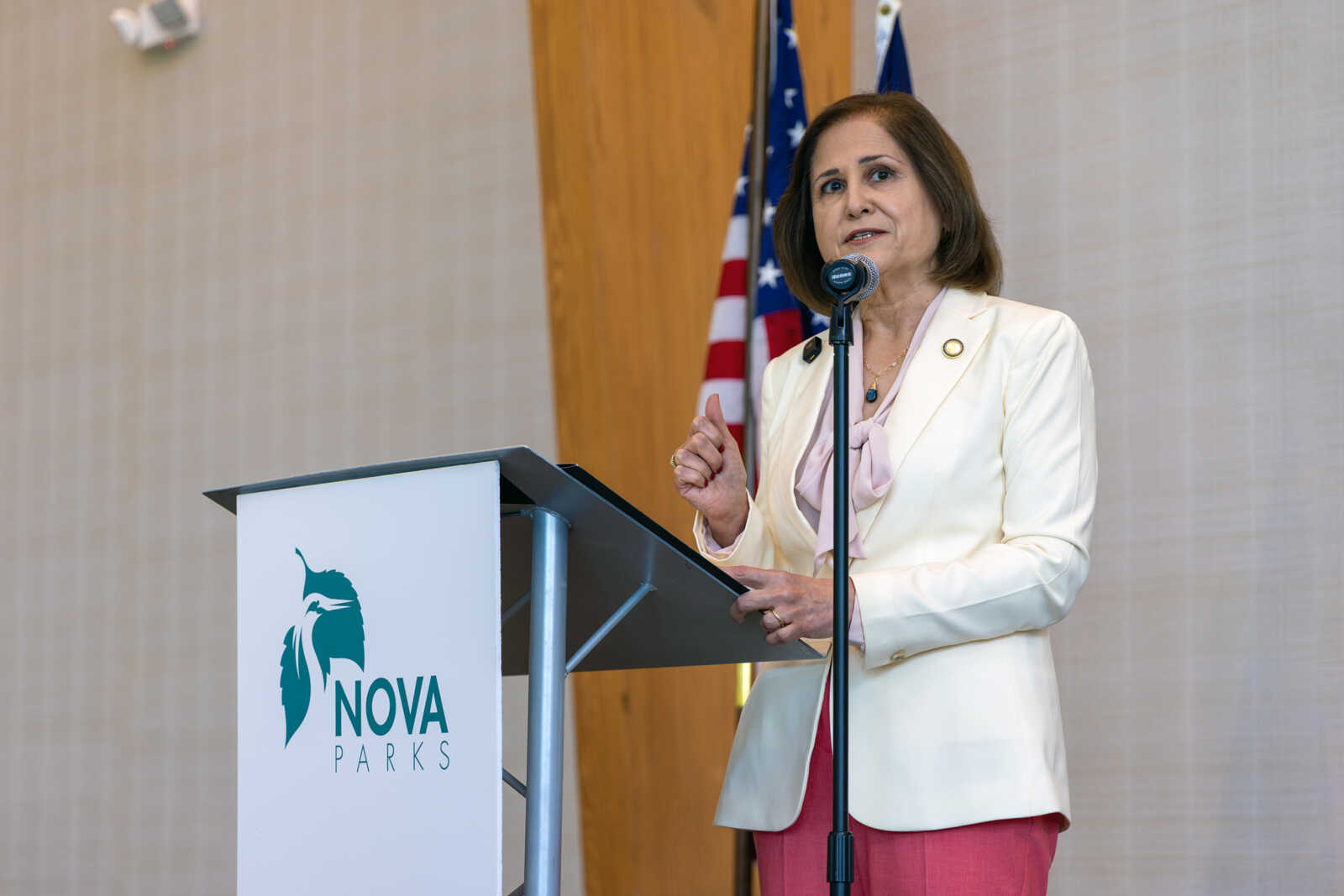
Virginia Lt. Gov. Ghazala Hashmi took part in the Women’s Equality Day celebrations by giving a keynote address.
Speaking in front of the memorial, Hashmi, who is the first-ever Asian American and Muslim elected to a statewide office in Virginia, said the event was meaningful in that it took the persistence of women to make the 19th Amendment possible.
“This occasion is especially meaningful this year as we recognize the tremendous milestone that Virginia took far too long to reach, and that is the election of the first woman to lead the Commonwealth,” Hashmi said, referring to Gov. Abigail Spanberger. “It must mean having a voice, a true voice in how we are governed.”
During her remarks, she gave credit to Sarah Grimke and, whom, along with her sister Angelina, who became among the first American women to call for the abolition of slavery and suffrage for women during the 19th century.
Hashmi also acknowledged the Black women who took part in the struggle, such as Frances Ellen Watkins Harper, Ida B. Wells, Mary Church Terrell and Shirley Chisholm — the first Black woman elected to Congress and to run for president.
She said those women displayed “persistence, vigilance and engagement.”
“[They] did not know exactly what the future would look like, but they did understand something very essential, that the future of democracy is shaped by the people who refuse to accept the boundaries of the present,” Hashmi said. “Let us honor them not simply by remembering what they accomplished, but let us honor them by continuing that work.”
She gave a call to action for women to be involved in government, whether on school boards, county governments, city councils or state legislatures.
“We have a responsibility to teach young people about the roles and functions of government, and we must encourage and mentor more women to run for office,” Hashmi said. “It’s a collective responsibility to defend the voting rights of others, even when their political choices may be different from our own, because the right to vote is not a reward for agreeing with us. It is a constitutional right.”
