

The Fairfax County Board of Supervisors directed staff yesterday (Tuesday) to stay in close touch with the Spanberger administration as the state government refines rules for dealing with data center development.
The county government needs to be “fully engaged” and ensure its “needs, challenges and experiences are represented” in a statewide discussion, Sully District Supervisor Kathy Smith said when introducing the directive to staff.
The measure passed unanimously, including a provision that county staff report back on their activities within 120 days.
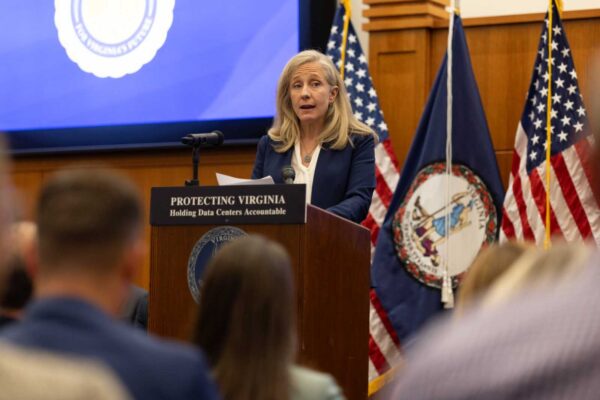
It comes in the wake of an executive order signed by Spanberger in September, laying out what she described as accountability measures for data centers and artificial intelligence in the commonwealth.
“It’s really important that we have a voice in the process,” Smith said. It was a sentiment shared by a number of her colleagues.
“The whole point is to keep the conversation going. We want to have a seat at the table,” Dranesville District Supervisor Jimmy Bierman said.
Board of Supervisors Chairman Jeff McKay said he was confident the county has “a strong foundation” when it comes to regulations for data centers, but “there may be ways we can improve.”
Under Virginia law, localities control most of their own land use policy, but there are areas where the state government sets the rules. At the Oct. 27 meeting, Mason District Supervisor Andres Jimenez said he hopes the state’s future policies will continue to allow localities to “be flexible and be able to move in the right direction.”
Among the areas where county staff are being asked to focus:
- Evaluating community benefit plans that encourage developers to “address local impacts and provide measurably community benefits”
- Considering what improvements can be made to the county government’s existing communication with residents on data center projects
- Identifying opportunities to coordinate with state agencies and utilities on energy affordability, infrastructure demand and related concerns
Depending on what actions the Spanberger administration takes on data centers, “we may need to update some of our things,” Hunter Mill District Supervisor Walter Alcorn said.

While the local business community is largely bullish on data centers, a growing segment of the community is increasingly wary of the impacts on neighborhoods and the environment. In the middle of the thicket are local political leaders.
In Fairfax County, data centers are banned in residential districts, but they needed only administrative approvals to be allowed in industrial and high or medium-intensity office districts until September 2024, when the Board of Supervisors adopted tighter restrictions on by-right developments.
To the disappointment of data center critics, though, the new rules, including size limits and minimum distances from residential properties, didn’t apply to projects already under review.
In announcing her executive order on Sept. 18, Spanberger said that Virginia previously had lived with a patchwork of inconsistencies in planning and regulating data center facilities.
“That changes today,” she said then. “Virginia should be leading the nation in setting the highest standards for this industry. And now, I believe we are doing just that.”
As part of her proposed Virginia’s Data Center Accountability Framework, Spanberger is also calling on the General Assembly to take measurable regulatory steps in its 2027 session, which opens Jan. 13.
Among her requests of legislators is enactment of a ban on non-disclosure agreements between localities and developers of commercial data centers. Fairfax officials say they don’t use such agreements when reviewing submitted plans.
The executive order also creates a state Artificial Intelligence Task Force to focus on issues like workforce displacement, data privacy and cybersecurity.
When the measures were unveiled, Del. Rip Sullivan (D-6) of McLean called them “welcome and positive steps forward.”
