

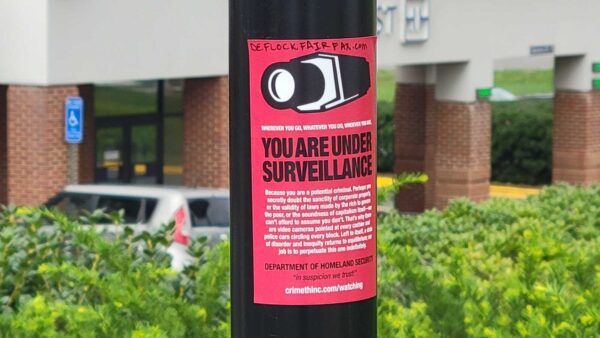
Civil rights advocates pressed the Fairfax County Board of Supervisors on Oct. 27 to end the local government’s relationship with Flock Safety, remove its license plate readers and not replace them with similar equipment.
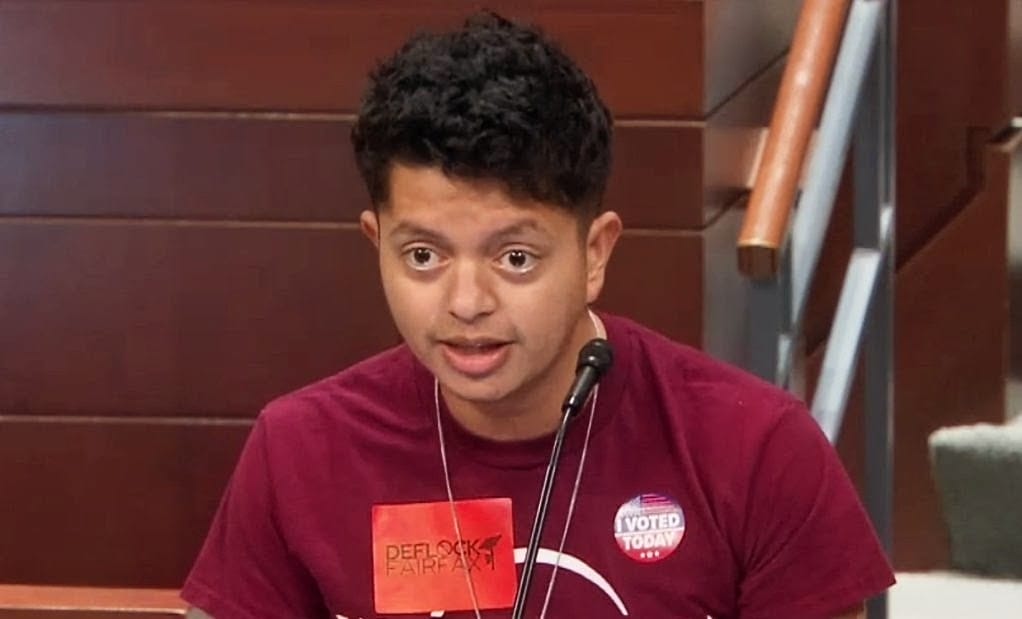
“Mass surveillance does not reduce violent crime or deter serious offenses,” said Christian Martinez Lemus, representing We Are CASA at the supervisors’ monthly public comment session.
Martinez Lemus voiced fears that county leaders could opt to cancel their contract with Flock, only to replace the equipment with something similar.
“The solution isn’t a new contract,” he said. “The solution is ending automated mass tracking. Surveillance is bad, period.”
While there have been no reports of Fairfax County Police Department (FCPD) personnel misusing data collected by Flock cameras, one speaker said there’s no guarantee that would always be the case.
“We can’t be sure that FCPD officers with a legitimate reason to run license plate reader queries aren’t turning around and sharing [that] data informally with federal immigration enforcement officials,” said Marcella Levine, representing ACLU People Power Fairfax.
Under the Trust Policy that has been in effect since 2021, Fairfax County employees are prohibited from sharing information with and assisting U.S. Immigration and Customs Enforcement unless required by law or a court order, though some immigrant rights advocates worried that revisions to the FCPD’s internal policies last year might’ve weakened protections.
While county police say the use of automated license reader technology helps to solve crimes, Levine wasn’t impressed with the argument.
“Do we need to put our immigrant community at risk to prevent a few more crimes?” she asked. “Wouldn’t FCPD have solved most of these crimes anyway?”
Supervisors typically do not respond to remarks made during public comment sessions, and did not address the issue on Oct. 27.
The Board of Supervisors voted in September not to install any additional Flock cameras until they could discuss the topic in more detail at a future Safety and Security Committee meeting.
At that meeting on Oct. 20, county public safety staff made the case for license plate readers as critical tools for addressing crime to some skepticism from elected officials, but no decisions were made about the future of the FCPD’s program, which has been in place since 2022.
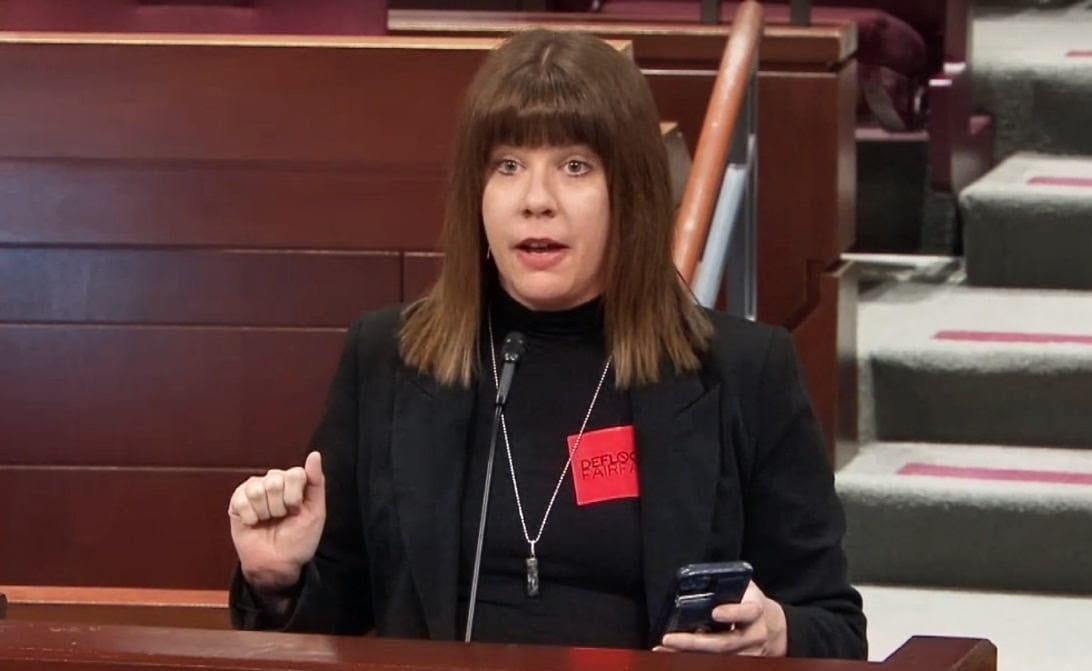
Courtney Massie, a speaker at the Oct. 27 comment period, contended that police officials manipulated statistics and presented “a cornucopia of fallacious arguments and misleading evidence.”
Massie was representing Showing Up for Racial Justice Northern Virginia, which has called on Fairfax leaders to end the Flock contract and ban government use of automated license plate readers in the county.
Debate also rages in other parts of N. Va.
Fairfax elected officials are not the only ones grappling with public concerns about Flock Safety.
Alexandria leaders announced on Tuesday that the city was nixing its Flock program, and at an Oct. 26 meeting, Falls Church City Manager Seth Hendler-Voss said the city government operates no automated license-plate readers and has no intention of introducing them.
Meanwhile, Arlington County Board members were criticized on Oct. 26 both for going too far, and not going far enough, in limiting the use of automated license plate readers in the county.
Most who spoke on the topic at a town hall meeting shared the view of Eric Lotke, who said county officials should permanently ban their use by local law enforcement.
Simply ending the county’s contract with Flock Safety, as Arlington County Board members did in September, was not enough, Lotke said.
“Let’s finish the job — ban them for good,” Lotke said at the town hall.
“This is not about speed cameras or red-light running,” he said. “It’s literally Big Brother watching you.”
Desiree Lomer-Clarke was another pressing for a full ban on use of the equipment in local law enforcement.
“They don’t prevent crime, which is what we really need,” she told County Board members.
On the other side of the issue was John Antonelli, who criticized Board members for a lack of transparency in deciding behind closed doors to end the relationship with Flock:
“I’m wondering why there was no public hearing before the Flock contract was cut. Is the Arlington Way dead? If there was [a public hearing], we would have had a staff report, we could see there were no problems with Flock in Arlington and we would have known exactly what the controls are. Citizens could have come and given you better and more input.”
Antonelli noted that there have been three shootings in Arlington since the cameras were turned off, suggesting police no longer had a tool that could help to solve them.
In response to criticism coming at the Arlington body from both directions, Board Chair Matt de Ferranti said local leaders would work to engage the community going forward.
“We have committed to a public process going forward,” he said.
De Ferranti voiced concerns that the Trump administration could find a way to obtain Flock data and use it for its own means.
“While this man is president, I will not support automated license plate readers in Arlington,” he said. “We don’t have any reason to trust the guy.”
