



A Virginia bill crafted in memory of Oakton High School students killed on Blake Lane in 2022 is on its way to becoming law.
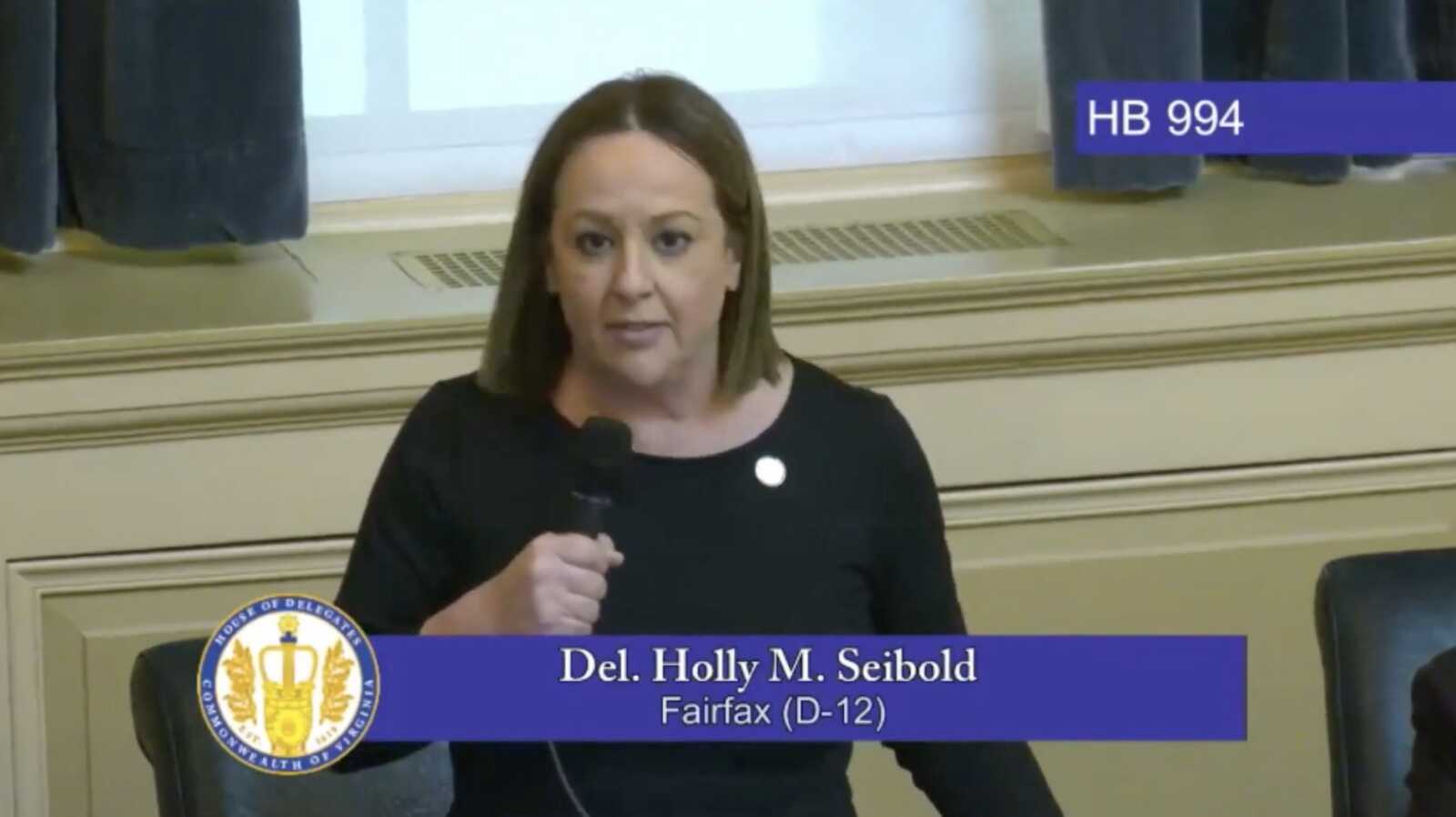
Del. Holly Seibold (D-12), whose district includes part of Oakton, has been pushing for a bill (HB 994) to expand speed camera locations to “safety red zones” designated by the state. The bill passed the Virginia General Assembly and is awaiting action from Gov. Abigail Spanberger (D).
The legislation would only apply to sites VDOT designates as “red zones” with speeds up to 45 mph in its Pedestrian Action Safety Plan. According to Seibold, they represent about 5% of the state’s roads and can be designated as such due to a lack of sidewalks, lighting or other infrastructure, as well as frequent pedestrian crossings.
Under current Virginia law, localities can only authorize speed cameras in active school crossing zones and highway work zones.
Fairfax County currently has 20 active speed cameras outside schools — including one on Blake Lane outside Oakton High School — after expanding its program at the beginning of this school year. It also has cameras in the work zone for projects to widen Fairfax County Parkway.
Seibold told FFXnow that her bill honors 15-year-old Leeyan Yan and 14-year-old Ada Martinez Nolasco, who were killed, as well as a third student who was injured in the 2022 crash. The driver, who was reported to be speeding at 81 mph in the crash, received a four-year sentence for involuntary manslaughter.
According to Seibold, speeding combined with a lot of students walking to and from school creates a “perfect storm” on Blake Lane. She says localities need authority to place cameras in high-risk locations with more unsafe conditions for student pedestrians.
“Oakton, for example, had a camera in its school zone. It’s not going to help the kids who are walking home from school, because the schools themselves have great infrastructure,” Seibold said. “The problem exists on those side roads, something like a Blake Lane, where cars are speeding and kids are walking home from school, and it’s still under 45 miles per hour. That’s what we’re talking about here — our secondary roads, where the speed is low, yet people are not abiding by it and getting hurt.”
The bill was amended before it passed to limit it to localities in Planning District 8, which includes the Northern Virginia communities of Arlington, Fairfax and Loudoun counties, towns within those counties, and cities of Alexandria, Falls Church, Fairfax, Manassas and Manassas Park.
Seibold hopes Spanberger will amend the legislation to expand it across the state, noting that other areas like Richmond have concerns about pedestrian fatalities.
According to Seibold, the bill would give localities the authority to decide if they want to move cameras from school zones to the high-risk “red zones.” But the delegate wants localities to place cameras based on their potential to prevent pedestrian fatalities, not generate revenue.
The bill sets limits on how funds from speed camera fines can be used and restricts highway work zone speed camera operations to times when workers are present. It also requires signage and other notifications to alert the public to the presence of speed cameras.
“We want people to know where they are. We want full transparency,” Seibold said. “We don’t want to make money off these cameras. We just want people to slow down so what happened to my constituents walking home from Oakton High School doesn’t happen to other people’s children and other families in our community.”
