

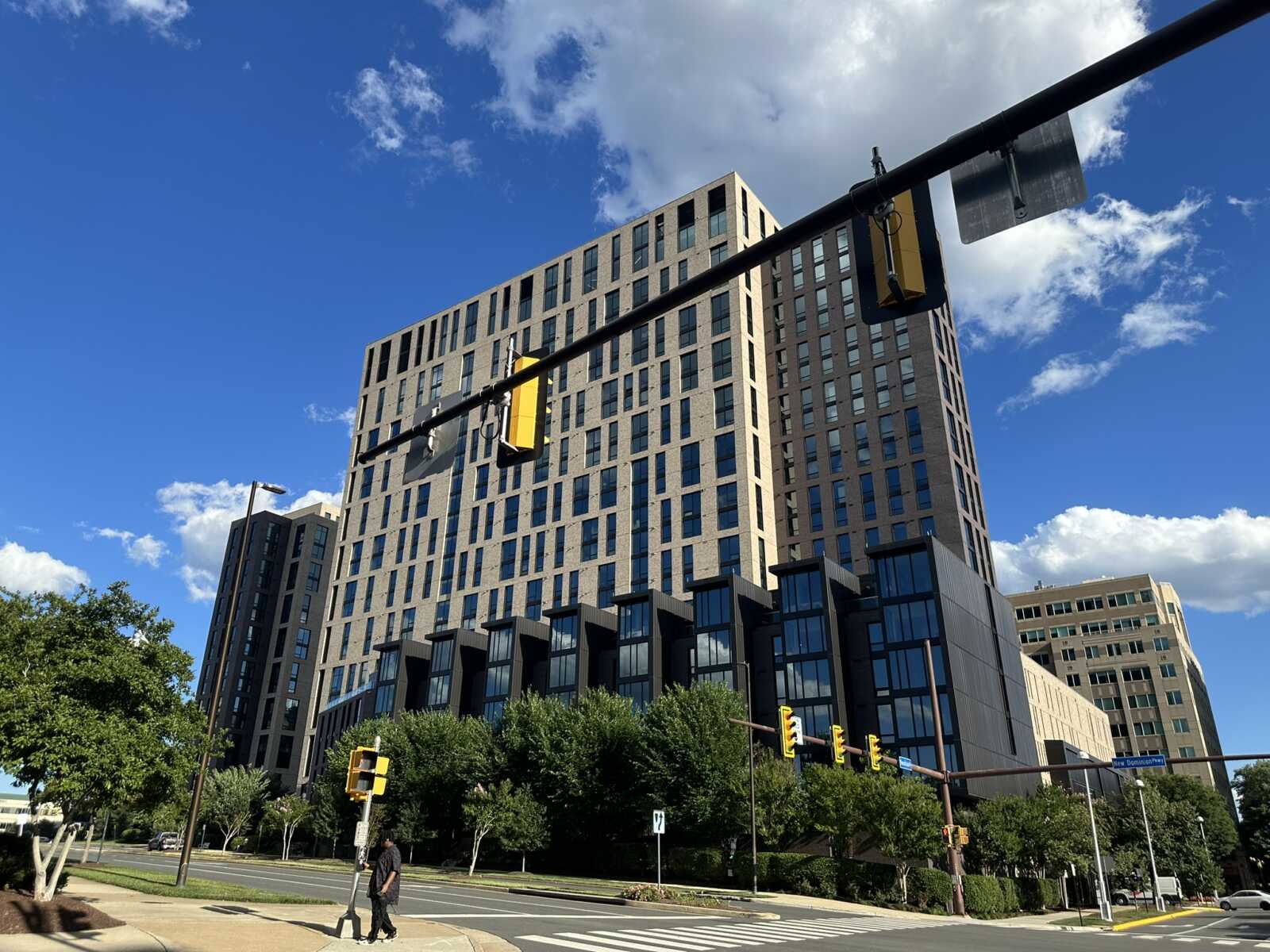
Median year-over-year apartment rents declined in seven of eight Fairfax County corridors and the county overall in June, according to new data.
Only Lorton saw an increase in figures released June 30 by Apartment List. Its median rent was up 0.2%, standing at $2,250 for one-bedroom units, $2,728 for two bedrooms and $2,778 for all bedroom sizes.
The year-over-year trajectory was down in each of the remaining communities analyzed:
- Centreville: Median rental prices were $2,079 for one-bedroom units, $2,415 for two bedrooms and $2,459 for all sizes, a 2.7% dip
- Fair Oaks: Median rental rates were $2,266/$2,553/$2,483, down 2.4%
- Fairfax: $1,925/$2,203/$2,293, down 2.9%
- Herndon: $1,880/$2,256/$2,285, down 0.8%
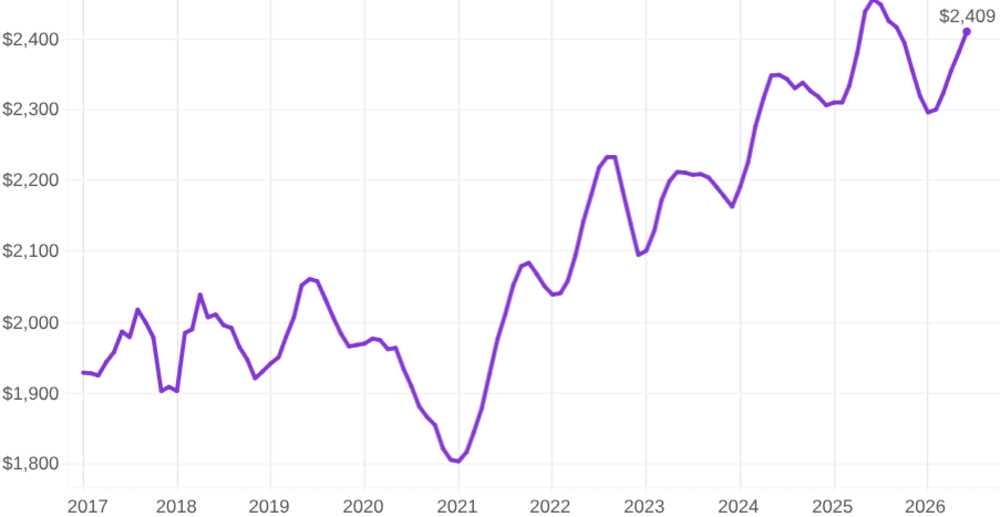
- Reston: $2,234/$2,365/$2,409, down 1.9%
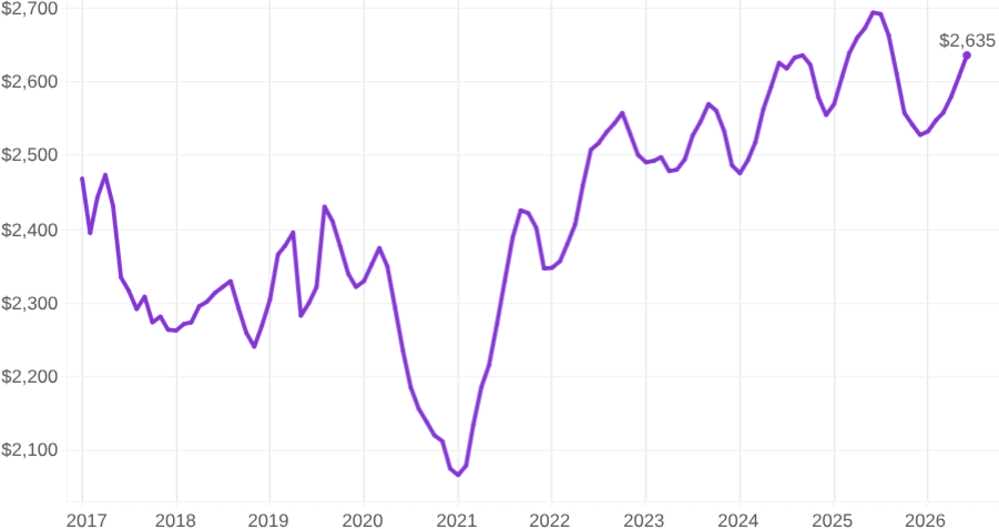
- Tysons: $2,396/$2,873/$2,635, down 2.2%
For Fairfax County as a whole, median rental rates for June were $2,079 for one-bedroom units, $2,408 for two-bedroom units and $2,426 for all bedroom sizes, down from $2,472 a year before.
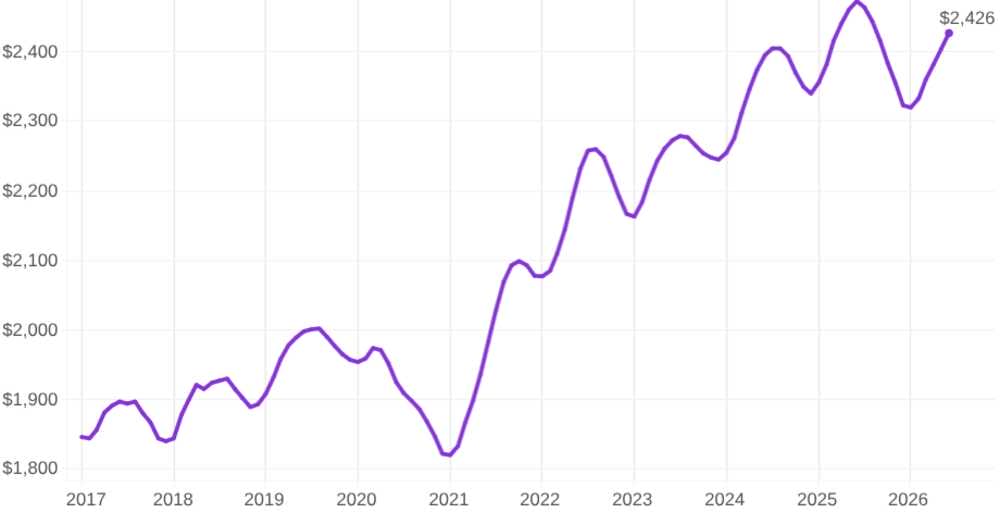
Fairfax County’s pre-pandemic median apartment rental cost peaked at $2,001 in August 2019. At the onset of Covid in March 2020, it was $1,973.
Rental costs then declined, bottoming out at $1,819 in January 2021 before rebounding. Since 2022, the Fairfax market has followed typical seasonal norms, with higher leasing rates in spring and summer, and lower rates in autumn and winter.
Nationally, the median rent across the U.S. in June was $1,385. That rate represented a fifth consecutive monthly increase, but it was down 1.2% year over year.
According to Apartment List analysts:
“We are now in the middle of the peak summer moving season, and as such, we’ll likely see prices continue to increase for another month or two, before the fall cooldown begins. This trend is in line with typical seasonal patterns — prices generally increase in the spring and summer when most moves take place, and then soften in the fall and winter as moving activity slows.”
“The broad contours of this seasonal pattern are a dependable trend, but in recent years we’ve seen sharper winter dips and more modest summer bumps as the market has gone through a soft spell amid a wave of new multifamily construction. As a result, full year rent growth has been negative for each of the past three years.”
Nationally, rental prices peaked in mid-2022 after a year and a half of skyrocketing growth, Apartment List analysts said.
Since then, rents have been drifting downward, falling about 4%, or $57 per month, from the market peak.
“Despite the pullback in prices, today’s rent levels remain 21% higher than they were at the start of 2021,” the analysts said.
Across the D.C. metro area, the median June rental cost was $2,168.
Each month, Apartment List ranks the top 100 urban areas by price. Four California localities topped the rankings: $3,558 in San Francisco, $3,058 in San Jose, $3,046 in Irvine and $2,929 in Fremont.
Rounding out the top five was Arlington, with a median rental rate of $2,601.
At the other end of the scale, the most affordable median rents were found in Toledo ($895), Detroit ($1,036) and Tucson ($1,040).
Nationally, the vacancy rate has been relatively stable since mid-2025. It was 7.2% in June.
“Despite being on the downslope of the construction boom for nearly two years, the market had been struggling to absorb the swell of new inventory,” Apartment List analysts said. “That may finally be changing, as we see multifamily occupancy also hitting an inflection point in tandem with rent growth.”
Supply issues driving market conditions, one analysis says
Another firm that analyzes rent trends, Zumper, found that for the first time since May 2025, the median U.S. one-bedroom rent for the month had gone up year-over-year territory, rising 0.4% to $1,526. The median rental rate for two-bedroom units was essentially flat at $1,905.
“The biggest story in housing is still supply,” Zumper CEO Shawn Mullahy said, adding:
“The national average hides what’s really happening — rent trends are diverging sharply by market, and the common denominator is inventory. Where supply remains elevated, rents are still soft, although the declines are moderating. Where supply is constrained, rents are rising, sometimes aggressively.”
The national rent index “is simply the midpoint between those two realities,” Mullahy added.
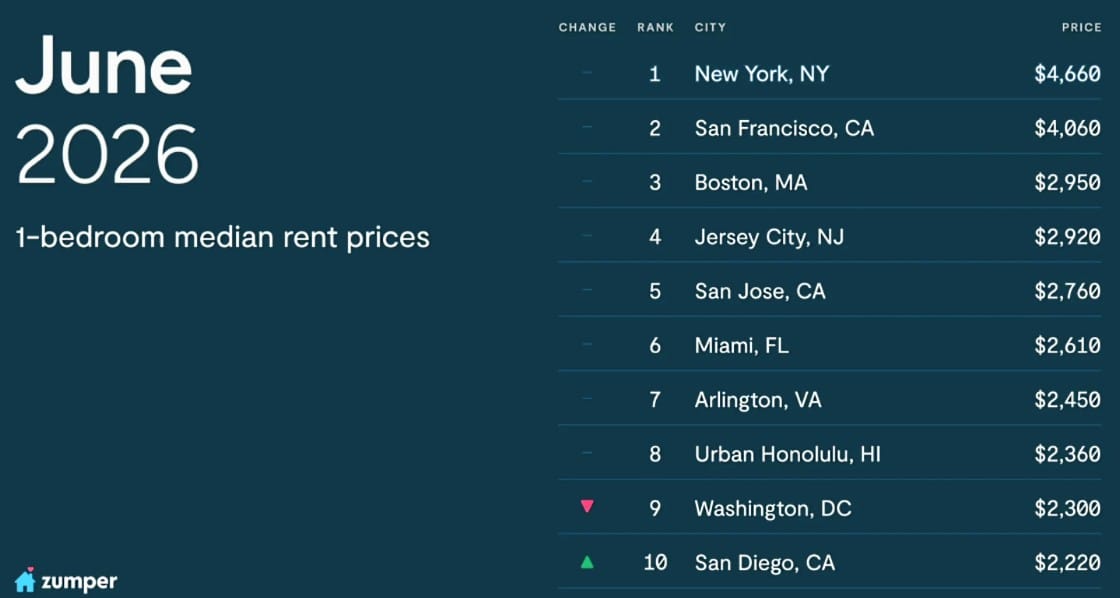
Nationally, the locality with the biggest year-over-year increase in June was in San Francisco, where rents were up a whopping 22% — to a median $4,060 for one-bedroom units and $5,700 for two bedrooms.
Rounding out the top five percentage increases were St. Louis, Chicago, Providence in Rhode Island and Virginia Beach.
Areas seeing the largest declines were Houston, Austin, Henderson in Nevada, San Antonio and Memphis.
