

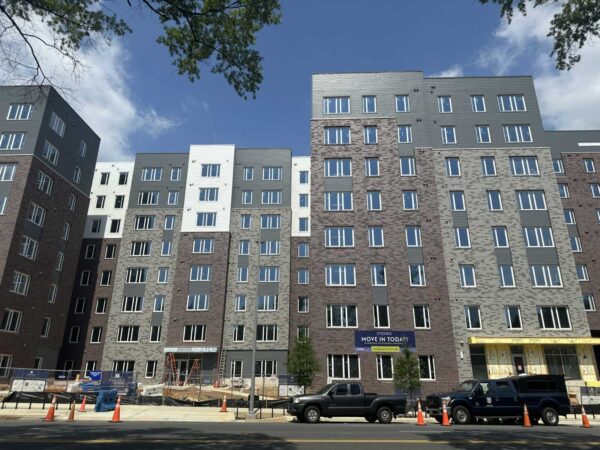
Most of Fairfax County recorded year-over-year declines in median apartment rents in October, according to new data.
The median countywide rent for the month stood at $2,041 for one-bedroom units, $2,364 for two bedrooms and $2,382 overall, according to data reported on Oct. 28 by Apartment List.
Of the six major county corridors tracked by Apartment List, only Tysons posted a year-over-year increase in the October data.
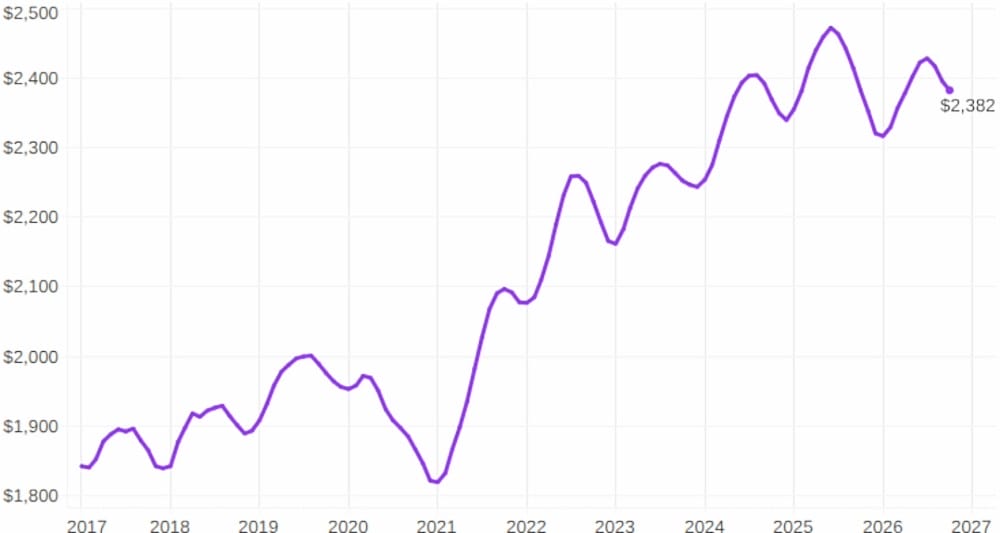
In Tysons, the median apartment rent for the month was $2,403 for one bedroom units, $2,881 for two bedrooms and $2,642 overall, a 3.3% increase from October 2025.
In the other five areas, relatively small declines were recorded:
- Centreville: Median rental prices were $2,067/$2,402/$2,446, down 0.1%
- Fair Oaks: Median rents were $2,165/$2,421/$2,374, down 0.9%
- Fairfax City: Median rents were $1,903/$2,177/$2,266, down 1.1%
- Herndon: Median rents were $1,802/$2,162/$2,189, down 0.8%
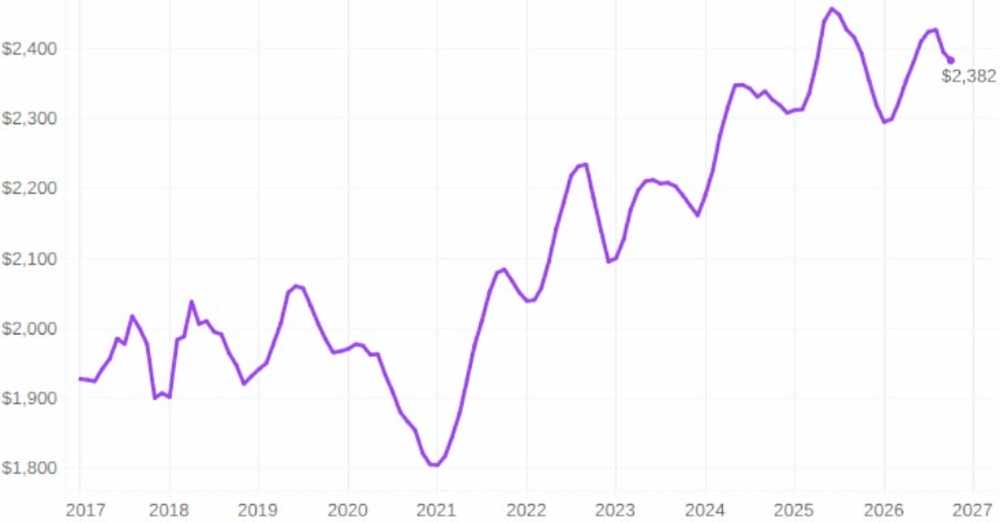
- Reston: Median rents were $2,208/$2,338/$2,382, down 0.4%
Nearby, median rents declined modestly to $2,189 overall in Alexandria and were up slightly to $2,604 in Arlington. Across the metro area as a whole, the median rental cost of $2,165 in October was down 0.1% from a year before.
Like the rest of the region, the Fairfax apartment market has been on a roller-coaster ride since the onset of Covid in March 2020.
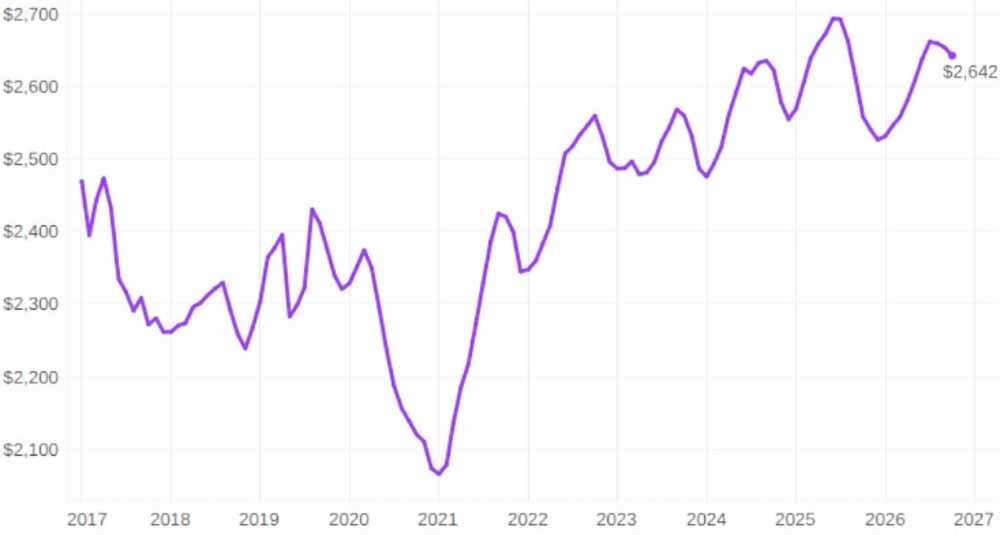
Immediately preceding the pandemic’s arrival, the county’s median apartment rent stood at $1,971. It then declined to $1,818 by January 2021 before beginning a rebound that peaked in June 2025 at $2,472.
In 2026 to date, median rental prices in Fairfax have followed cyclical norms, ranging from $2,316 in January to $2,428 in July.
Nationally in October, Arlington retained its usual position as the fifth most expensive of the 100 largest urban areas tracked by Apartment List. Four California communities had higher median costs: San Francisco ($3,842), San Jose ($3,146), Irvine ($3,144) and Fremont ($2,980).
On the other end of the scale, the most affordable rental markets for the month were found in Toledo ($895), Cleveland ($1,018), Wichita ($1,025), Tucson ($1,041) and Memphis ($1,063).
Nationally, October’s median rental cost was $1,215 for one-bedroom units, $1,369 for two bedrooms and $1,384 overall in the Apartment List survey.
October’s national data provided a promising milestone, Apartment List analysts said.
“Year-over-year rent growth in the U.S. flipped positive in October for the first time since mid-2023, though just barely,” they said. “The vacancy rate is also gradually tightening, as the market transitions out of the soft conditions that have prevailed in recent years.”
At the same time, many landlords are offering concessions to renters, suggesting ongoing softness in the market.
Nationally, the median national rental rate peaked in mid-2026. Since then, it has fallen by about 4%, or $58 per month.
And as more units have come onto the market, some apartments have been empty for longer.
“Units leased in October had been sitting on the market for an average of 36 days, up two days compared to last month and somewhat elevated for this time of year,” Apartment List analysts said.
Second survey also sees national increases
A separate tracking organization, Zumper, reported on Oct. 28 that one-bedroom apartments climbed 0.5% annually to a median rental rate of $1,519 and two-bedrooms grew 0.7% to $1,901.
“This month marks the strongest annual readings for both bedroom types since May 2025,” analysts said. “It’s also the second straight month that both have been positive simultaneously, following 16 months without this trend.”
New York City held the top spot at $4,610 for one-bedroom apartment rents, while San Francisco ended October just $180 shy of a record $4,430. San Francisco’s two-bedroom rent slipped slightly to $6,320 from last month’s record of $6,340, but it is still up 27.9% year over year.
“The same economic pressures are cutting both ways for the rental market,” Zumper CEO Shawn Mullahy said in an analysis of current trends:
“With elevated mortgage rates, would-be buyers are staying renters longer. But the same inflation that pushed rates up has wages lagging prices and employers hiring less, which leaves renters little room to absorb further increases and can slow the new household formation that drives demand. You end up with more renters but less room to raise rents, which helps explain why national gains are still measured in fractions of a percent.”
San Francisco (+26.2%), Virginia Beach (+16.4%), Chicago (+12.4%), Boise (+11.5%) and Akron (+9.3%) lead the list of biggest annual gainers in the Zumper ranking, with Cleveland (+9.2%) just behind.
On the other side, Aurora (-9.2%), San Antonio (-8.7%), Durham (-8.4%), Nashville (-7.0%) and Denver (-6.8%) posted the steepest annual declines, but no market in the report fell by double digits during the month, Zumper analysts said.
Arlington dropped to the eighth most expensive rental market nationally in the October report released by Zumper, having held down the seventh position for much of the year.
Arlington fell behind Honolulu, which in September had tied with the county for seventh most expensive out of 100 urban localities in Zumper’s ranking.
National vacancy rate declines
The national apartment-vacancy rate continues to decline as landlords are offering incentives to fill units, Apartments.com said in its third-quarter RentPulse index, released Oct. 28.
According to Apartments.com, which is a subsidiary of Northern Virginia-based CoStar:
“The national vacancy rate fell to 7.8%, down 0.5 percentage points from a year ago and its lowest level since late 2023, as the historic wave of apartment construction begins to recede. Yet landlords are still competing for renters, with the national concession rate rising to 4.2%, 0.6 percentage points higher than last year.”
In parts of the Upper Midwest, limited construction and strengthening demand are pushing rents higher as recently delivered apartments are absorbed, analysts said.
In Las Vegas, Salt Lake City and Southwest Florida, excess supply continues to push rents lower and give renters greater leverage, while Texas sits somewhere in between, with significant discounts still available even as leasing picks up and vacancies begin to decline.
According to the survey, New York continues to dominate the least affordable major rental markets, while other high-cost markets including Miami, Boston and Jersey City also rank among the most challenging for renters.
