

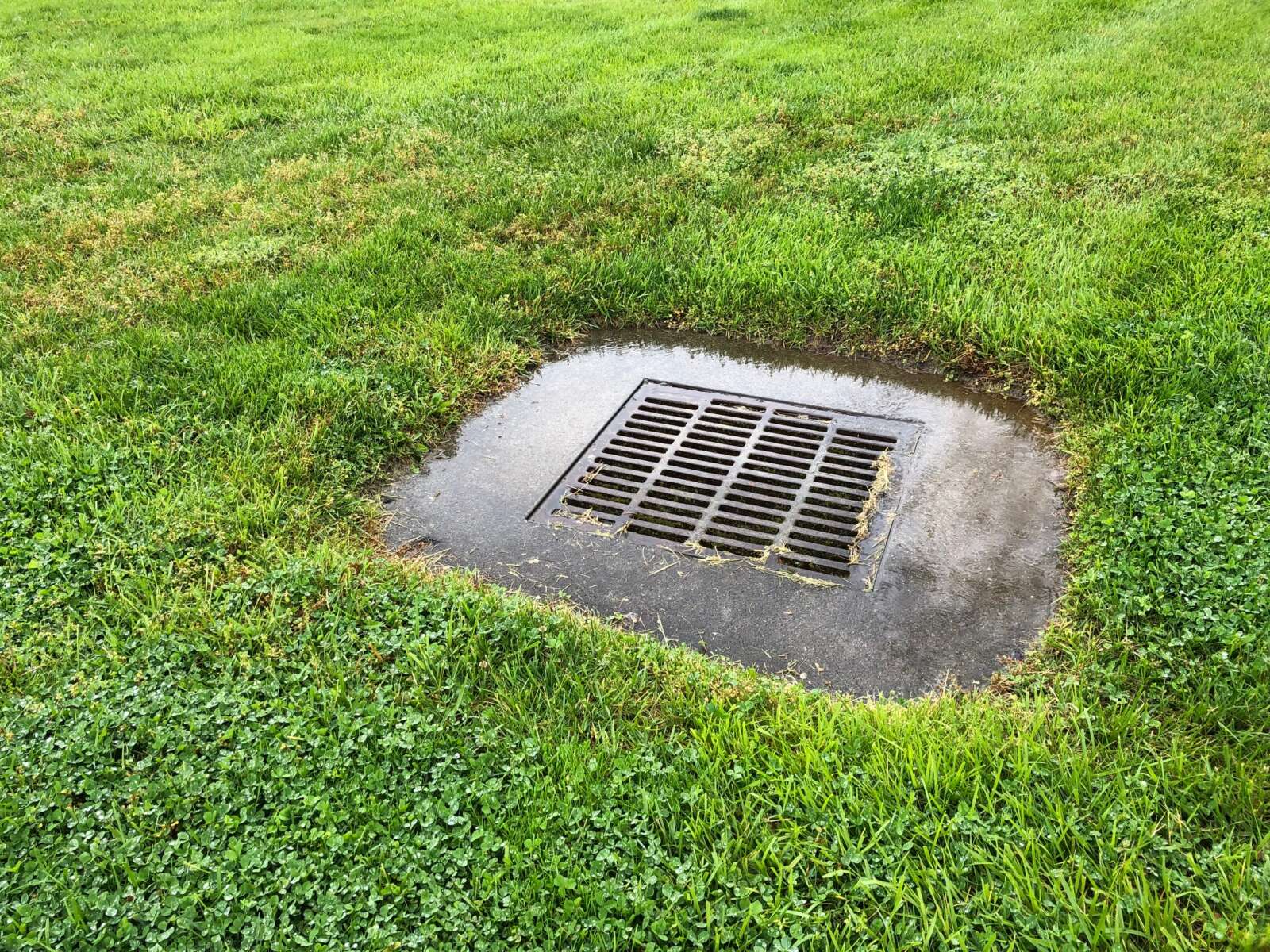
Fairfax County is considering making all existing and future development built to lessen flooding risks from huge, 100-year event storms, as opposed to a 10-year storm.
The risk of flooding in the county is rising due to climate change, staff told the Fairfax County Board of Supervisors environmental committee late last month. While preventing flooding is impossible, its impact can be mitigated, they said.
Under the staff proposal, the county would require all future development to have proper drainage, pipe conveyance, and safety measures to accommodate a 100-year storm event adjusting for climate change.
The proposal is part of the county’s Community-wide Energy and Climate Action Plan, which was approved last September.
A “100-year storm event” is defined by the U.S. Geological Survey as one that “statistically has a 1-percent chance of occurring in any given year.” It brings about 8 inches of rain over a 24-hour period, according to the latest data.
With climate change expected to produce stronger storms and increased flooding, that figure is likely to be adjusted in the future.
Part of the proposal is that new development would be required to be built to adjust for predicted sea level rise and severe weather risks.
Currently, all developments must accommodate a 10-year storm event, which is the 10% chance of 4.5 inches of rain falling in a 24-hour period.
In the last decade, Fairfax County and the D.C. region have experienced several flood-level storms. In 2011, Tropical Storm Lee dumped 7 inches of rain in three hours. In 2019, nearly 5 inches came down in some parts of the county, and just last month, nearby Montgomery County experienced extreme flooding from more than 5 inches of rain.
For existing structures, like houses, the plan is to “mitigate” flooding through regulation, public infrastructure projects, and recovery programs.
“There’s no right answer about what flood risk is acceptable because there’s no such thing as zero risk from flood,” Department of Public Works and Environmental Services Deputy Director Ellie Codding said. “What we can do is design infrastructure to a reasonable point and to educate the public and be ready with resources for recovery.”
With water typically passing through residential properties from upstream, a channel or flood path blocked by a fence, debris or an unpermitted addition can exacerbate flooding, preventing water from flowing where it was designed to go.
Almost all flooding in the county happens in basements, Codding said, so understanding and preventing this is a shared responsibility of residents and the county.
“With participation from residents and businesses, the county alone can’t achieve a meaningful level of flood risk reduction,” she said.
Of course, all of this will come with a cost, one that might be supplemented by increased taxes.
While board members agreed with the overall assessment, several noted that educating homeowners will be an important and more cost-effective component.
Chairman Jeff McKay said homeowners associations or community groups that own and manage stormwater facilities and common areas (like ponds) may not know how to maintain those.
“I’m increasingly concerned about the smaller subdivisions and lack of information, assistance, and oversight to even maintain stormwater facilities that they put in with their development,” McKay said.
Braddock District Supervisor James Walkinshaw noted that some responsibility needs to fall on contractors, who might be doing home renovations or repairs. They are either not educated themselves on good practices or not passing that knowledge on to their clients.
With the board’s consent, county staff are expected to present a “proof-of-concept” study with cost estimates next spring, followed by a flood mitigation plan later in 2023.
