

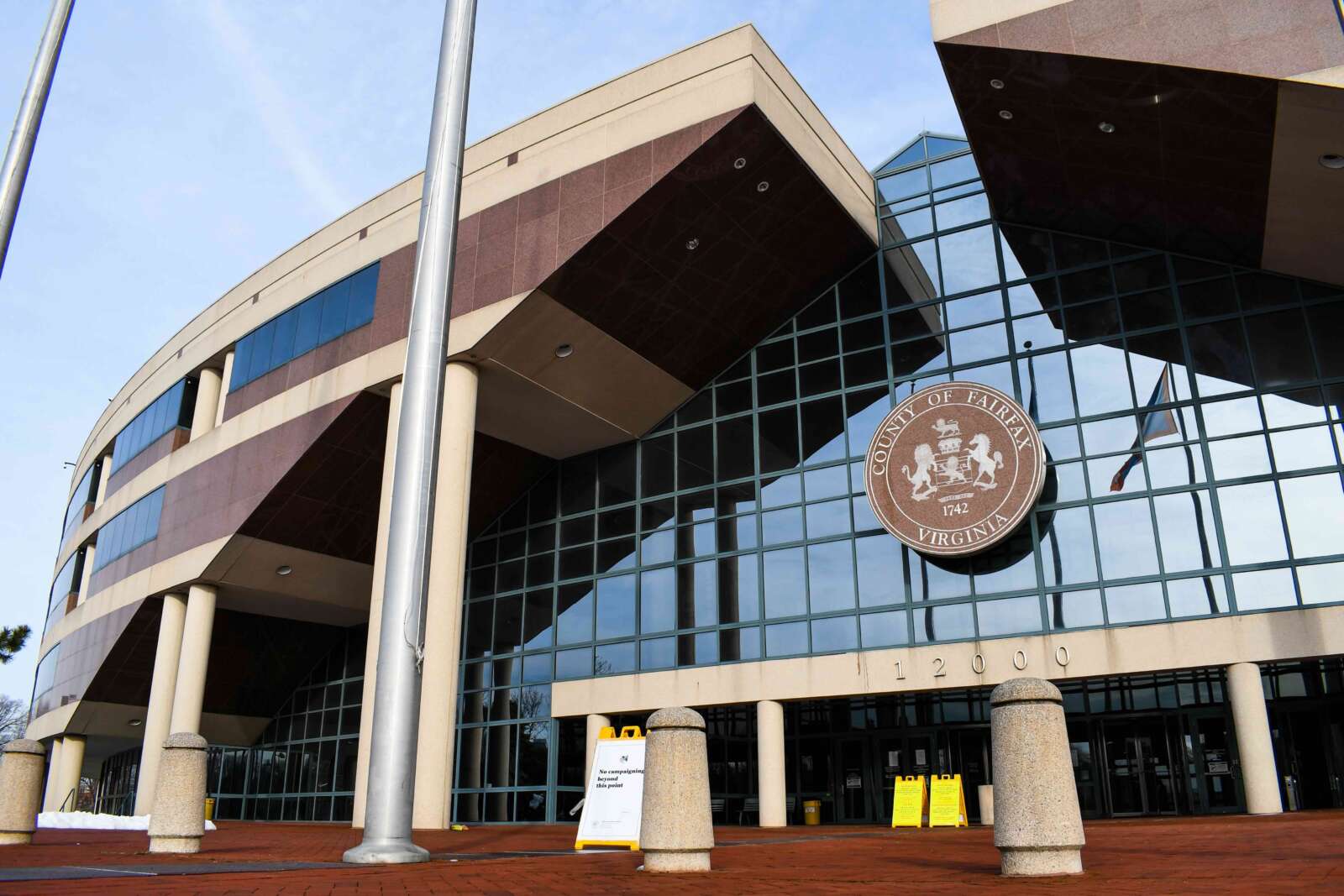
Fairfax County will review its property deeds to remove clauses that historically barred non-Caucasian individuals from owning or leasing property in specific neighborhoods.
In response to new research revealing the prevalence of racially restrictive covenants in Northern Virginia property deeds, the Board of Supervisors, led by Dan Storck and Rodney Lusk, unanimously approved a board matter yesterday (Tuesday) to allocate resources for eliminating any segregation-era language from county-owned property deeds and assisting private property owners in doing the same.
“We’ve known about this for a while, and there hasn’t been an organized way to deal with this issue,” Chairman Jeffrey McKay said during the board’s Sept. 10 meeting. “And so this is hoping to put organization behind it, and to track our success in making sure this happens.”
The plan includes assigning staff to review over 730 property deeds and bringing on summer interns to assist with the workload.
County Attorney Elizabeth Teare has also been tasked with developing a template to streamline the process of removing outdated, discriminatory clauses from property deeds across the county. The form will allow property owners to officially nullify the restrictions, permanently erasing them from public records once identified.
Unlike redlining, which involved financial institutions denying services based on race, these covenants were explicit legal agreements in property deeds that excluded certain racial or ethnic groups from living in designated areas.
Recently, Lusk and Storck, along with county staff, attended a presentation by University of Mary Washington historian Krystyn Moon at Sherwood Hall Library in Hybla Valley, where she detailed the widespread use of racial covenants in neighborhoods developed between the 1920s and 1950s, particularly in Hybla Valley and along the Richmond Highway corridor.
Moon disclosed her latest findings, identifying an additional 8,000 land parcels with racial restrictions, particularly in the Mount Vernon and Falls Church areas. In total, the research project has found over 22,000 parcels with restrictive covenants in Fairfax County, including some owned by the county government.
Although the 1968 Fair Housing Act nullified racial restrictions and made them no longer enforceable, Storck argued the county should still make progress toward removing racial covenants from property deeds.
“The amount of work required to change all these deeds is not something that we can do tomorrow, but it is something that, I think, by our decision today, we can start that process and clearly, over time, make a difference,” he said.
The Board of Supervisors is expected to receive updates on county staff’s progress annually.
