

As Fairfax County officials prepare recommendations for Centreville’s future for review, one supervisor hopes to see a focus on options for boosting housing.
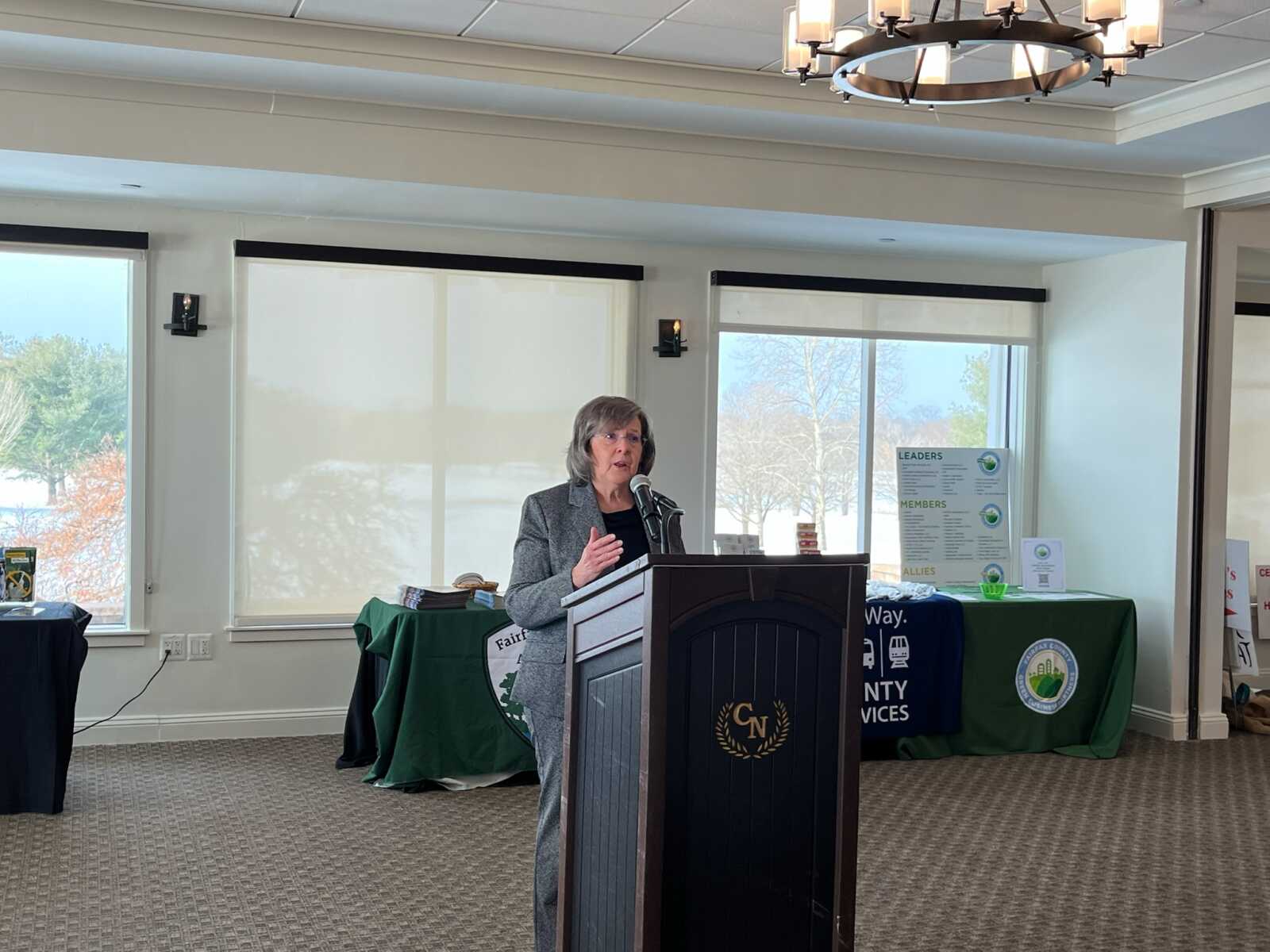
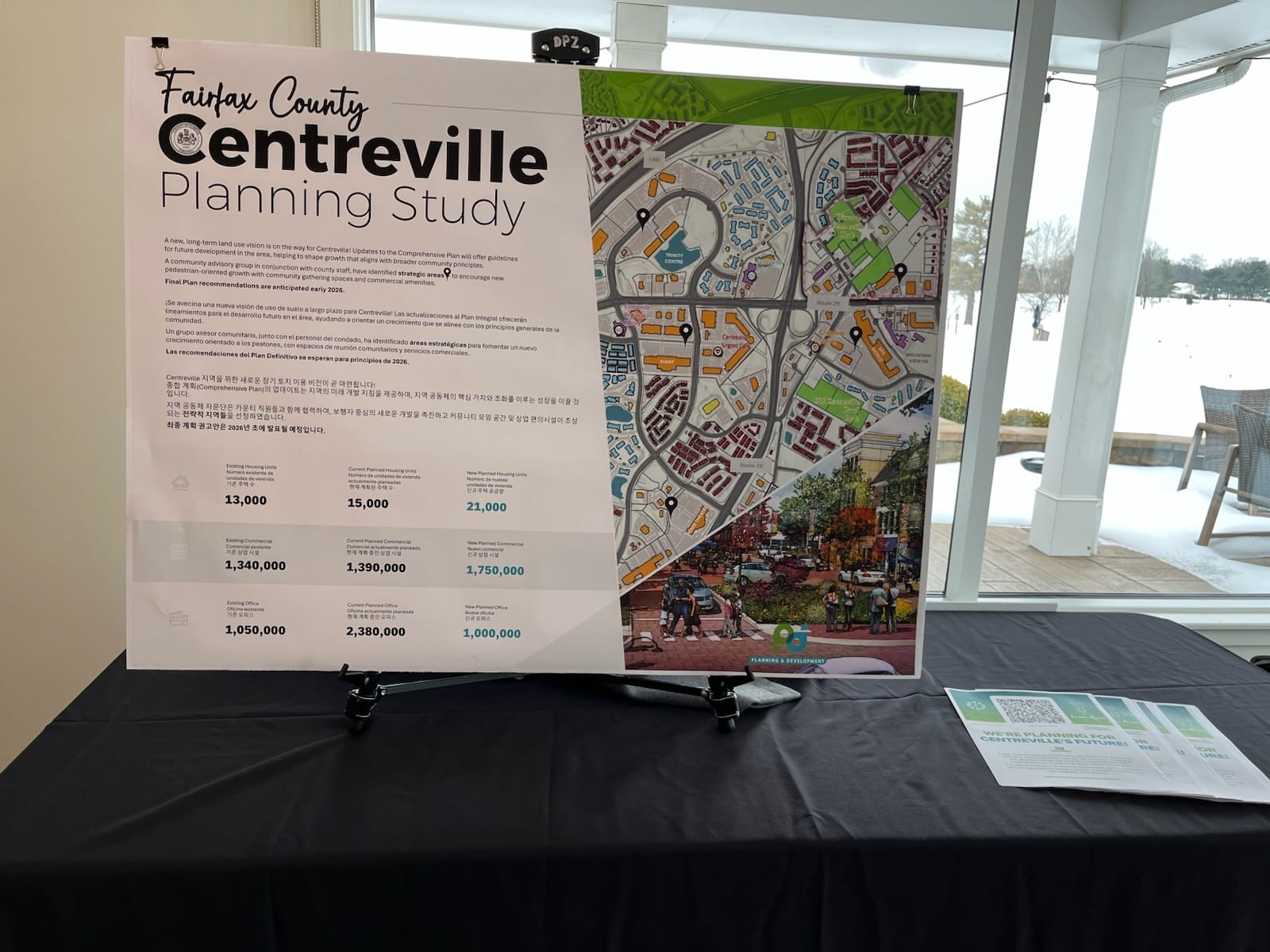
Fairfax County is updating its Centreville comprehensive plan, a long-term land use guide for the community’s core to complement the zoning ordinance. The Centreville plan amendment was one topic Sully District Supervisor Kathy Smith (D) addressed in remarks at the 2026 State of Centreville hosted by the Dulles Regional Chamber of Commerce on Friday (Feb. 6).
Smith, who represents the Centreville and Chantilly area on the Fairfax County Board of Supervisors, told FFXnow that Centreville has seen significant change since the last comprehensive plan amendment more than 25 years ago. According to Census data, Centreville’s population increased from 26,585 in 1990 to 73,518 two decades later.
“The study really focused on the core of Centreville and looking at, ‘Should land use change?'” Smith told FFXnow. “Should there be more residential in certain spots? Should density change? What recommendations should be made for heights of buildings? What’s the focus for transportation, for trails?”
According to Smith, the Centreville Study Task Force formed to make recommendations on the plan amendment had its last meeting in December. Once county staff prepare a final proposal based on the task force recommendations, the plan amendment goes to the Fairfax County Planning Commission and Board of Supervisors.
Public hearings are scheduled for May 20 (Planning Commission) and June 23 (Board of Supervisors).
Smith named additional housing as one result she’d like to see supported by the new Centreville’s land use plan.
“As Board of Supervisors members, we’re out there talking with business owners, the business community, and they know how hard it is to bring in employees at the beginning of their careers,” Smith said. “They need somewhere to live. It is really an economic issue for our Board of Supervisors, for our community.”
Other key areas that could be addressed in Centreville’s comprehensive plan include maintaining adequate parks and recreational facilities and core services for Centreville’s growing population; improving multimodal transportation options; and setting parking standards for development.
“We want to stay a vibrant community, but we also need our open space and our parks and places where people can relax,” Smith said.
A 2023 community survey revealed residents’ varying desires for the area, including calls for a town center, more transit options, pedestrian and bicyclist improvements, restaurant options, more green space, and affordable housing.
Those priorities are reflected in a draft plan amendment released when the task force wrapped up its work in December. Among other goals, the text emphasizes a need for a variety of housing options, public park spaces, and “safe and comfortable” pedestrian and bicycle facilities:
Centreville is envisioned as a lively, walkable and bikeable community with places that bring people together. New development is encouraged to provide a mix of homes, shops, and public spaces that improves access to daily services and make daily life more convenient and enjoyable. Expanded options for walking, biking, and transit will help people move comfortably between neighborhoods, schools, parks, and services.

Opinions from respondents to the 2023 survey were mixed on whether Metro’s Orange Line should be extended to Centreville and if there needs to be more development.
The draft amendment proposes planning for a future transit station with Metro and a commuter parking garage along I-66 west of Trinity Parkway but notes a final location “will require further study.”
Countywide, the Board of Supervisors set a goal of adding 10,000 net new affordable housing units in the county by 2034. According to Smith, 1,458 new units have been delivered since 2020, 1,445 are under construction, and about 2,000 are in the pre-development and conceptual phases.
While Smith supports supervisors’ efforts to increase the housing stock, she is wary of state legislation that would affect the local government’s authority over approving new development. At the State of Centreville, Smith addressed several bills proposed in the Virginia General Assembly.
SB 388 — the Faith in Housing Act by state Sen. Jeremy McPike — and its House-approved companion bill (HB 1279) would remove the rezoning process for affordable housing on church-owned property. The bill’s supporters, part of the “Yes in God’s Backyard” movement, spoke about the costs and delays that local rezoning processes bring to affordable housing developments on church properties.
However, Smith maintained that local approval is an essential part of church-based development.
“I think that’s a great idea,” Smith told State of Centreville attendees about church-based affordable housing. “Up in the Franklin Farm area, we have one that we are working on, but the community’s voice is vital in these processes.”
SB 454 by Sen. Schuyler VanValkenburg (D-16) and its House companion bill (HB 816), passed by their respective chambers, seek to boost housing in commercial spaces by requiring localities to permit by-right multifamily residential development. That by-right allowance would apply to at least 75 percent of the commercial or business zone land.
Smith said localities should continue to have a voice in the development approval, noting local officials know their communities.
“You have elected me to be your voice. It won’t be good for any of us if the General Assembly takes that voice away,” Smith said.
Another bill would eliminate minimum parking requirements for developments — SB 354 by Sen. Saddam Azlan Salim (D-37) was defeated in a Senate committee. Smith said Fairfax County had already eased some parking requirements through its 2023 Parking Reimagined zoning ordinance update.
“We reduced the amount of parking in a thoughtful way,” Smith said. “We have a process so that if a builder comes in and think they need less parking they can go through a process and find out about that.”
