

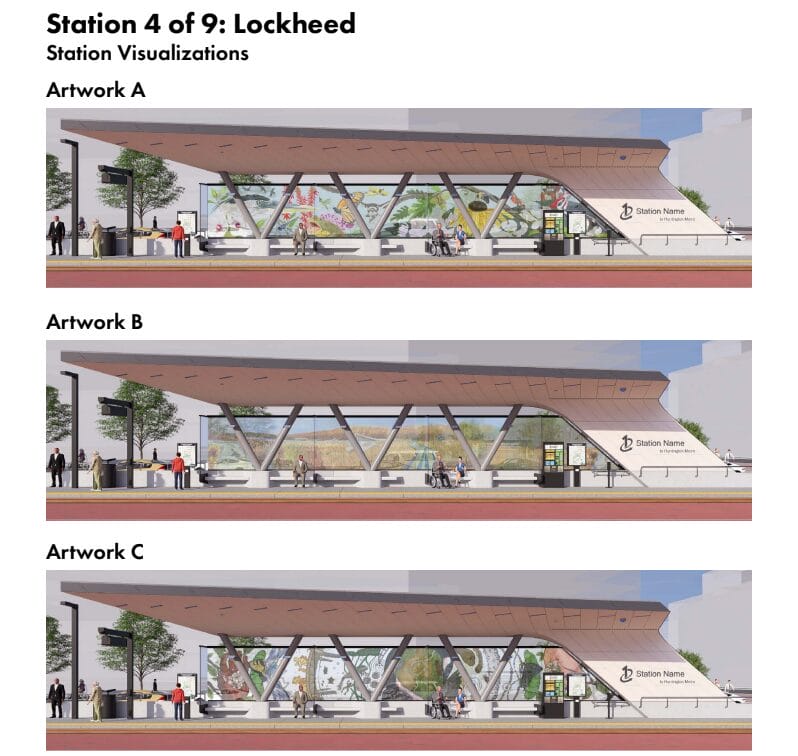
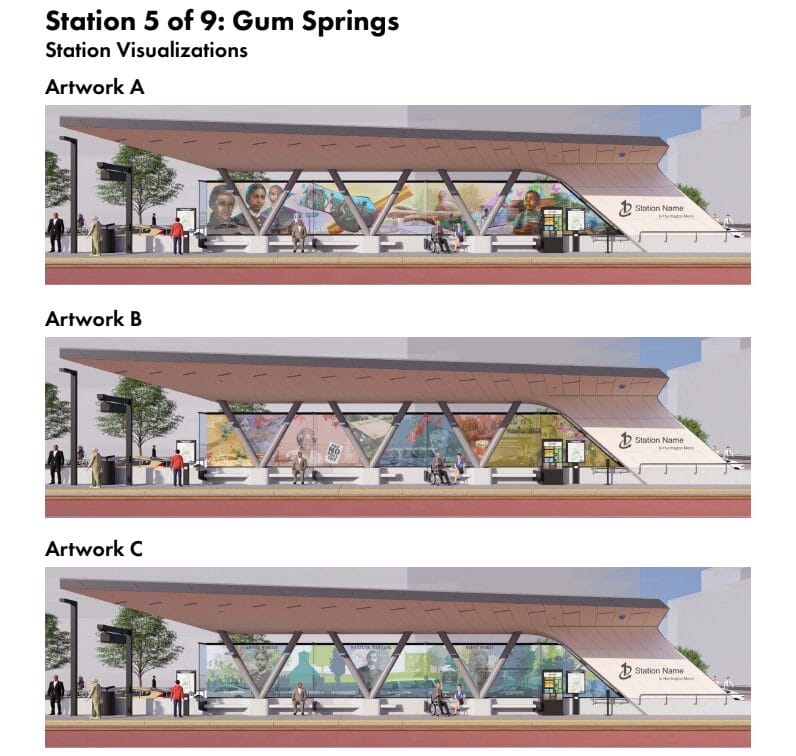
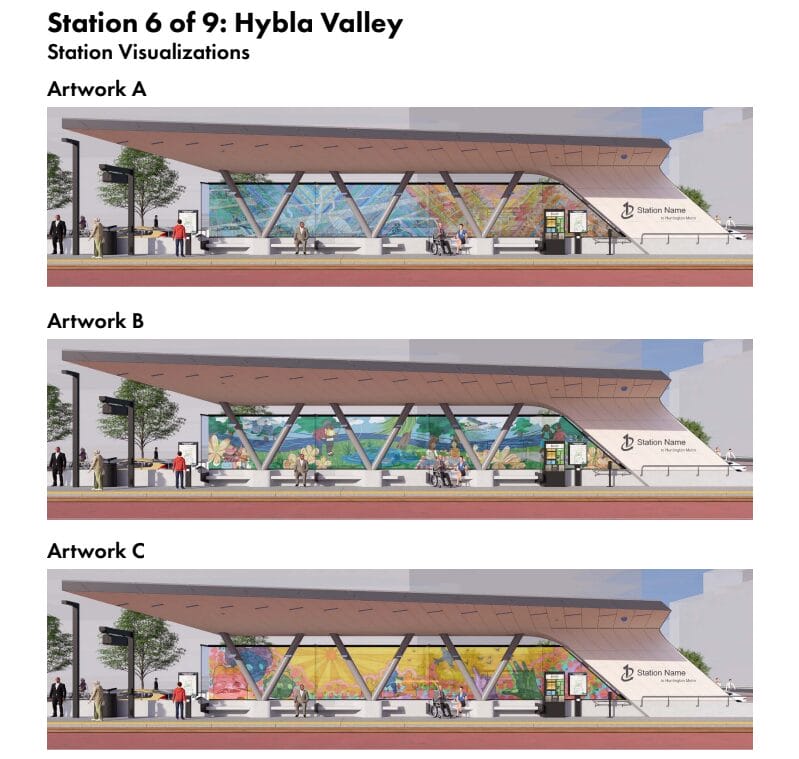
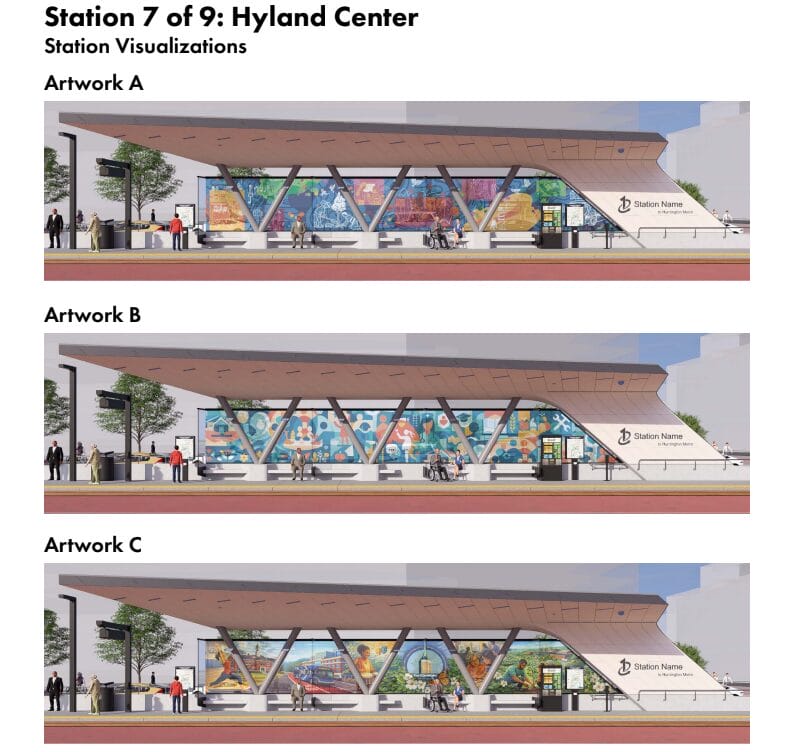
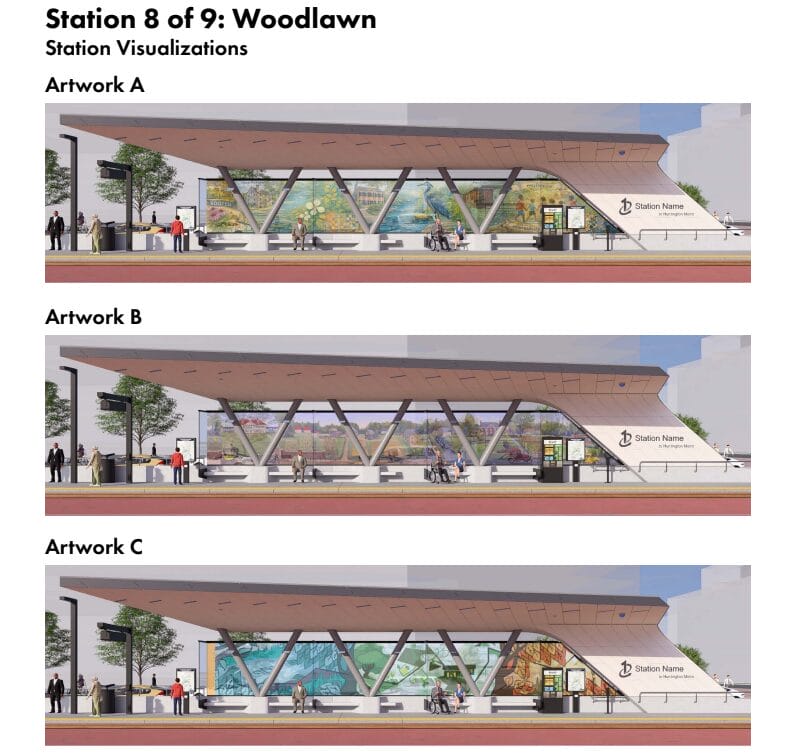
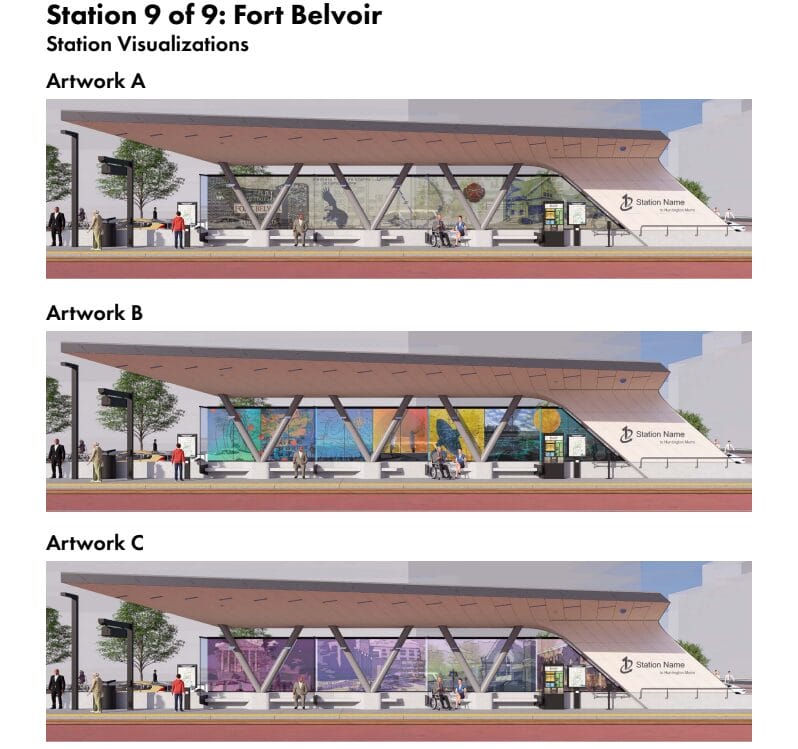
Fairfax County is starting to narrow down its options for the artwork that will grace its future Richmond Highway bus rapid transit (BRT) stations.
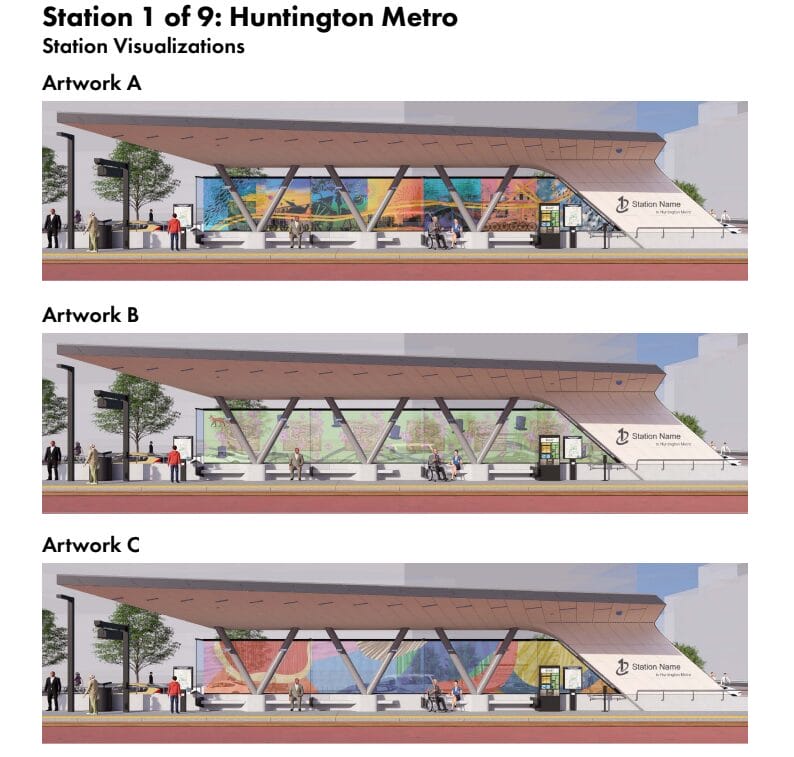
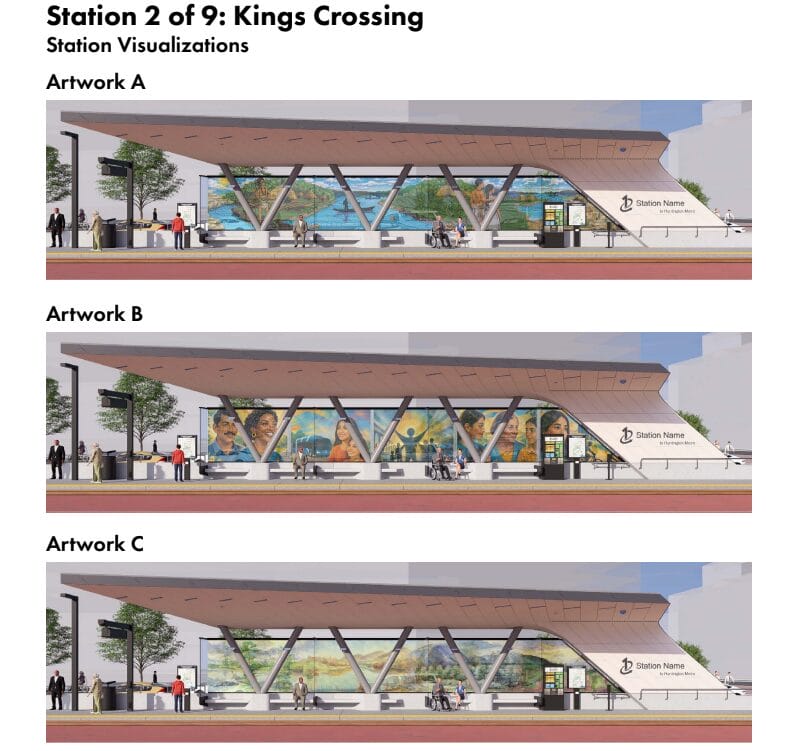
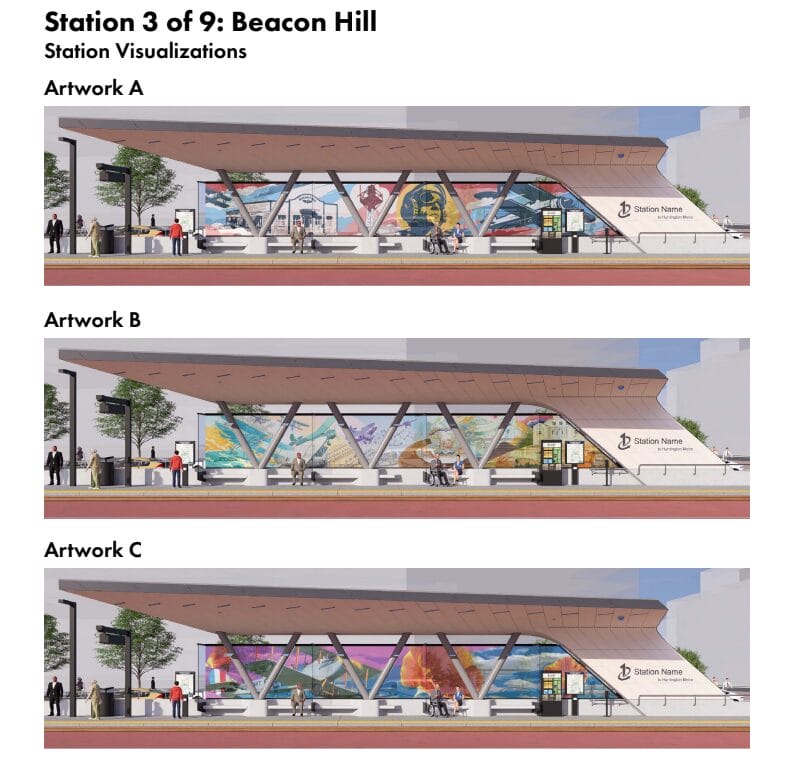
Earlier this week, the Fairfax County Department of Transportation (FCDOT) launched a survey that asks community members to rank three different windscreen designs proposed for each of the bus service’s nine planned stations.
Solicited from both professional and student artists as part of a “Community Charm” initiative, the concepts all “reflect the history, identity and character of the neighborhoods surrounding each station area,” FCDOT said in an April 7 press release.
Proposed designs for the stop at the Huntington Metro station, for example, highlight the history of Fort Lyon, which served as a key defense for D.C. against Confederate forces during the U.S. Civil War, and the people enslaved at nearby Mount Eagle Plantation, now the site of the Montebello Condominiums.

For the Beacon Hill station, artists nod to the area’s ties to aviation as the former home of the Hybla Valley and Beacon Field airports, while the Lockheed station designs follow a nature theme that reflects its proximity to Huntley Meadows Park.
Available in both English and Spanish, the online survey will remain open through May 8. FCDOT will also present the proposed artworks, answer questions and accept feedback at an open house at Bryant School (2709 Popkins Lane) in Groveton on April 29, from 6:30-8:30 p.m.
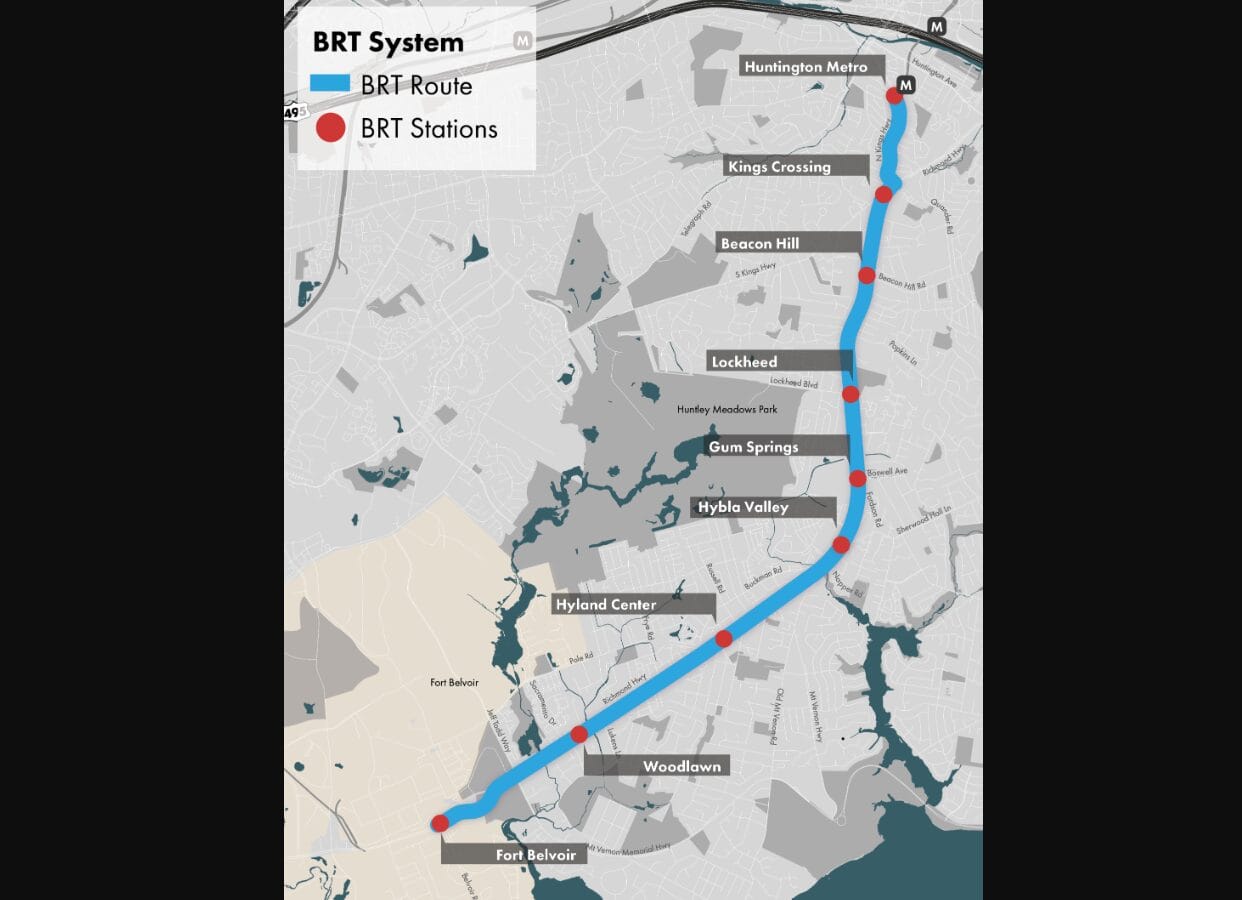
Named “The One,” the Richmond Highway BRT will serve a 7.4-mile stretch from the Huntington Metro station down to Fort Belvoir. A study conducted by the state in 2013 to 2015 found that a bus rapid transit system would be the best short-term option for providing more reliable and frequent transit service in the corridor.
In addition to widening the road to accommodate new bus lanes and stations in the median, the county is working with the Virginia Department of Transportation, to add sidewalks, two-way cycle tracks, and intersection, lighting and landscaping improvements as part of the project.
The county is currently seeking another $463 million in regional funds from the Northern Virginia Transportation Authority to support the nearly $1-billion BRT project, which is on track to begin construction in 2028.
