


Fairfax County officials now have a lengthy to-do list in their efforts to increase the community’s housing stock.
The goal is to “ensure we keep the pedal down on this priority,” Ben Aiken, a county staffer who serves as project manager for the Housing Task Force, told the Board of Supervisors at a Land Use Policy Committee meeting on Tuesday (May 12).
Featuring staff from across 13 different county agencies, the Housing Task Force was formed in response to a Sept. 9 directive from the Board of Supervisors, which requested a “roadmap” for incentivizing and removing bureaucratic obstacles to the provision of housing.
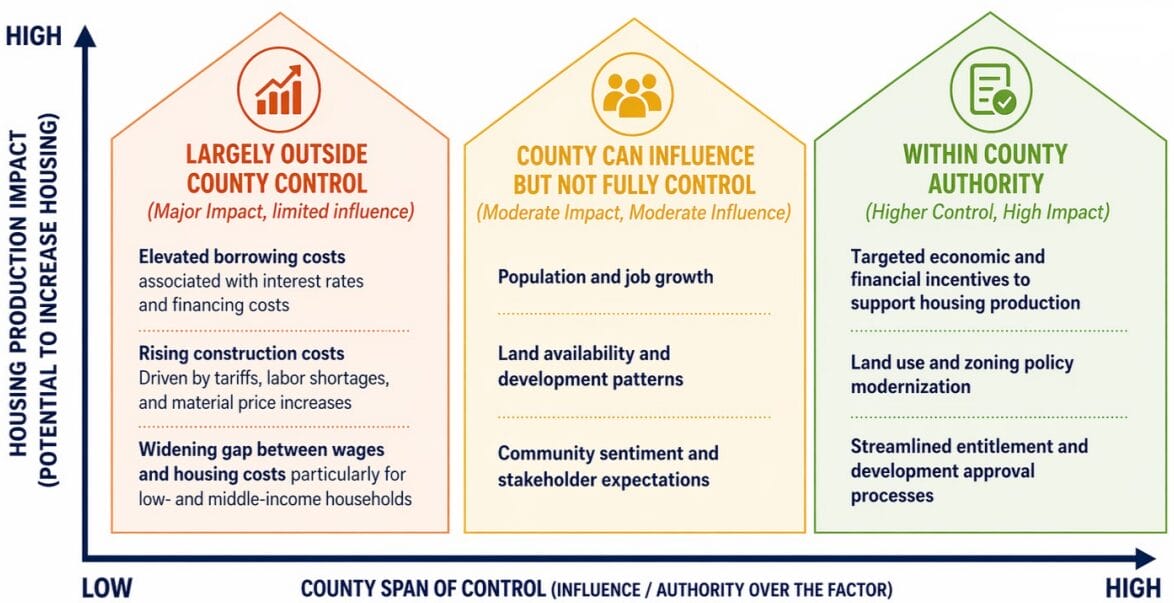
Presented at Tuesday’s committee meeting, the task force’s resulting action plan aims to increase both market-rate and affordable housing throughout the county. The plan took eight months to create, resulting in more than 30 concrete recommendations for removing barriers to housing across Fairfax.
Among those current hurdles:
- Only 40,000 new homes have been constructed countywide in the last nine years, well below employment growth.
- Only 13% of homes built in Fairfax in recent years are affordable to households earning the county’s median income
- Fairfax is lagging in creation of new rental units, putting upward pressure on prices charged renters
- Northern Virginia is losing population, and those moving in earn less than those who have moved out
- While the county is outperforming the region in creating affordable housing, it is lagging behind D.C. and only on par with its peers in creating market-rate housing
According to a housing needs assessment released in February, the county needs to add as many as 95,000 new homes by 2035 to keep up with the area’s growth. The study also identified a “critical shortage” of rental homes affordable to people who earn 60% or less of the area median income, which is $166,100 for a household of four, as of May 1.
To address the situation, “we’ve got to be creative,” said Braddock District Supervisor Rachna Sizemore Heizer.
She was among those suggesting building up, not out, is the way to bring new housing to the county.
“We don’t have the land” to do much else, Sizemore Heizer said.
Board Chair Jeff McKay said the need for sufficient housing has moved from a moral imperative to an economic one.
“We need people to fill jobs, and they can’t afford to live here,” he said. “Eventually, the jobs will go somewhere else.”
In the meantime, he added that the county has “a transportation problem because people have to drive to work too far from where they live.”
Action items coming out of the task force’s report range from improvements in internal county planning processes to forging better working relationships with state agencies and the development community.
McKay said supervisors need to meet the moment with aggressive steps as warranted. He believes the public will back up elected officials.
“We have to understand what the silent majority needs,” he said. “We have real, tangible actions we can take. Do we have the will to do this?”
The Board of Supervisors adopted a budget for fiscal year 2027 on May 5 that allocated $52.7 million to affordable housing initiatives, an increase from previous years but still short of its repeatedly stated goal of dedicating the equivalent of two cents of the real estate tax rate.
Providence District Supervisor Dalia Palchik agreed that changes have to start with action by supervisors themselves.
“We got here over decades,” she said of impediments to creating more housing. “Now the buck is up to us.”
As he frequently does, Springfield District Supervisor Pat Herrity zeroed in on making the county’s development process more transparent, responsive and easy to navigate.
“The cost impact of our regulations, we need to take a look at that,” he said.

Herrity suggested members of the Fairfax County Planning Commission, who vet development projects before they come to supervisors, can play a greater role in streamlining the development process.
“We need to make sure the planning commission gets the message, too,” he said, suggesting county staff at times are scared of that body.
Among items coming down the pipeline for supervisors to consider will be potential changes to zoning regulations for accessory living units and streamlined opportunities to redevelop aging commercial properties with mid-intensity mixed-use development.
But “there are few quick or easy solutions” that will bring thousands of new housing units to Fairfax, Aiken acknowledged.
At a Housing Committee meeting held later on May 12, elected officials were briefed on county communication strategies and received an update on the new Housing Solutions page on the county’s website.
