

Virginia lawmakers want to examine consolidating Northern Virginia’s transit agencies to assess potential cost savings and service improvements.
The proposal, which is included in the two-year budget lawmakers passed Monday, directs the Department of Rail and Public Transportation to include in its report not only the cost savings and long-term financial impacts of merging multiple systems, but also how potential changes would affect riders through fare structures, service reliability and accessibility.
The transportation study emerged as legislators work to avoid a shutdown and finalize a two-year spending plan ahead of the July 1 deadline, which includes state funds for the Washington Metropolitan Area Transit Authority, or Metro.
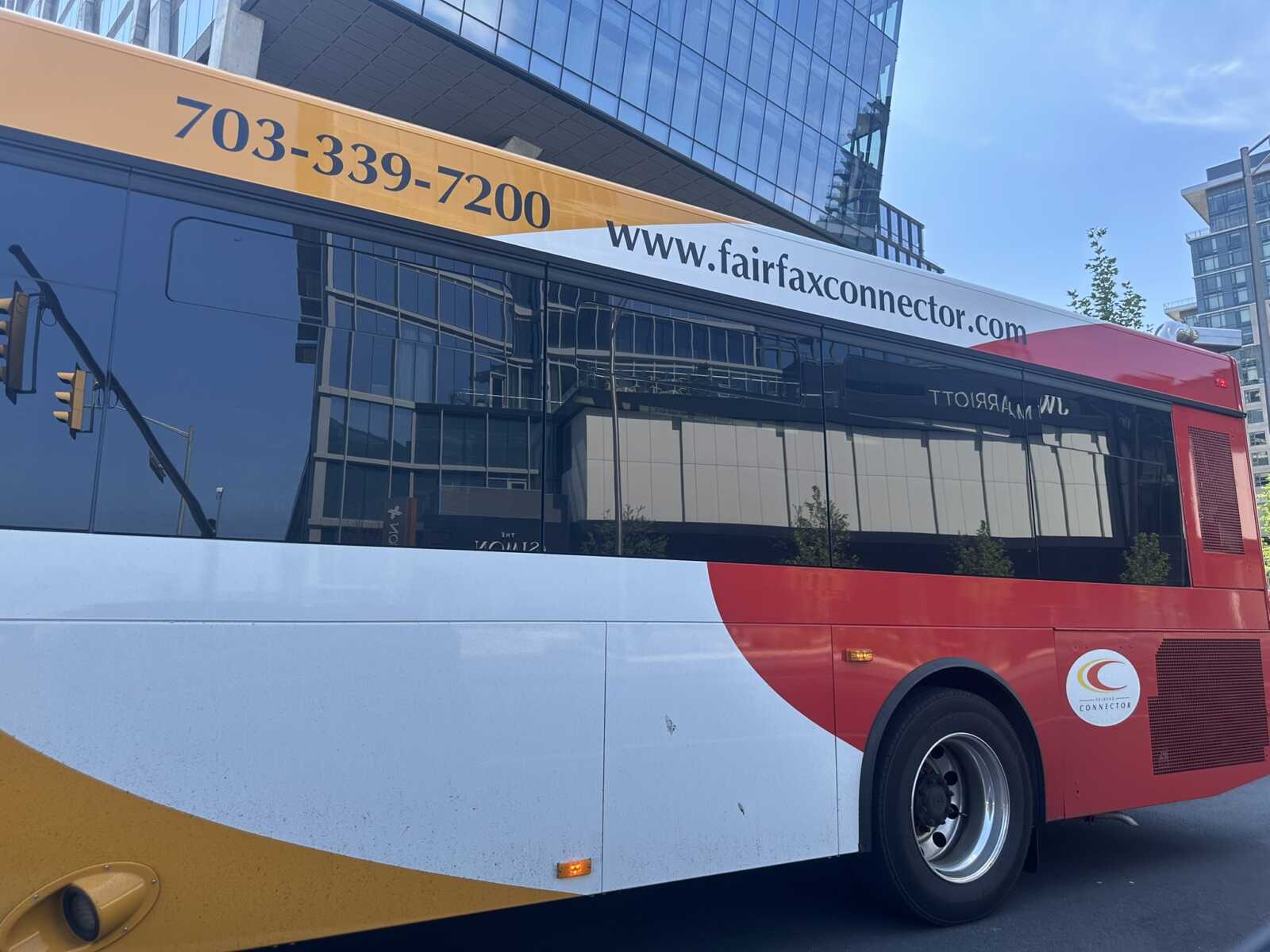
The outcome of the study could reshape transit for four agencies — DASH Alexandria Transit, Fairfax Connector, ART Arlington Transit, and CUE Fairfax City — by identifying potential efficiencies and improvements through consolidation.
On Monday, Senate Majority Leader Scott Surovell, D-Fairfax, stressed that merging transit systems could eliminate redundant operations and boost efficiency, similarly to a widespread, unified system that existed in previous decades.
He argued that the current fragmentation hinders the delivery of better services and responsible spending.
“In this budget, we are asking taxpayers to step up and provide more funding to WMATA, and I think as we do that, it’s important that we demand that WMATA and other transit agencies in Northern Virginia try to do business more efficiently,” said Surovell.
He said that in Northern Virginia, every locality has its own bus system, which he calls “incredibly inefficient,” with multiple garages, purchasing systems, fare systems and contracts with different operators.
“Before 1980, all these services were operated under WMATA as one sole entity,” he said, “and I think we need to look at a way that we can make these systems more efficient, so we don’t have to keep revisiting how to fund them every seven years.”
The agency must also gather rider and community input, assess the potential effects of any consolidation on public access and daily transportation options and examine similar changes in other regions and states to inform the public about possible impacts.
The proposed study aligns with broader efforts by area leaders to support the region’s transit network.
At the culmination of their work, regional leaders encouraged Virginia, Maryland, and Washington, D.C. to contribute to a $460 million new capital funding package starting in fiscal year 2028, which aims to stabilize service, support investments and provide budget certainty for all three jurisdictions.
Virginia also created a committee that urged the General Assembly to consider “net new” revenue sources, avoid reductions in current transportation funding or the use of existing transportation funding and minimize impacts on low-income Virginians.
In response, lawmakers proposed allocating $153 million in the budget for additional operating assistance for Metro. It also requires Metro to produce a 20-year capital plan and annual performance reports.
Metro and other public transit services in Northern Virginia could also generate funding through a plan that would allow localities to use a 1% sales tax to pay for transportation projects that address the region’s public transit needs.
If the study language remains in the budget after the governor’s review, a report is due to the Chairs of the Senate and House Transportation Committees by Dec. 15.
Lawmakers are scheduled to return to finalize the budget on Monday, after Gov. Abigail Spanberger examines it.
This article was reported and written by Virginia Mercury and has been republished under a Creative Commons license.
