

Fairfax County leaders are asking Gov. Abigail Spanberger to take into account the local area’s unique circumstances if a drought emergency needs to be declared in Virginia.
The Fairfax County Board of Supervisors on Tuesday (June 23) authorized Chairman Jeff McKay to send a letter to Spanberger, laying out concerns of local leaders and Fairfax Water officials.
The letter requests that the Potomac River be excluded from any Virginia-specific drought declaration, because of the unique agreements surrounding its water allocation.
“For more than four decades, the water utilities which share the Potomac River resource for their water supply have worked cooperatively on water-supply planning,” the letter notes.
Any unilateral drought declaration coming from Richmond could cause problems in regional commitments that are coordinated by the Metropolitan Washington Council of Governments (COG), the letter suggests.
The regional plan “provides consistent, practiced, and region-specific communication and coordination actions,” the county’s letter adds. “These risk-based triggers ensure appropriate and timely action by all parties reliant upon this system.”
As part of the regional compact, COG placed the entire region under a drought watch in early June. It applies to nearly six million local residents.
In making the declaration, the Council of Governments encouraged community members to voluntary take small steps to cut their water usage:
- Reducing shower length to under 5 minutes
- Turning off water while brushing teeth or shaving
- Washing only full loads of dishes and clothes
- Fixing plumbing leaks, especially toilets and faucets
- Limiting lawn, plant and shrub watering to what is necessary
- Sweeping rather than hosing sidewalks and driveways
- Using commercial car washes that recycle water rather than washing vehicles at home
Fairfax Water, which as a retail and wholesale provider serves about 2.2 million Northern Virginia residents, relies on the Potomac for much of its water supply. Maintaining a coordinated regional effort in allocating that supply is vital during “what could be a particularly dry summer,” McKay said at the Jan. 23 meeting.
In evaluating drought status, state officials do not consider conditions outside Virginia’s borders. As a result, more than 60% of the Potomac River watershed and 100% of the upstream Potomac River storage wouldn’t factor into the Commonwealth’s determination of whether an emergency exists.
Not taking those conditions into effect when considering a drought declaration would result in “unnecessary hardship for millions of Northern Virginia residents and businesses,” McKay’s letter contends.
The motion to send the letter received bipartisan support.
“I’m glad we’re doing this,” said Springfield District Supervisor Pat Herrity, the Board’s lone Republican.
In Virginia, the Department of Environmental Quality and Virginia Drought Monitoring Task Force have oversight responsibility on drought issues.
The state government places local areas into one of four water-level categories — normal, drought watch, drought warning and drought emergency — at any given time, with specific responses at each level.
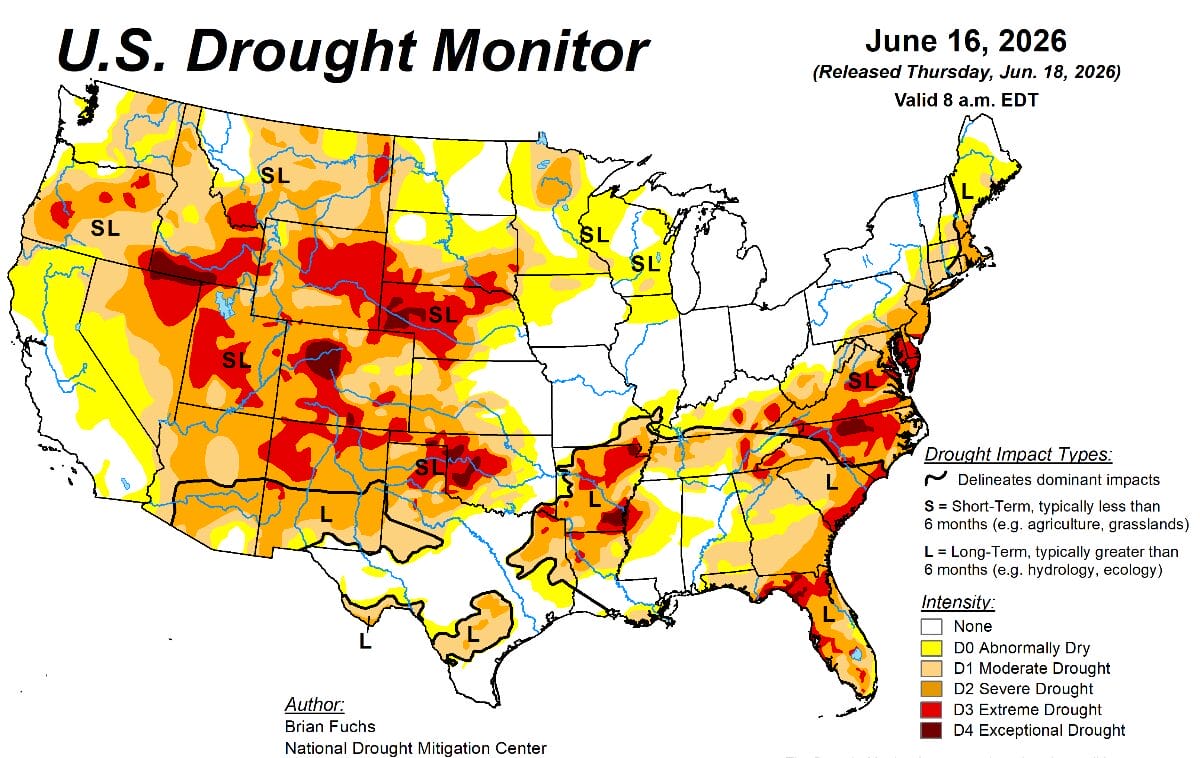
Currently, all of Virginia currently is in warning category except far southeastern Virginia, which is in the watch category.
Southside and central Virginia are among the most drought stricken areas in the nation, according to the U.S. Drought Monitor via the National Drought Mitigation Center.
Entering a drought emergency imposed by the state government is rare in Virginia. The last governor to declare one was Mark Warner in 2002. But if a drought emergency is declared for all or parts of the commonwealth, mandatory water restrictions will be put in place.
Earlier this month, Spanberger urged Virginia residents act now to conserve water to avoid the need for more draconian action later.
“It is important that we take commonsense steps to meet this challenge,” she said. “I’m grateful to Virginians for doing their part.”
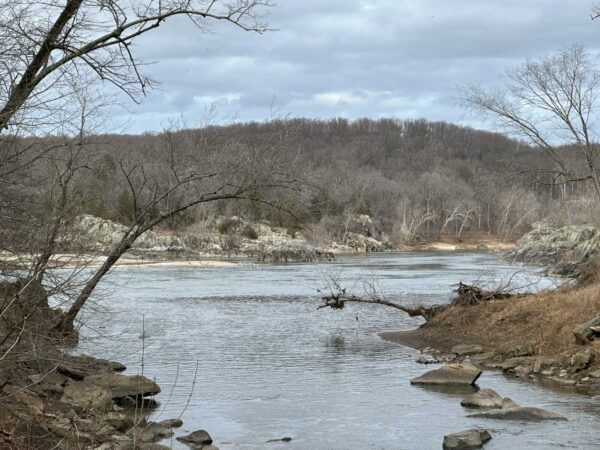
State officials say reservoir levels remain healthy, but McKay noted that “Potomac River flows remain near record lows.”
“Hopefully this week will help,” Herrity said, pointing to a deluge hitting much of the region on June 22 and intermittent rain at other times.
The full text of McKay’s letter to Spanberger is below:
Dear Governor Spanberger:
The Fairfax County Board of Supervisors supports the request by Fairfax Water to specifically exclude the Potomac River System from any statewide or region-specific Drought Emergency that you might declare.
For more than four decades, the water utilities which share the Potomac River resource for their water supply have worked cooperatively on water supply planning by investing in upstream storage and by coordinating operations.
The Metropolitan Washington Water Supply and Drought Awareness Response Plan: Potomac River System (2000) – the “MWCOG Plan” – contains drought triggers and response actions for the Potomac River that are based on technical risk measures specific to the Potomac supply. These were developed after the 1999 drought to avoid confusion among Potomac River users in Maryland, the District of Columbia (DC) and Northern Virginia that use the same water supply. The MWCOG Plan provides consistent, practiced, and region-specific communication and coordination actions. These risk-based triggers ensure appropriate and timely action by all parties reliant upon this system. The Code of Virginia designates that all local governments that utilize the Potomac River System as a water supply source incorporate the provisions of the MWCOG Plan into their drought response and contingency plans and that the MWCOG Plan be the governing document for drought declarations.
The MWCOG Plan is tailored to the Potomac River System’s unique characteristics, including its upstream reservoir operations and a multi-state watershed, whereas a state-wide declaration based on the Virginia Drought Monitoring Task Force assessment would rely solely on indicators within Virginia and not include conditions in more than 60% of the watershed and 100% of the upstream storage that lie outside the Commonwealth, all critical components of the Potomac River System.
Northern Virginia residents and businesses have invested millions of dollars in Potomac River System resiliency (e.g., reservoirs and storage). Without specific reliance on the regional MWCOG Plan and exemption from a state-wide drought declaration, we risk unnecessary hardship for more than 2.2 million people and the economy of Northern Virginia and ignore our infrastructure investments and regional operational capabilities.
To recognize the investments made in water supply resiliency by our residents and businesses throughout Northern Virginia and to avoid unnecessary water use restrictions, the Fairfax County Board of Supervisors respectively requests that you exclude the Potomac River System users that follow the MWCOG Plan from any statewide or region-specific Drought Emergency Declaration.
Thank you in advance for your consideration of this important matter.
Sincerely,
Jeffrey C. McKay, Chairman
