

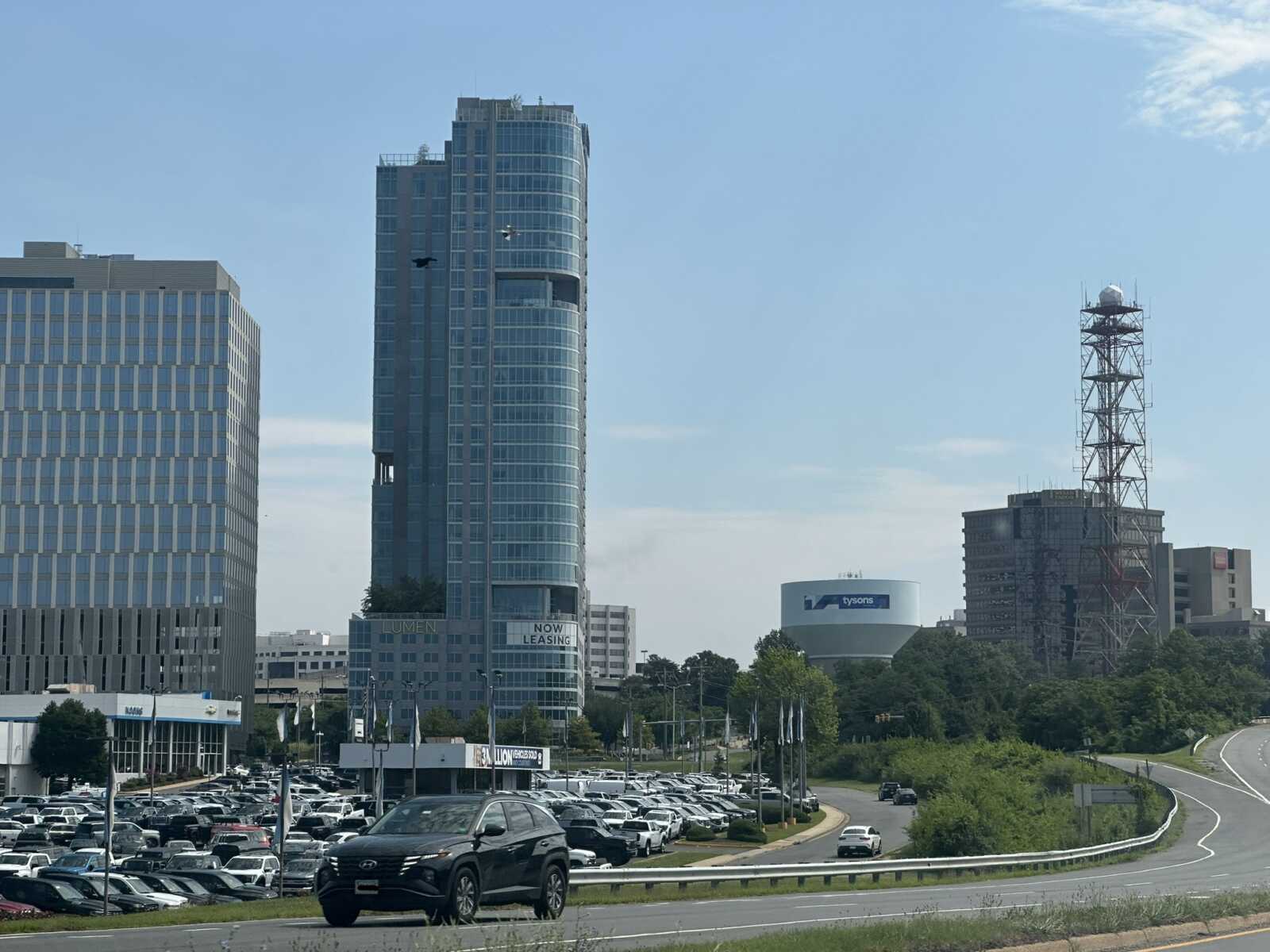
Tysons will be celebrated on the silver screen tonight (Wednesday) with the premiere of a short film reflecting on the first 150 years of its history.
Produced by Fairfax County’s Channel 16 as part of an ongoing “Providence Perspectives” oral history series, the 42-minute documentary will screen for the first time at LOOK Dine-In Cinemas (1667 Silver Hill Drive) at The Boro at 7 p.m.
The event, including a pre-screening happy hour at 6 p.m., is free and open to the general public, but organizers are encouraging attendees to register in advance.
The Providence District supervisor’s office, which represents most of Tysons, was approached about including an installment on the transformation of Tysons in its “Providence Perspectives” series by the Tysons Community Alliance (TCA).
A nonprofit charged with promoting and advocating for Tysons as the county’s envisioned downtown, the TCA released an even shorter, 2-minute video of its own in March marking the area’s “150th anniversary,” but the new movie provides more context and commentary from developers, elected officials, planners and other community leaders who have helped shape Tysons’ evolution from a pit stop into an urbanizing hub.
“I think it’s going to be a really neat event to be able to learn a little more about how we got to the Tysons that we visit or live in today,” Providence District Supervisor Dalia Palchik said of the upcoming premiere at last week’s unveiling of a Lego display showcasing Fairfax County destinations — including Tysons Corner Center.
The TCA says it “was proud” to support the documentary project as part of a broader celebration of Tysons’ transformation over the past 150 years “from a rural crossroads into one of the nation’s premier mixed-use business districts.”
“The documentary reflects our shared commitment to preserving Tysons’ history, celebrating its evolution, and inspiring the next chapter of this dynamic community,” TCA communications director Monique Blyther said in a statement.
Officials identify pivotal moments in Tysons history
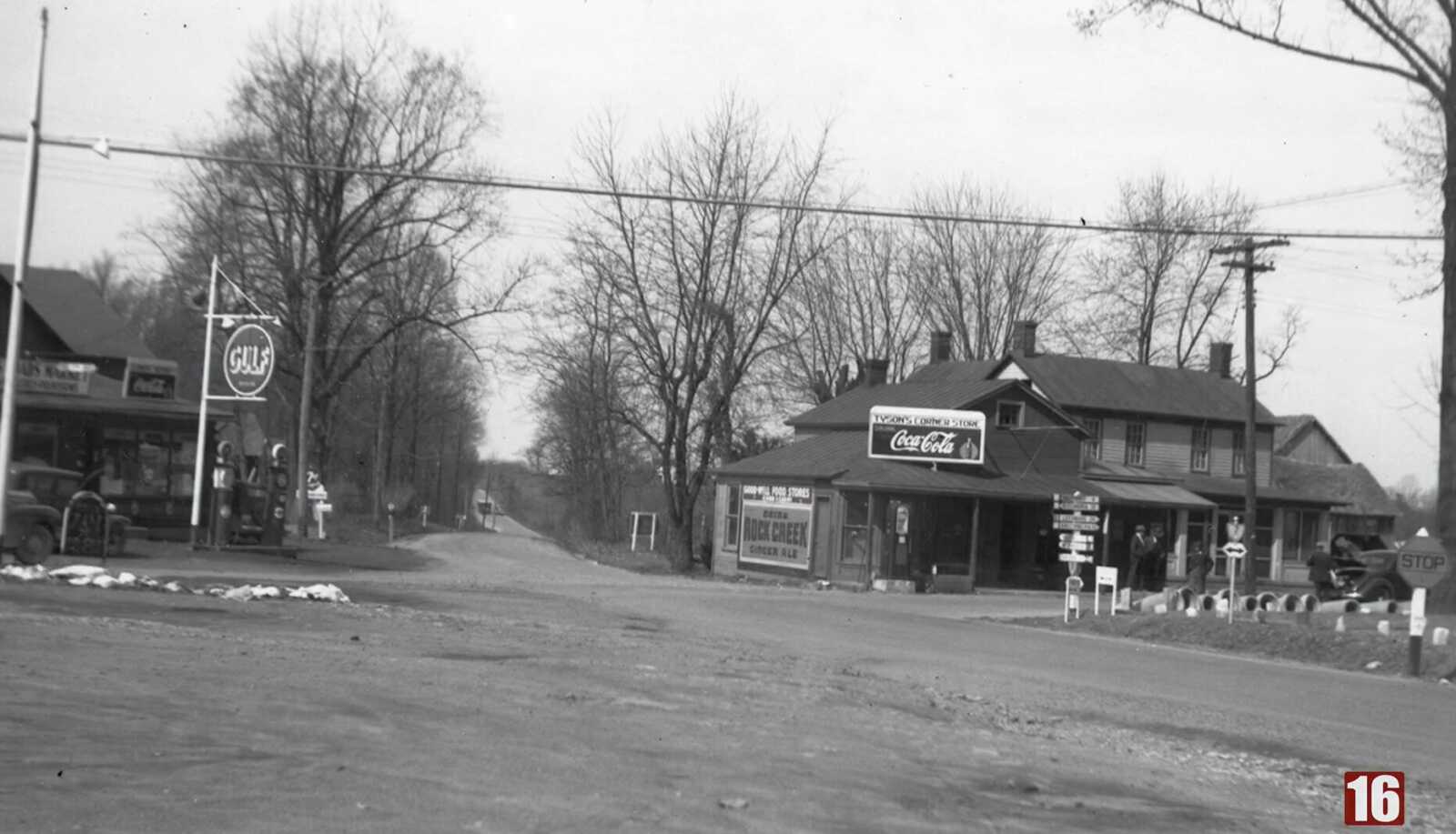
While Tysons is now associated with shopping malls, high-rises and a tangle of major roadways, the community can trace its modern history back to 1852, when Maryland native William Tyson acquired a large tract of land at the crossroads of two roads that would become Route 7 (Leesburg Pike) and Route 123 (Chain Bridge Road).
Previously known as Peach Grove for the local peach farms, the rural area gradually took on the moniker of Tyson’s Corner after Tyson opened a general store and served as postmaster at the local post office from 1858 to 1864, according to former Providence District Supervisor Kate Hanley.
“His name was sort of given to that area,” Hanley says in the “Tysons 150” video, which was shared as a preview with FFXnow. “We’ve all seen over the years of the pictures going out Route 7 of the fruit stands and the stores on the corner, and there was a meat locker that people talk about, and all kinds of small businesses. And we hear about the peach ice cream that people drove to Tysons to get.”
In addition to the emergence of the Capital Beltway (I-495) and Fairfax County’s post-World War II population boom, Tysons was shaped by the openings of the Tysons Corner Center and Tysons Galleria malls as well as a 1991 redistricting that moved the north central part of Tysons from the Dranesville District to Providence.
Fairfax County leaders began considering a more intentional approach to developing Tysons with the creation of a Tysons Land Use Task Force in 2005 under then-Providence District Supervisor Linda Smyth and then-Board of Supervisors Chairman Gerry Connolly, said Hillary Zahm, vice president of development at Tysons Corner Center owner Macerich.
Composed of regular citizens, business leaders, county staff and other stakeholders, the task force ultimately produced a Tysons Comprehensive Plan adopted by the Fairfax County Board of Supervisors in 2010.
“I think the reason that’s so critical is it really allowed the private, public [sector] and citizens to be part of the process and to establish a vision that was united and unified amongst everybody,” Zahm said. “… It was really a critical moment for Tysons with the task force, and it’s only grown and evolved since then in the best way.”
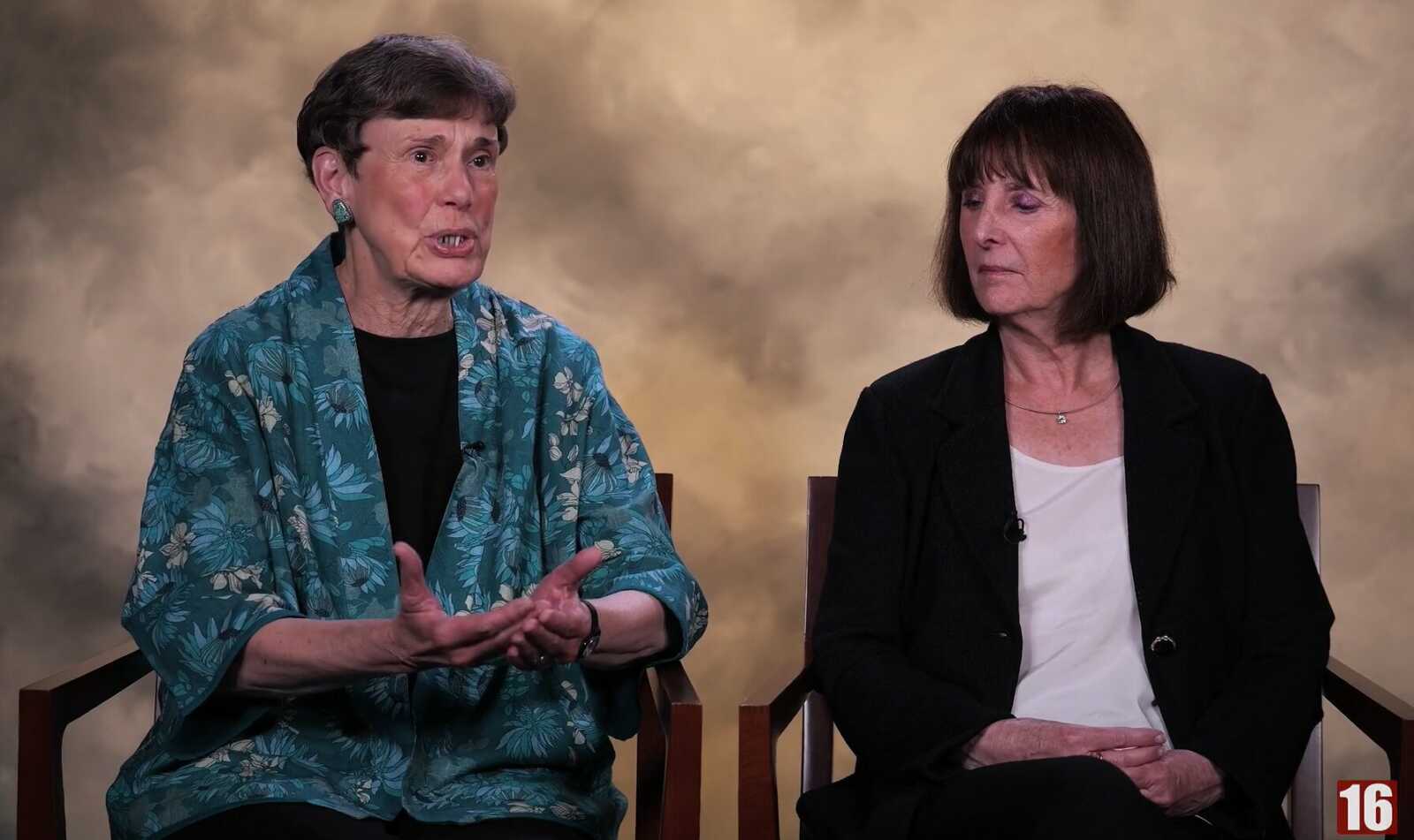
Anticipating the launch of Metro’s Silver Line in 2014 as an economic driver, the plan called for Tysons to be redeveloped as a walkable, transit-oriented urban center where people would live as well as shop, visit and work. It set a goal of drawing 100,000 residents and 200,000 jobs to the area by 2050.
Tysons has made progress toward those goals, boasting an estimated population for 2025 of approximately 32,000 people, up from 17,000 in 2010, and with 92,000 employees, it’s the second largest employment hub in the region outside of D.C., according to data collected by the TCA.
Developments like Tysons Corner Center, Capital One Center and The Boro have started to settle in as established neighborhoods with a mix of housing, office, retail and entertainment.
“Tysons does look very different than it did 20 years ago,” TCA Board Chair David Schneider said, noting that he was born and raised in Fairfax County.
The change has been driven in part by the influx of residents, along with a solid employment base and successful retail at the Tysons malls, according to Schneider.
“Having that 24/7 activation to have residents here that truly require the nightlife that we can provide makes Tysons more of a 24/7 city than a 9-to-5 destination,” he said.
However, obstacles remain, from streets that remain challenging for pedestrians and bicyclists to navigate to a continued need for more — and more affordable — housing.
Like other urban areas regionally and nationally, Tysons has struggled with a decline in demand for office space, leading to a trend of developers looking to modernize or fully replace older properties, often with housing.
In its most recent market report, released in May, the TCA found that the local office market is stabilizing. The vacancy rate has held at 20% since late 2024, while an “outsized” concentration of space occupied by owners (8 million square feet or 24% of the total inventory) indicates a long-term commitment to the area by major employers like Capital One and Mitre, though the latter is looking to consolidate its offices.
Schneider described the process of developing Tysons as “a constant learning experience,” while retired supervisor Smyth noted that county officials always understood that their vision would be a “long-term project.”
“The more people who have a stake in it, the better off Tysons will be through good times and bad,” Smyth said. “I’m glad I had time to do that. I may be like some of those people at public hearings saying, ‘I wish we’d done this’ or ‘I wish we’d done that.’ I also knew … things would get worked out and changed. It’s evolution. It’s people doing this, and that’s what we need to remember.”
The name of the oral history series has been corrected from “Providence Presents” to “Providence Perspectives.”
