

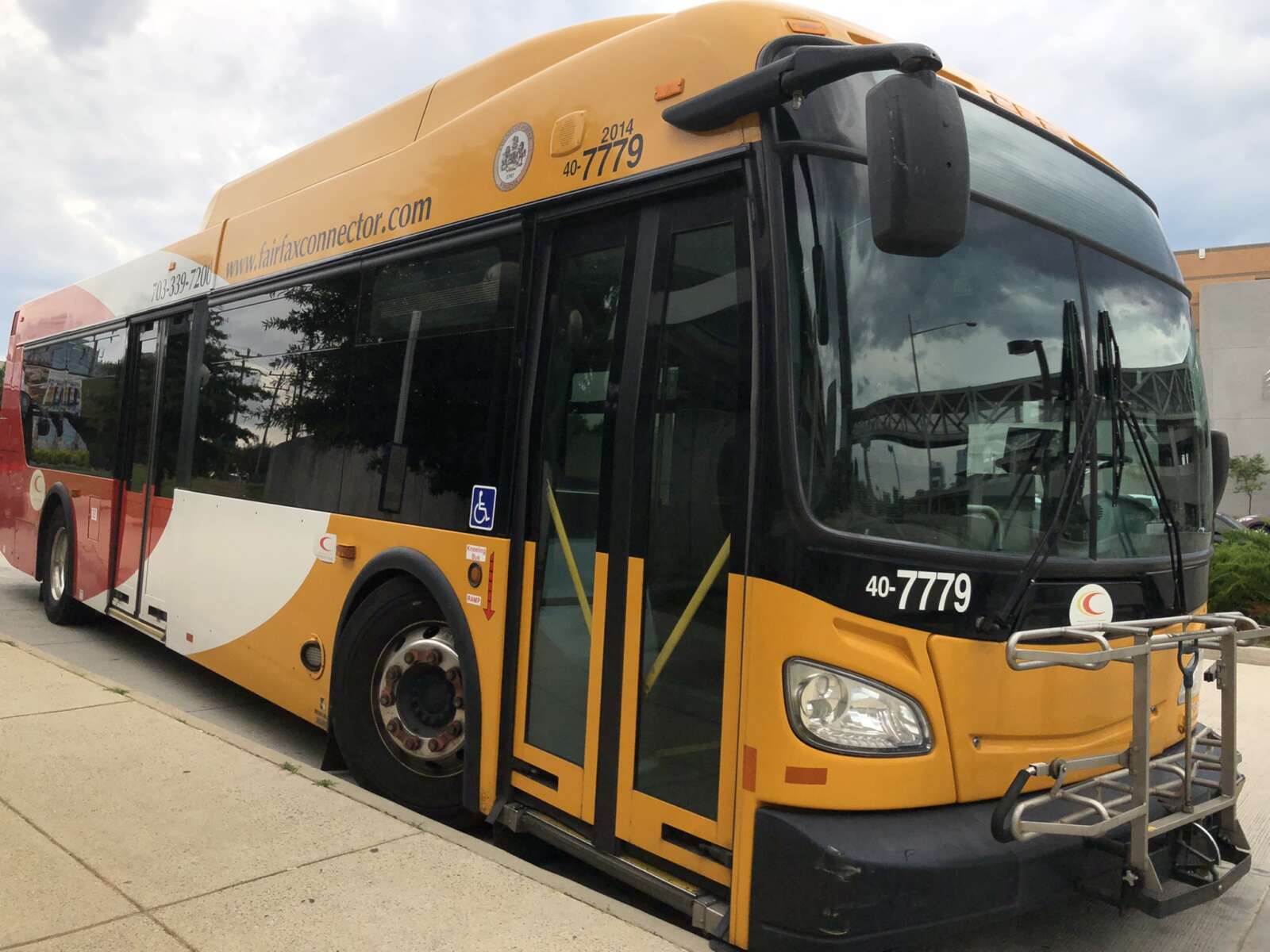
Fairfax County is set to receive close to $51 million from the federal government to buy 60 new diesel-electric hybrid Connector buses.
Sens. Tim Kaine and Mark Warner announced yesterday (Wednesday) that the county has been awarded over $50.5 million for the buses from the Federal Transportation Administration’s Low or No Emission Grant program, which has funded more than 1,100 buses in 47 states.
“Robust public transit systems are vital to helping Virginians get where they need to go and investing in green infrastructure is key to our future,” the senators said. “We’re proud to have supported the historic Bipartisan Infrastructure Law, which has already brought billions to Virginia and now will invest an additional $50 million to improve public transit options in Fairfax County and boost air quality by reducing emissions.”
The new hybrid buses will replace about 20% of the county’s 300 Connector buses, which carry roughly 26,000 riders daily on 93 different routes. Some new routes recently took effect, while others are under consideration.
The Fairfax County Board of Supervisors authorized its Department of Transportation (FCDOT) to apply for roughly $128.1 million in federal grants to purchase 72 buses, including 60 hybrid and 12 diesel models, and upgrade the county’s bus facilities to support equipment for low- and no-emission vehicles.
The county sought $71.1 million from the Grants for Buses and Bus Facilities Program and $57 million from the Low or No Emission Grant program. The FTA was allocated $1.5 billion for both programs by the Bipartisan Infrastructure Law to make transit fleets more energy-efficient and less polluting.
While FCDOT was awarded most of the Low or No Emission funding it requested, FCDOT spokesperson Freddy Serrano says it didn’t get any funding from the Buses and Bus Facilities program.
Consequently, Serrano says the county does not intend to use the $50.6 million grant for bus facility upgrades. Instead, it plans to purchase dozens of diesel-electric hybrid buses — vehicles powered by a conventional diesel engine and an electric motor — over the next two years.
“This grant is a significant step forward for Fairfax County as we continue to work toward a more environmentally sustainable public transportation system and improved service,” Fairfax County Board of Supervisors Chairman Jeff McKay said in a press release. “Adding these low emission, diesel-electric hybrid buses to our fleet supports our commitment to our riders and to reducing our carbon footprint.”
Though purchasing more hybrid buses will move Fairfax County closer achieving carbon neutrality by 2040, it won’t help with the county’s goal of replacing the entire Fairfax Connector fleet with non-carbon-emitting buses by 2035.
FCDOT previously told FFXnow that it decided to purchase hybrid buses, rather than all-electric ones, because the county’s facilities still lack the infrastructure needed to maintain more battery-powered electric buses.
Last fall, the county launched a pilot program to study bus electrification by adding eight such buses to the Connector fleet. In April, Fairfax County Public Schools also introduced 42 new electric school buses, funded by the BIL.
But without more federal or state funding, it’s unclear how the county plans to meet its long-term goal of upgrading its facilities to accommodate more electric buses, especially as it grapples with a tight budget.
