


Community members may soon get more information on local transportation projects across Fairfax County earlier in the development process — but they also may find their input opportunities cut off earlier, too.
That was one potential scenario considered by county supervisors and staff on April 6, as they brainstormed ways to improve a process they acknowledged can take frustratingly long.
That discussion was designed to consider “ways to make the processes better,” Fairfax County Department of Transportation (FCDOT) Director Gregg Steverson told the Board of Supervisors’ transportation committee.
“If there are red flags [that crop up in projects], we need to find them and find them quickly” to “avoid the things that make project timelines slip,” he said.
Staff acknowledged that the community involvement component of many projects can be patchy.
“We don’t necessarily have consistent engagements — I don’t think this will shock anyone,” said Jennifer Miller, a deputy county manager whose oversight responsibilities include planning and public works.
Sidewalk improvements, minor pedestrian upgrades and intersection improvements were the types of projects under discussion. The hour-long presentation focused on various project parts: scoping, pre-design, design, land acquisition, utility relocation, and finally, construction.
“It generally takes about three to six years” to go through all the steps to a completed project, Steverson said.
While that also is the norm for other localities engaged in similar projects, “that doesn’t mean we can’t do better,” he said.
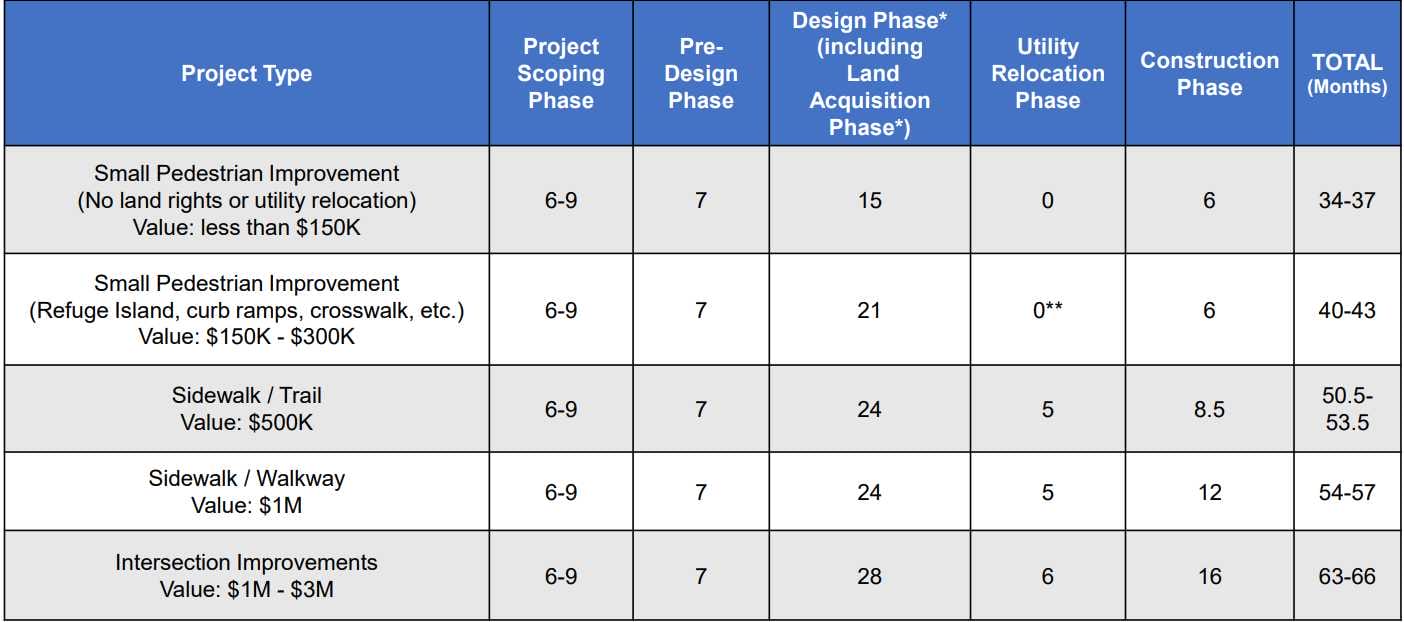
Discussion included efforts to work better with the Virginia Department of Transportation and utility companies. A good deal of time during the meeting was spent trying to find the sweet spot of encouraging community engagement without letting it derail projects.
Steverson said that, “far too many times,” projects go out to the public more than midway through the design process. When residents then raise objections or offer suggestions for major changes, the timeline gets pushed back so staff can address them.
That’s the wrong approach, said Sully District Supervisor Kathy Smith.
“Something needs to change here,” she said.
The goal, everyone in the room seemed to agree, was getting the public engaged before significant work has been done.
“Early and often is what needs to happen,” Springfield District Supervisor Pat Herrity said.
His counterpart representing the Franconia District, Supervisor Rodney Lusk, agreed, saying county leadership needs to “do what we can to make it a little more inclusive, making sure the community feels part of the process.”
An earlier start in community engagement might allow the county government to place firm deadlines on when staff will stop accepting additional input.
“At a certain point … we can’t go back and redesign something at great expense,” said Board Chairman Jeff McKay.
He said that while it’s not a new problem, getting projects completed in a timely manner “may have risen to a new level” of difficulty in recent years.
McKay said county staff need to be willing to call out the Board of Supervisors when projects are being held up by factors in board members’ control.
“If it’s our fault, tell us,” McKay said.
Herrity cautioned against staff considering the public as impediments to getting projects done, rather than as partners in the process.
“The community, on a couple of my projects, has provided a lot of valuable guidance,” Herrity said.
Dranesville District Supervisor Jimmy Bierman, who chairs the transportation committee, said getting to a better process would be a challenge, as many transportation improvements can be “extremely complex, involving many parts.”
But process improvements need to be found, he said.
“I think everybody here agrees that our transportation timelines are too long,” Bierman said.
Fairfax’s transportation staff has started meeting collectively with counterparts in Arlington, Prince William and Loudoun counties, in order to share best practices as each jurisdiction works to improve its planning efforts.
Steverson said whatever changes might be made, they will be incremental and rely on trial and error to see what works and what doesn’t.
He compared changing the existing process to a freighter ship as opposed to a speedboat.
“You’ve got to move it a little bit at a time to get where you want to go,” Steverson said.
