

Fairfax County transportation officials think they have found a better way to prioritize and manage sidewalk, trail and crosswalk improvements after several rocky years.
Yesterday (Tuesday), the Board of Supervisors informally ratified a proposal for Fairfax County Department of Transportation (FCDOT) staff to develop a three-year cycle for listing all potential projects, then prioritizing them based on cost and community impact considerations.
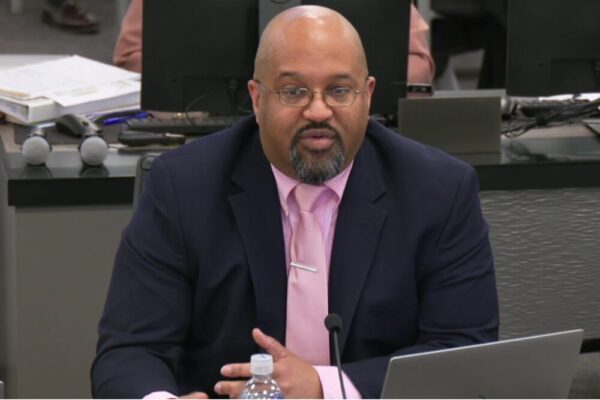
“That will structure things in a better way,” FCDOT Director Gregg Steverson told members of the board’s Transportation Committee.
In 2021, supervisors approved $100 million for six years’ worth of sidewalk, trail and intersection upgrades. So many projects were added to the queue that they overwhelmed FCDOT staff’s ability to address the complexities of each.
“Be careful what you wish for,” Steverson said of that process, which supervisors criticized last September for not advancing projects quickly enough.
To date, $56.7 million of the $100 million has been allocated for specific projects in three rounds of funding. A fourth round is currently in the works, with final decisions on which projects will receive the available $25.4 million to be made later this spring.
Under the proposed future three-year planning cycle, all unfunded sidewalk and crosswalk projects that meet the criteria could be included in the ranking. Any project submitted after the deadline would have to wait for the next three-year cycle before being added to the queue.
Most supervisors who spoke at the April 7 committee meeting were supportive of the concept.
“We should look at the cyclical process — it’s worth experimenting and trying,” Board Chairman Jeff McKay said.
Going with a three-year process “sounds good,” but there needs to be flexibility when it comes to deciding which projects take priority, Providence District Supervisor Dalia Palchik said.
Sully District Supervisor Kathy Smith liked the concept but wondered about the schedule.
“Is three [years] the magic time? I don’t know … but I do think we need to prioritize,” she said.
Smith said compiling a list of projects in priority order didn’t mean others couldn’t jump the queue if circumstances dictated.
“Safety needs to be top of mind,” she said.
Dranesville District Supervisor Jimmy Bierman, who chairs the transportation committee, also liked the proposal as an alternative to the current process.
“I have pounded the table about this in the past, so I’m not going to today,” he said. “We are going to try and find ways to do this better.”
At the meeting, Steverson updated supervisors on the three previous rounds of funding:
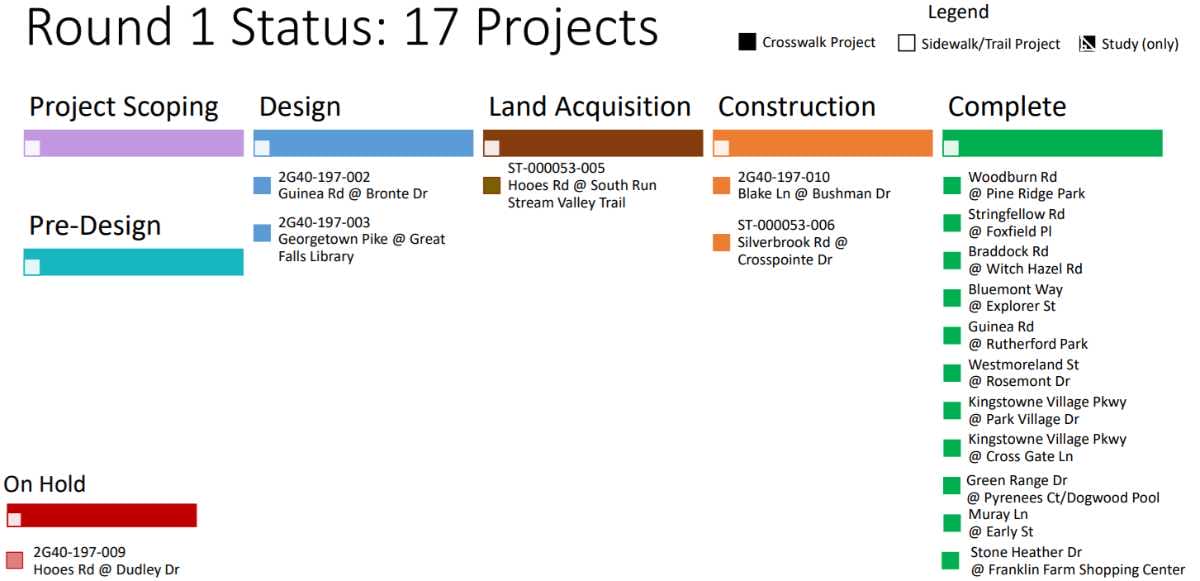
- Round 1: Mostly comprised of “quick-hitting” crosswalk improvements, 17 projects were funded, with 11 now finished, one on hold and the others in various stages of completion.
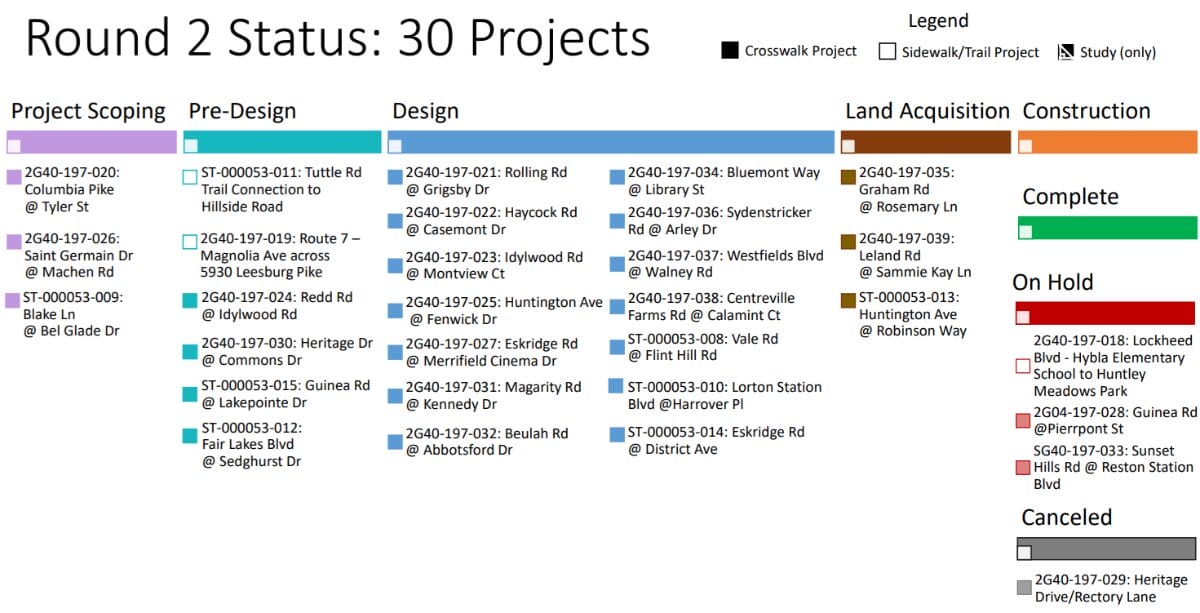
- Round 2: Featuring mostly crosswalk improvements that were “more complex” than the first round, about half the 30 projects are in design, three are on hold, one has been picked up by the Virginia Department of Transportation and the remainder are in preliminary stages.
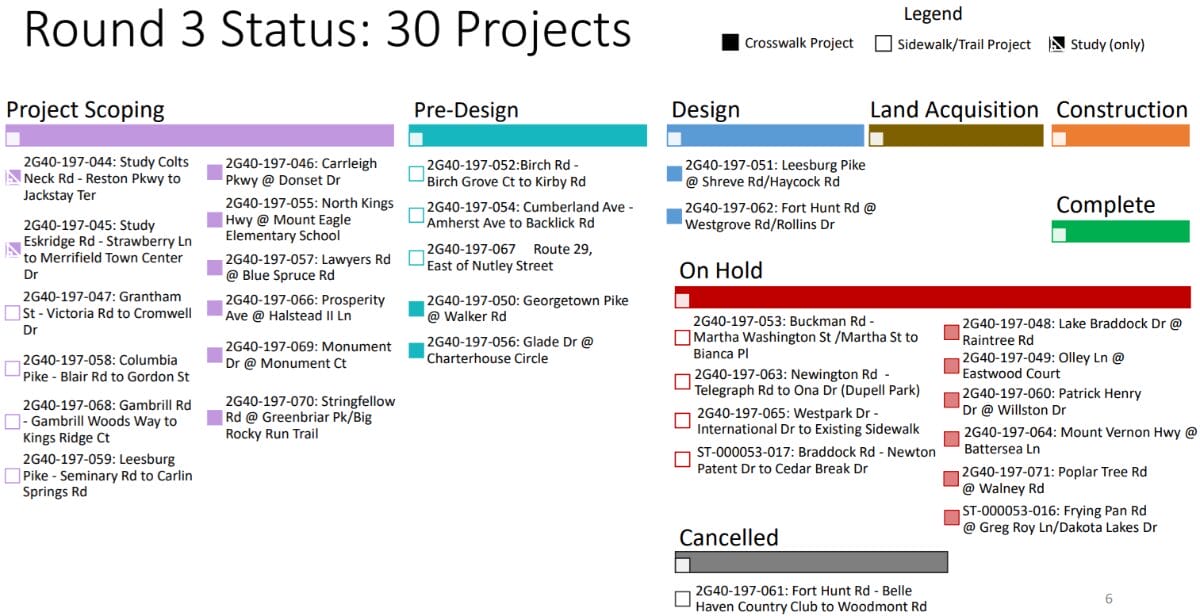
- Round 3: Of the 30 projects approved for funding, two currently are in the design page, 10 are on hold, one has been canceled and others are in project scoping or pre-design.
For the upcoming Round 4, transportation planners have taken a host of unfunded improvement requests and are working to prioritize them. The effort “has taken longer than it should have, for a number of reasons,” Steverson said.
Among the challenges facing county transportation planners are Public Right-of-Way Accessibility Guidelines (PROWAG) that were finalized by the U.S. Department of Transportation in late 2024. The initiative updated crosswalk and intersection construction requirements to further the goals of the Americans with Disabilities Act.
Steverson said provisions of the federal mandate add complexity and cost to what previously had been relatively simple projects.
While the intent of the new regulations may be laudable, “this will have the effect of killing a lot of projects,” McKay said.
“It doesn’t make any sense to me — at all,” he said.
The county’s efforts to stay on top of the sidewalk and intersection improvements has also been disrupted by staff turnover, said Steverson, who permanently took office in January 2025 after serving as an acting transportation director for more than a year.
FCDOT’s planning staff was relatively stable during Covid, but as the pandemic ebbed, “people started finding jobs, going places, moving around,” he said. That, in turn, took away institutional memory that made projects move more expeditiously.
Subsequent staffing cuts have meant remaining personnel have to oversee more projects as part of their daily routine, Steverson said.
If the new plan for three-year priority lists succeeds, it will mark an improvement over the “really frustrating” existing process, Palchik said.
“We have a very big list” of projects to work through, she said.
