

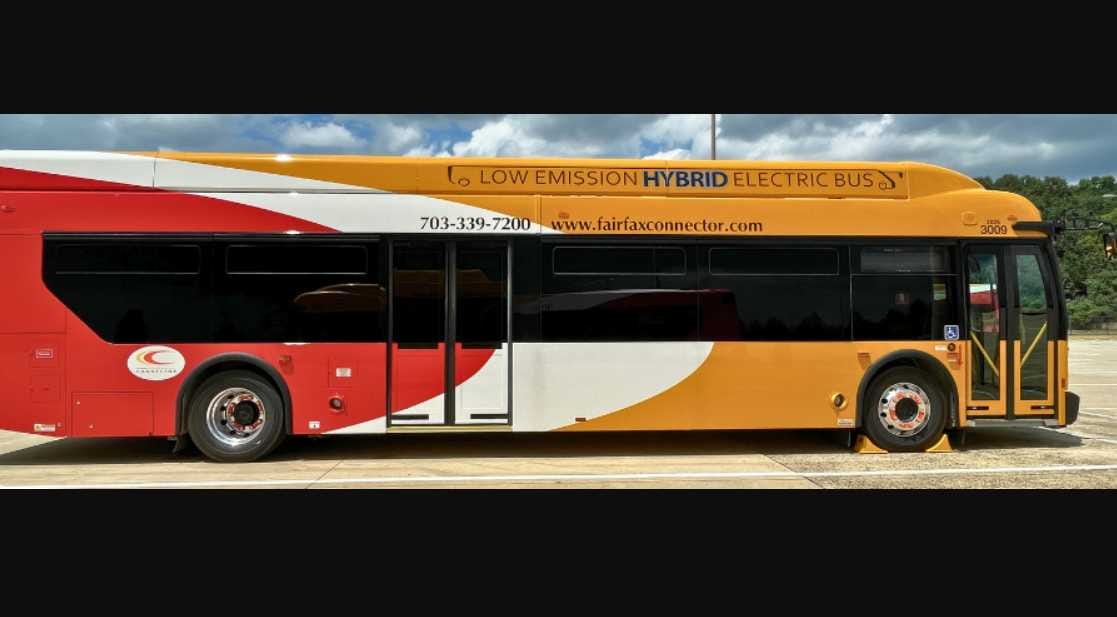
Fairfax County is expanding the use of electric and hybrid-electric buses in Fairfax Connector in an effort to reduce emissions and “modernize” its transit fleet.
The Fairfax County Department of Transportation (FCDOT) announced this week that 19 new next-generation hybrid-electric buses are being added, advancing a goal to transition nearly a quarter of the fleet to the technology by the end of the year.
The buses, built by New Flyer Industries, were purchased with state funding, costing roughly $1.1 million each.
The buses will have technology that allows them to use battery power in designated areas through geofencing.
“Hybrid-electric buses are expected to provide approximately 25% fuel savings and a 30% reduction in greenhouse gas emissions compared with traditional diesel buses, helping Fairfax Connector move toward a more environmentally sustainable fleet,” FCDOT Transit Division Chief Dwayne Pelfrey said in the release.
FCDOT spokesperson Jennifer DeAngelis told FFXnow in a statement that Fairfax Connector currently has 14 battery-electric buses and 19 hybrid-electric buses in service. The remaining 295 buses are diesel-powered.
DeAngelis said the county expects those numbers to shift by the end of 2026. Fairfax Connector is on track to have 22 battery-electric buses and 55 next-generation hybrid-electric buses in service by the end of the year. The number of diesel buses is projected to fall to 251.
The county also expects to receive another 36 hybrid-electric buses later this year funded by a Federal Transit Administration grant. Those buses will replace diesel buses as they are retired, according to the release.
Fairfax County has been gradually moving away from an entirely diesel-powered fleet in recent years. The expansion marks a significant increase from 2023, when the Connector first introduced battery-electric vehicles and started testing how the technology works within the county’s transit system.
Despite that progress, a study completed in late 2025 found that the county is unlikely to meet its goal of fully electrifying its vehicle fleet by 2035, because the technology isn’t available for all vehicles. Federal support for electric vehicles has also diminished under the current Trump administration, which nixed tax credits to incentivize EV purchases last year.
